
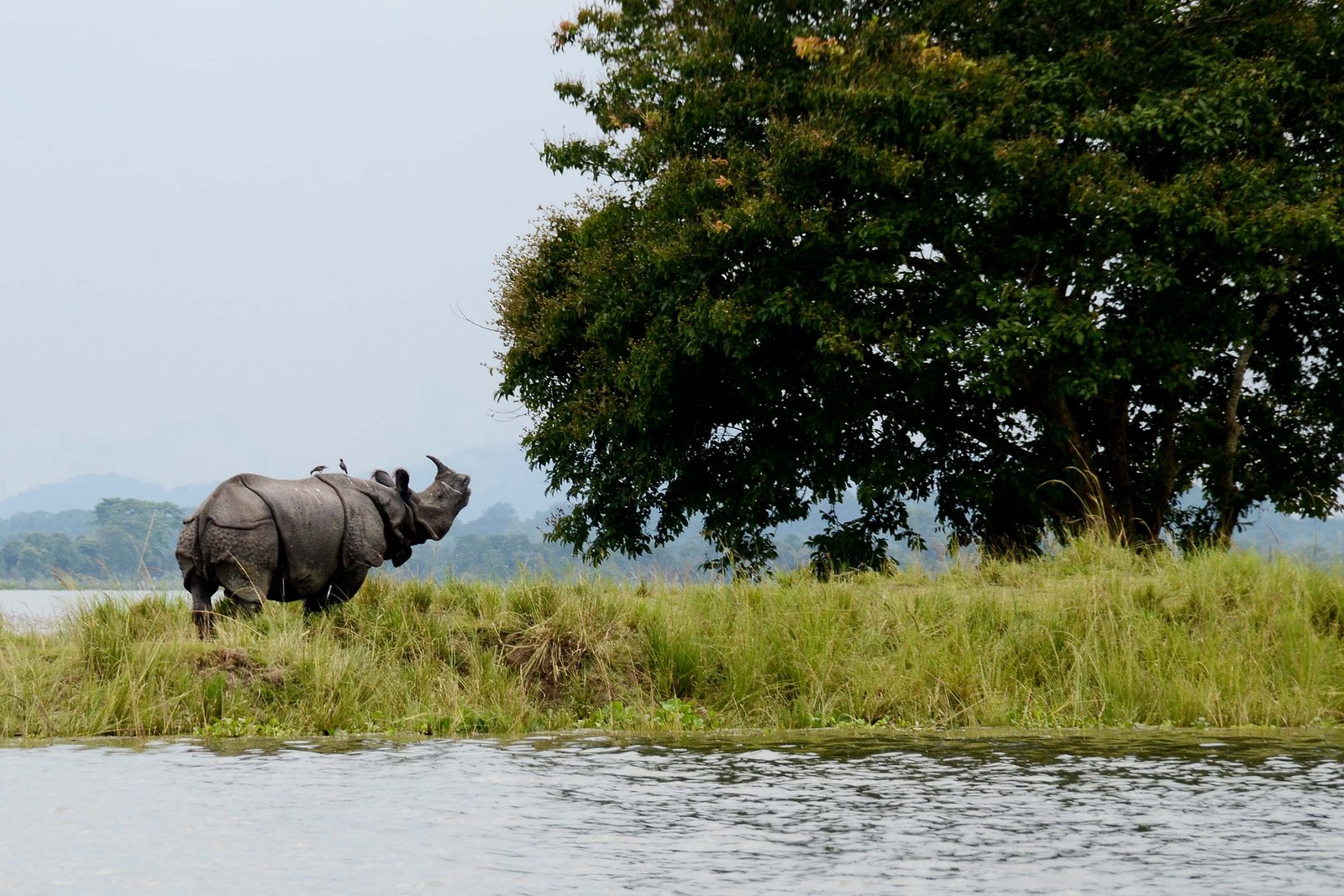
A World Heritage Site protecting one of Asia’s most biodiverse landscapes, where Indian rhinoceros, tigers, and wild elephants roam among tropical forests and vast marshes along the Brahmaputra River.
At a glance
Kaziranga spans four districts in Assam, occupying a mosaic of dense broadleaf forest, towering elephant grass, and wetlands dotted with beels—natural water bodies that sustain extraordinary wildlife. The park’s location on the Brahmaputra’s floodplain creates a dynamic ecosystem shaped by seasonal inundation.
History
Established as a reserve forest in 1905, Kaziranga marked its centennial in 2005. The park was formally recognized as a Tiger Reserve in 2006, reflecting the success of conservation efforts. Over the past century, it has become a global symbol of wildlife protection in South Asia.
What you see
The landscape is characterized by dense tropical moist broadleaf forest interspersed with tall elephant grass and marshland. The Brahmaputra River forms the park’s natural boundary. Multiple beels create distinct habitats within the reserve, each supporting different animal and bird communities.
Cultural significance
Kaziranga has inspired numerous books, songs, and documentaries, becoming a cultural touchstone for wildlife conservation in India. The park demonstrates how protected areas can sustain endangered megafauna and remains one of Asia’s most important biodiversity reserves.
Key facts
- UNESCO World Heritage Site
- Tiger Reserve (designated 2006)
- Important Bird Area designation
- Home to Indian rhinoceros, Asian elephant, wild water buffalo, swamp deer, tiger, and fishing cat
- Located across Golaghat, Sonitpur, Biswanath, and Nagaon districts
- Coordinates: 26.67°N, 93.35°E
Practical information & getting there
Kaziranga is accessible by road from major Assamese cities. The park’s terrain requires guides for safe wildlife viewing. The best season to visit is November to April, when animals congregate near water sources and visibility is optimal. Current visiting conditions and entry fees should be verified with local authorities.
Sources & resources
Find it on the map
See this place and what’s around it →📷 Become a Cultural Heritage Online photographer
Share your photos of places: they stay published under your name as the author. The more they're seen, the more you get noticed — and soon a contest will reward the most appreciated photos.
Log in or sign up free to add a photo