

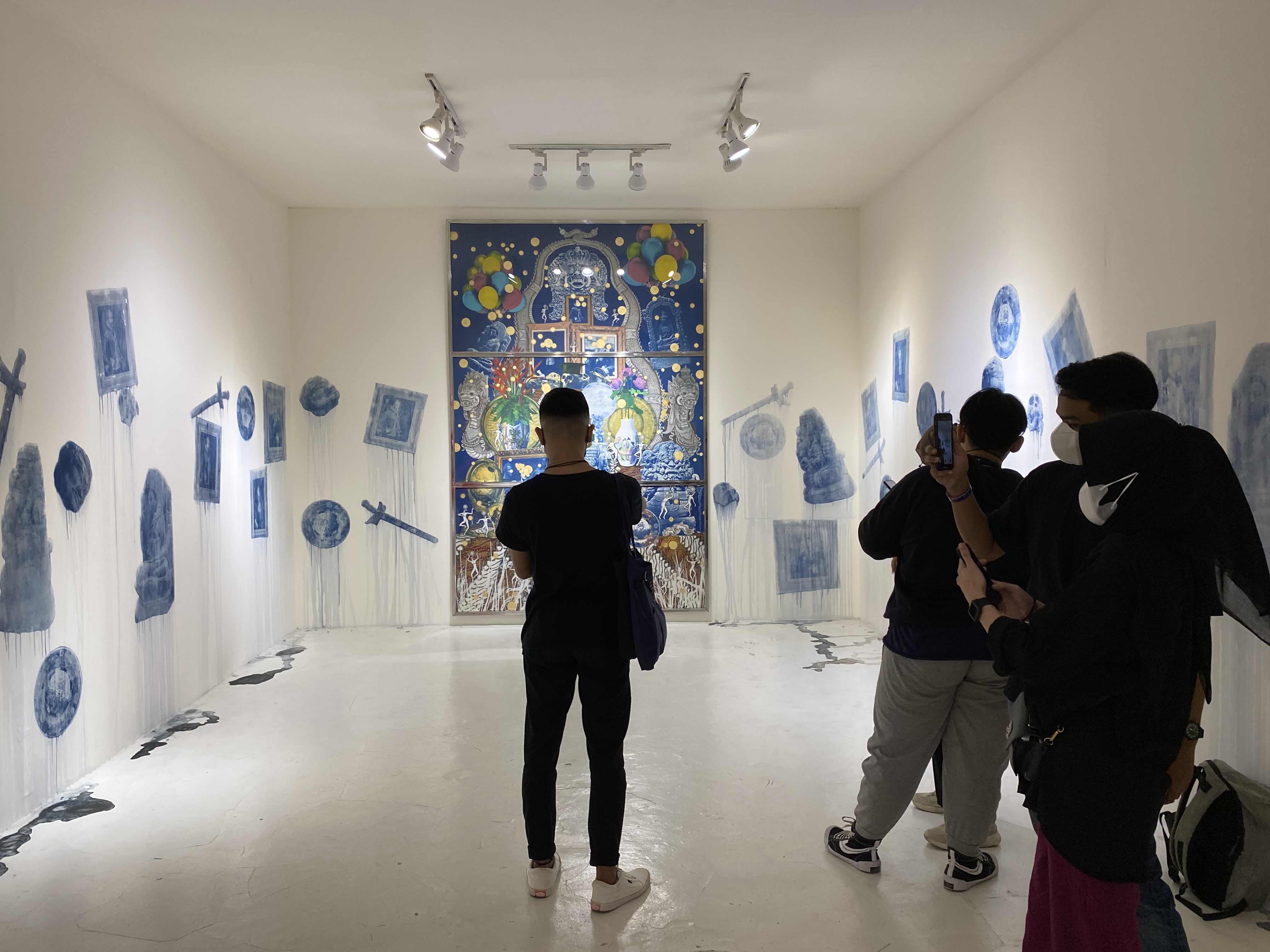
A contemporary art museum occupying a campus with deep roots in Indonesian art education, from Indonesia’s first visual art school to a major institute of the arts.
At a glance
Jogja National Museum is a contemporary art institution managed by Yayasan Yogyakarta Seni Nusantara. The museum operates within a significant educational legacy on its grounds.
History
The site’s history as an arts center began in 1950 with the founding of ASRI, Indonesia’s first visual art school. In 1984, the Faculty of Visual Art and Design (FSRD) was established on the campus. These institutions eventually became part of the Indonesian Institute of the Arts, Yogyakarta, before the museum’s establishment under current management.
What you see
The museum occupies a complex of buildings that evolved from its pedagogical origins. The campus retains structures associated with its former roles as a teaching institution and art school.
Cultural significance
Jogja National Museum represents Indonesia’s commitment to contemporary visual arts while honoring the country’s pioneering art education. Yogyakarta’s position as a cultural center is reinforced by this institution’s presence and programming.
Key facts
- Location: Yogyakarta, Indonesia
- Coordinates: −7.80°, 110.35°
- Manages: Contemporary art collection and exhibitions
Practical information & getting there
Jogja National Museum is located in Yogyakarta, a major cultural city in central Java accessible by air and road. Check the museum’s official channels for current hours, admission fees, and exhibition schedules before visiting.
Sources & resources
Find it on the map
See this place and what’s around it →📷 Become a Cultural Heritage Online photographer
Share your photos of places: they stay published under your name as the author. The more they're seen, the more you get noticed — and soon a contest will reward the most appreciated photos.
Log in or sign up free to add a photoIs this page about you?
This page is read by travellers and heritage enthusiasts who find it on Google. Tell us how you are connected to this place and we will take it from there.