
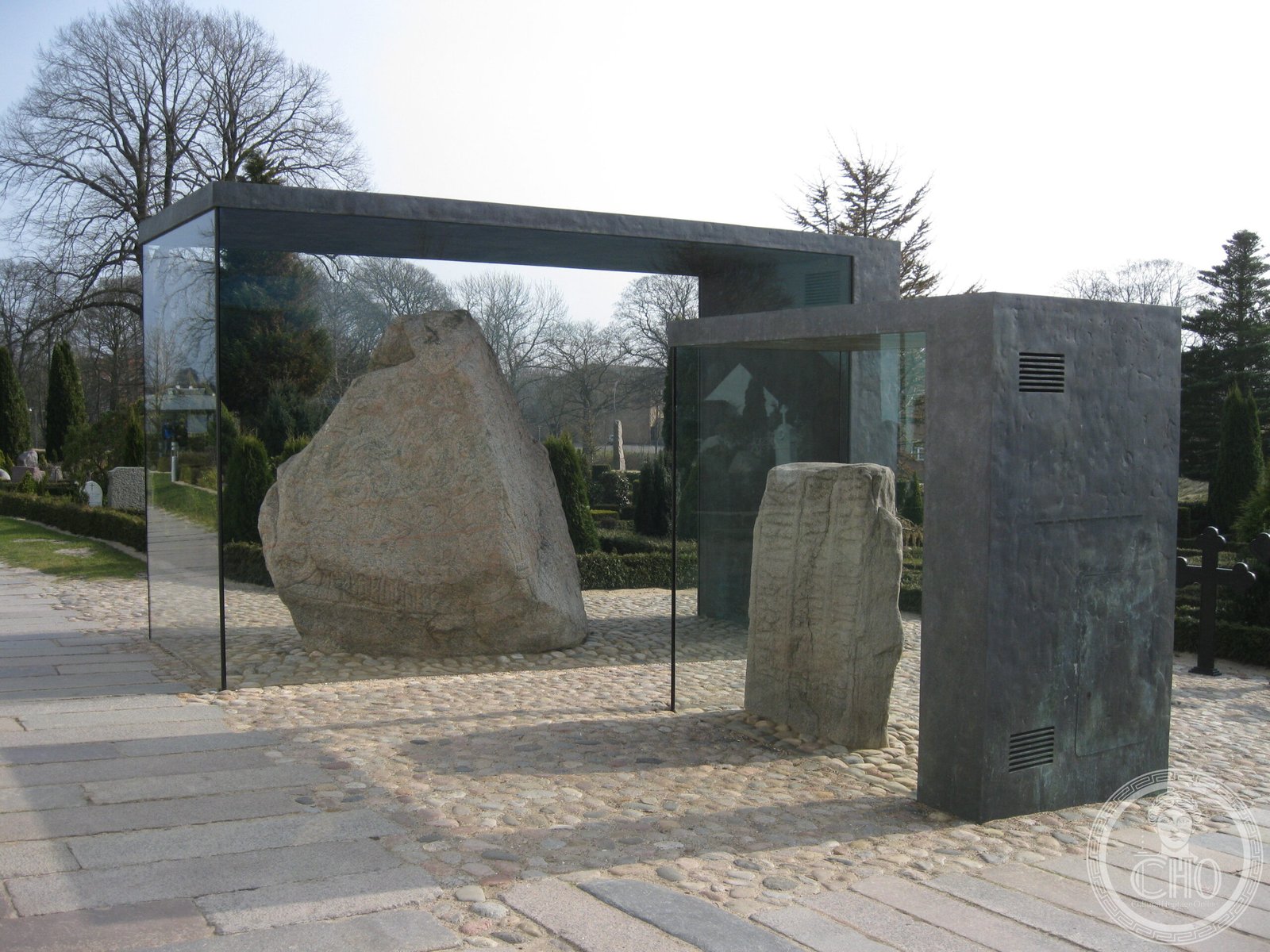
Two monumental runestones carved in the 10th century document Denmark’s transition from paganism to Christianity, commissioned by its greatest kings.
At a glance
The Jelling stones are among Denmark’s most significant monuments. The older stone was raised by King Gorm the Old to honour his wife Thyra. The larger stone was commissioned by his son, Harald Bluetooth, to commemorate both parents while celebrating his conquest of Denmark and Norway and the Christian conversion of the Danish people.
History
King Gorm the Old, Denmark’s first historical king, erected the smaller of the two stones in the 10th century as a memorial to Queen Thyra. His son Harald Bluetooth later commissioned the grander monument to celebrate his military achievements and religious transformation of the realm. The stones mark a pivotal moment when Denmark adopted Christianity, leaving a material record carved in granite for posterity.
What you see
Both stones are monumental in scale, their surfaces covered with runic inscriptions that form some of Denmark’s finest examples of runecraft. The carvings demonstrate the sophistication of 10th-century Nordic craftsmanship. At the site stands a small church and ancient burial mounds, which together create a layered archaeological landscape spanning sacred traditions.
Cultural significance
The Jelling stones are unparalleled witnesses to Nordic cultural transformation. They represent both pagan and Christian traditions side by side, capturing the religious shift that reshaped Scandinavian society. The runic inscriptions are considered the best known in Denmark, offering invaluable records of 10th-century royal power and faith.
Key facts
- Country: Denmark
- Town: Jelling
- Period: 10th century
- Commissioned by: King Gorm the Old (older stone) and King Harald Bluetooth (larger stone)
- UNESCO World Heritage status: Inscribed 1994 (with burial mounds and church)
- Coordinates: 55.757°N, 9.419°E
Practical information & getting there
The Jelling stones are located in the town of Jelling in central Jutland, Denmark. The site is accessible year-round and includes interpretive signage explaining the historical context. For current visiting hours and any seasonal information, contact local tourism services in the Vejle region.
Sources & resources
Find it on the map
See this place and what’s around it →📷 Become a Cultural Heritage Online photographer
Share your photos of places: they stay published under your name as the author. The more they're seen, the more you get noticed — and soon a contest will reward the most appreciated photos.
Log in or sign up free to add a photo