
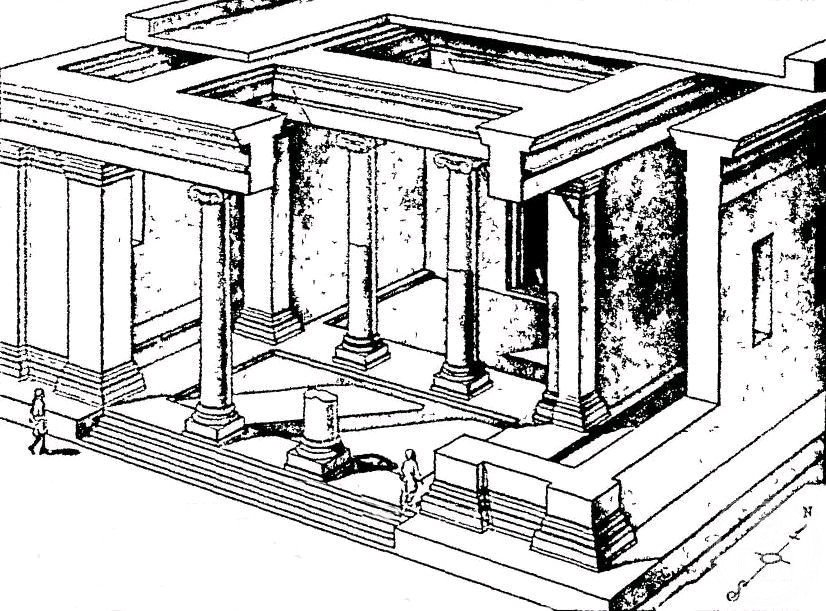
An ancient temple celebrated for its Ionic columns, Jandial stands as the most Hellenic structure yet discovered on Pakistani soil.
At a glance
Jandial is an archaeological site near the historic city of Taxila, distinguished by the remains of a temple featuring classical Ionic columns. Located 630 meters north of Sirkap’s northern gate, it represents a remarkable encounter between Greek architectural traditions and the Indian subcontinent.
History
The temple was excavated in 1912–1913 by the Archaeological Survey of India under the direction of John Marshall. This systematic excavation revealed a structure that would fundamentally reshape understanding of Hellenistic influence in the region.
What you see
The temple’s defining feature is its striking Ionic columns—the classical order that exemplifies Greek architectural refinement. These elements remain the most conspicuous evidence of the building’s Hellenic design and craftsmanship.
Cultural significance
Jandial represents a crucial intersection of cultures. Its designation as the most Hellenic structure on Pakistani soil underscores the profound reach of Greek civilization following Alexander the Great’s campaigns into South Asia, and the complex cultural synthesis that followed.
Key facts
- Location: Near Taxila, Pakistan
- Coordinates: 33.76°N, 72.83°E
- Distance from Sirkap: 630 meters north
- Excavation: 1912–1913 by the Archaeological Survey of India under John Marshall
Practical information & getting there
Jandial lies within the greater Taxila archaeological complex, accessible from Rawalpindi and Islamabad. As an active excavation site, visiting conditions may vary; contact local authorities or tourism offices for current access and visiting arrangements.
Sources & resources
Find it on the map
See this place and what’s around it →📷 Become a Cultural Heritage Online photographer
Share your photos of places: they stay published under your name as the author. The more they're seen, the more you get noticed — and soon a contest will reward the most appreciated photos.
Log in or sign up free to add a photoIs this page about you?
This page is read by travellers and heritage enthusiasts who find it on Google. Tell us how you are connected to this place and we will take it from there.