
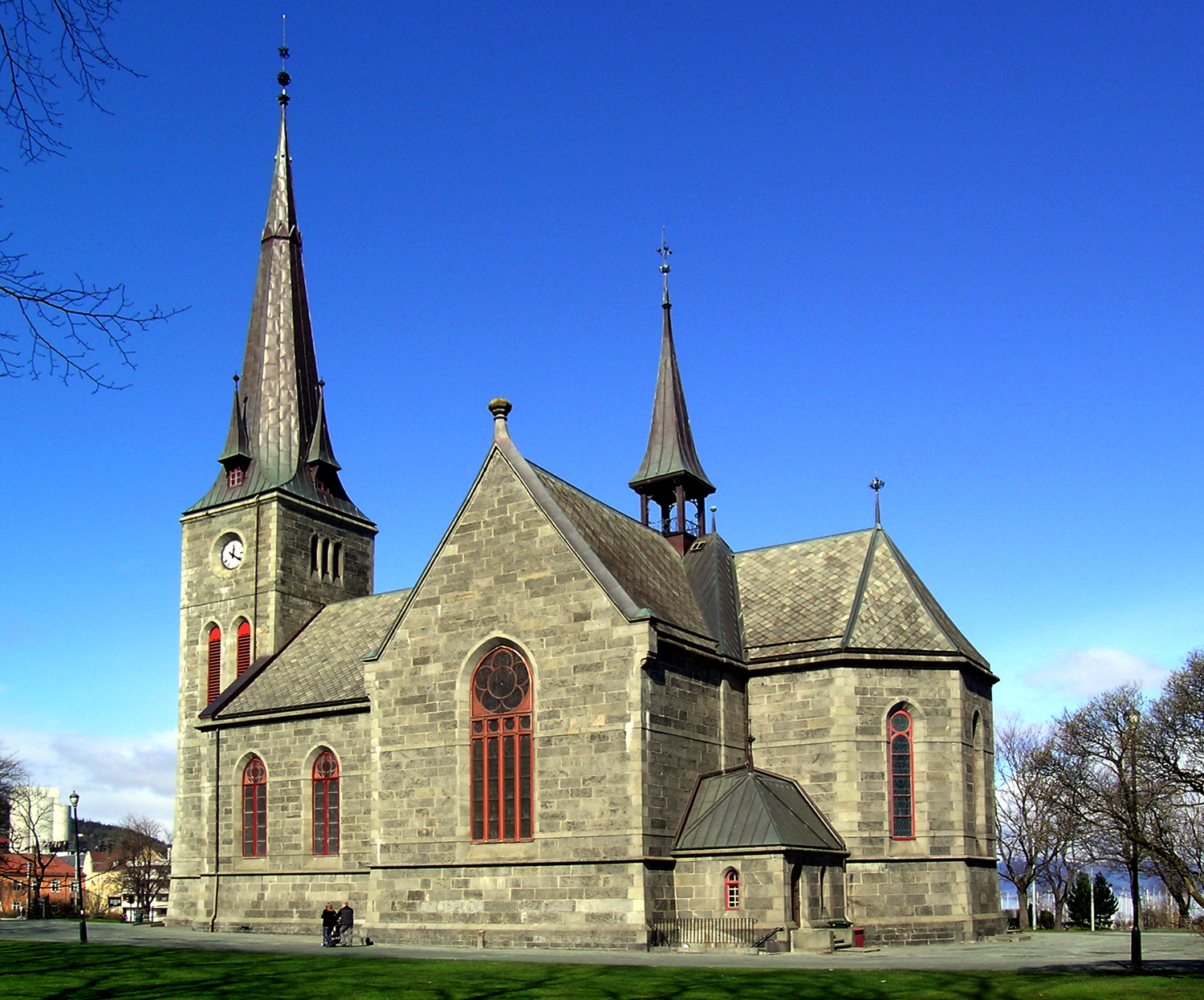
A stone cruciform parish church built on the narrow isthmus between river and fjord, designed by architect Eugene Sissenére and completed in 1889 by a local builder.
At a glance
Ilen Church stands on Ila, a 250-metre-wide isthmus in Trondheim, dividing the river Nid from the Trondheimsfjord. The gray stone structure seats approximately 550 worshippers today, reduced from its original capacity of 900 to meet fire safety codes.
History
Constructed in 1889, Ilen Church was built by the local building company of Jacob Digre. The architect Eugene Sissenére, a Trondheim-based designer born in 1858, created the plans. The parish belongs to the Heimdal og Byåsen deanery within the Diocese of Nidaros, part of the Church of Norway.
What you see
The church exemplifies late 19th-century Norwegian ecclesiastical design in its cruciform plan and gray stone construction. Originally designed to accommodate 900 people, the interior was later reconfigured to reduce seating capacity for compliance with modern fire regulations, fundamentally altering its spatial experience.
Cultural significance
Ilen Church represents the expansion of Trondheim’s parishes into residential areas during the city’s late-industrial growth. Its location on the distinctive Ila isthmus made it a focal point for the neighboring community, with the associated graveyard at nearby Ilsvika serving parishioners across generations.
Key facts
- Country: Norway
- City: Trondheim Municipality, Trøndelag county
- Built: 1889
- Architect: Eugene Sissenére
- Builder: Jacob Digre building company
- Current capacity: 550 people
- Original capacity: 900 people
- Coordinates: 63.4299, 10.3763
Practical information & getting there
The church is located in the Ila district of central Trondheim, on the isthmus between the Nid river and Trondheimsfjord. The associated parish graveyard is situated at Ilsvika, a short distance away. For current visiting hours, services, and access information, check the Diocese of Nidaros website or contact Trondheim Municipality.
Sources & resources
Find it on the map
See this place and what’s around it →📷 Become a Cultural Heritage Online photographer
Share your photos of places: they stay published under your name as the author. The more they're seen, the more you get noticed — and soon a contest will reward the most appreciated photos.
Log in or sign up free to add a photoIs this page about you?
This page is read by travellers and heritage enthusiasts who find it on Google. Tell us how you are connected to this place and we will take it from there.