
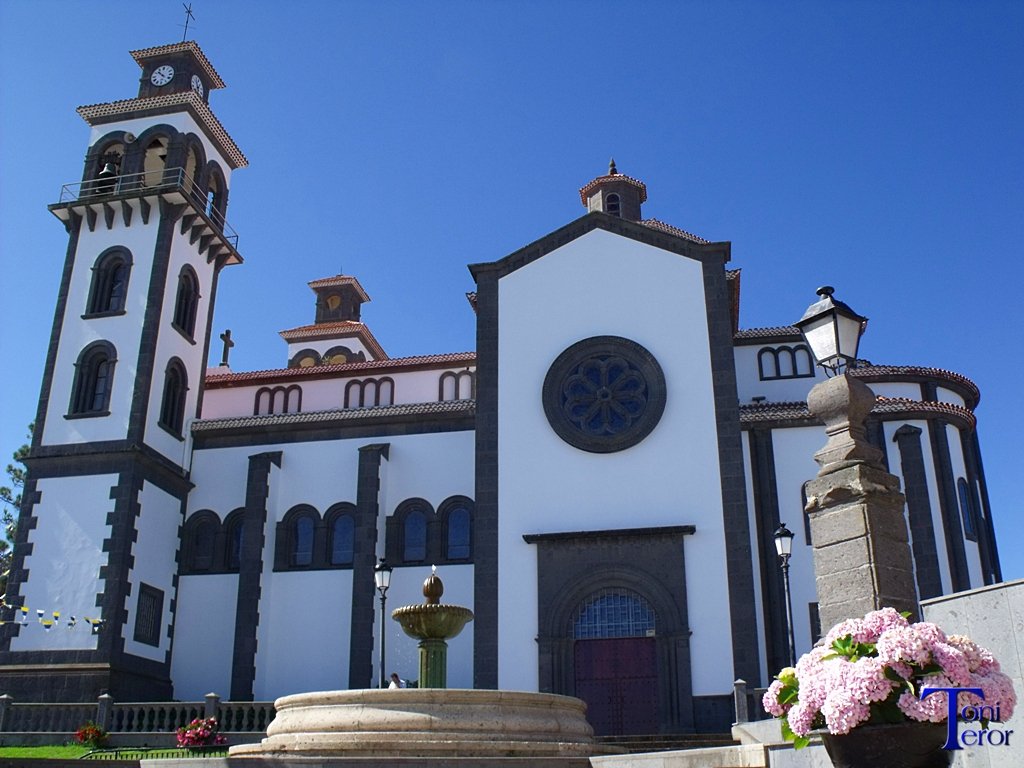
A modern parish church in Gran Canaria, built in the mid-twentieth century on the dramatic edge of a barranco, serving the mountain community of Moya.
At a glance
The Iglesia de la Virgen de la Candelaria stands in the village of Moya on Gran Canaria’s northern coast. Completed in 1957, this church represents contemporary religious architecture adapted to the Canary Islands’ rugged terrain. Its striking location perched above a barranco—the steep ravine characteristic of the archipelago—defines both its physical presence and its relationship to the landscape.
History
The church was completed in 1957, replacing or superseding earlier religious structures in Moya. It was built specifically to serve the parish community of this mountain settlement, marking an investment in local religious and civic infrastructure during Spain’s mid-century development.
What you see
The church’s defining feature is its precarious positioning on the barranco’s edge, a dramatic siting that anchors it to Moya’s topography. The structure dates to twentieth-century construction techniques and design principles, reflecting the architectural conventions of 1950s Spain adapted for the Canary Islands’ volcanic landscape.
Cultural significance
The Iglesia de la Virgen de la Candelaria represents the religious and communal identity of Moya, a settlement in the interior of Gran Canaria. Its location and architecture embody the relationship between human settlement and the island’s dramatic natural terrain.
Key facts
- Location: Moya, Gran Canaria, Canary Islands, Spain
- Completed: 1957
- Coordinates: 28.1108, −15.5842
Practical information & getting there
Moya is located in the northern interior of Gran Canaria. The church serves the local parish community. For visiting hours and access details, contact the local parish office or municipal authority in Moya.
Sources & resources
Find it on the map
See this place and what’s around it →📷 Become a Cultural Heritage Online photographer
Share your photos of places: they stay published under your name as the author. The more they're seen, the more you get noticed — and soon a contest will reward the most appreciated photos.
Log in or sign up free to add a photoIs this page about you?
This page is read by travellers and heritage enthusiasts who find it on Google. Tell us how you are connected to this place and we will take it from there.