
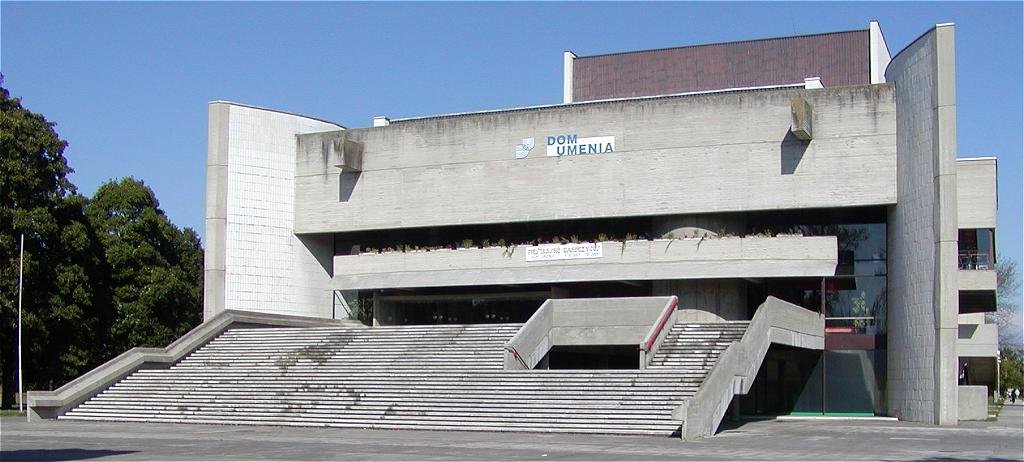
A modernist cultural center that marked a turning point in Slovak theatre architecture, designed by Ferdinand Milučký to harmonize contemporary form with vernacular inspiration.
At a glance
The House of Arts (Dom Umenia) stands on the Embankment of Ivan Krasko as Piešťany’s principal venue for performance and cultural assembly. Completed in 1980, it holds distinction as Slovakia’s first purpose-built theatre structure erected outside Bratislava in the post-war era.
History
Constructed between 1974 and 1979, the House of Arts emerged from a period when Slovak cultural institutions were consolidating their regional presence. The building opened to the public in 1980, representing both architectural ambition and cultural decentralization during the late Cold War era.
What you see
Architect Ferdinand Milučký drew inspiration from Slovak historical and folk architecture while crafting a modernist response to theatrical needs. The design emphasizes continuity between exterior and interior spaces, creating unified aesthetic experience. Material and spatial relationships reflect his synthesis of vernacular tradition and contemporary function.
Cultural significance
The House of Arts broke from the centralist model of cultural provision that had long concentrated major venues in the capital. Its construction signaled recognition that regional cities merited contemporary cultural infrastructure. The building remains a statement of mid-century Slovak architectural ambition and regional cultural identity.
Key facts
- Location: Piešťany, Slovakia (48.59225556°N, 17.83986667°E)
- Architect: Ferdinand Milučký
- Completed: 1980 (construction 1974–1979)
- Type: Theatre and cultural center
Practical information & getting there
The House of Arts is situated on the Embankment of Ivan Krasko in central Piešťany. For current programming, hours, and visitor information, consult local tourism resources or the venue directly.
Sources & resources
- House of Arts Piešťany – Wikipedia
- Cultural Heritage Online
Find it on the map
See this place and what’s around it →📷 Become a Cultural Heritage Online photographer
Share your photos of places: they stay published under your name as the author. The more they're seen, the more you get noticed — and soon a contest will reward the most appreciated photos.
Log in or sign up free to add a photoIs this page about you?
This page is read by travellers and heritage enthusiasts who find it on Google. Tell us how you are connected to this place and we will take it from there.