

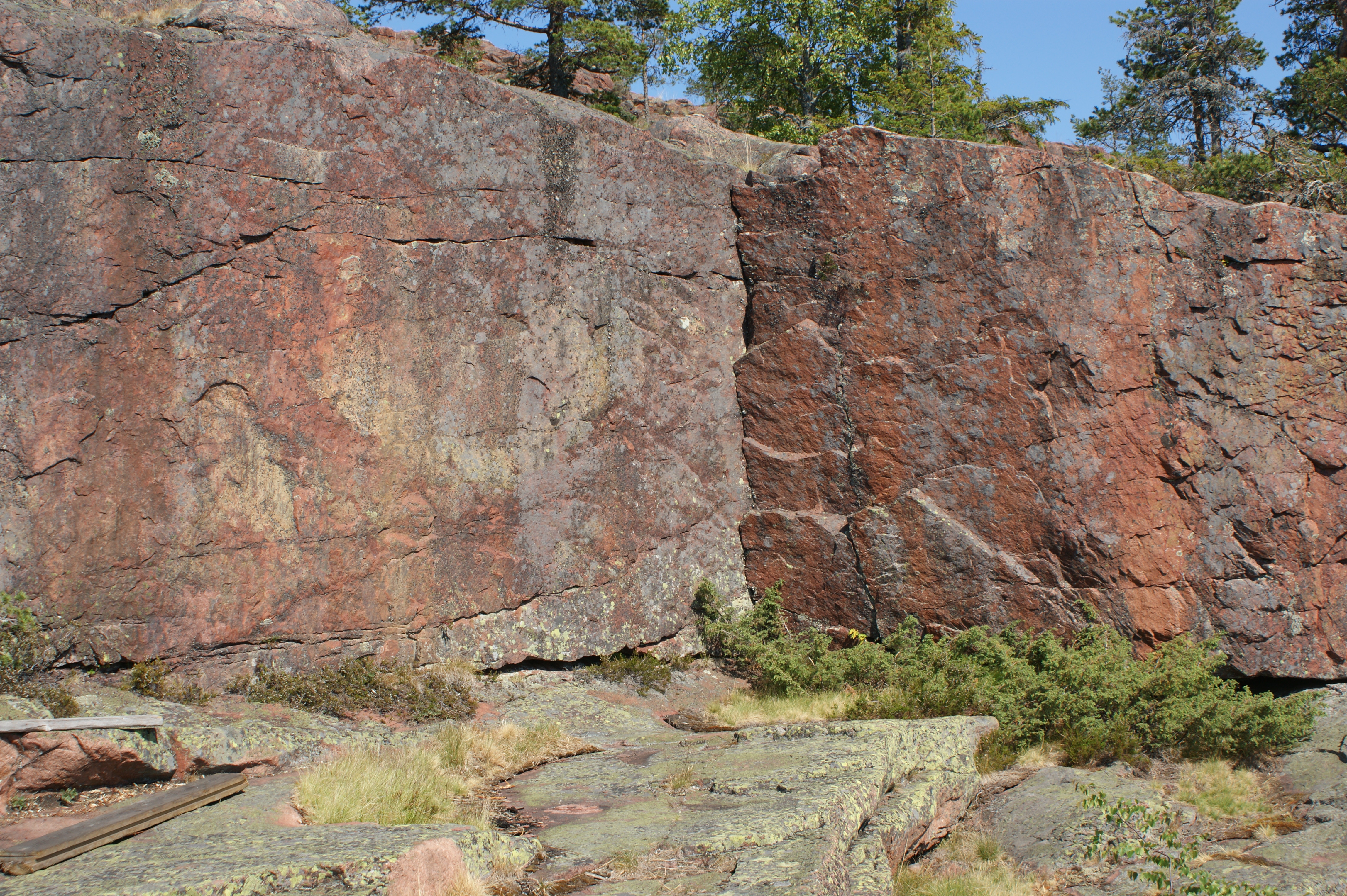
A dramatic stretch of Swedish coastline where the earth itself is visibly rising. The High Coast demonstrates post-glacial rebound at an unprecedented scale, with land that has climbed 300 metres since the last ice age.
At a glance
The High Coast borders the Gulf of Bothnia in northeast Sweden, spanning the municipalities of Kramfors, Härnösand and Örnsköldsvik. Its exceptional cliffs owe their height to millennia of geological upheaval. Together with Finland’s Kvarken, it forms a UNESCO World Heritage Site of global scientific importance.
History
This landscape was shaped by the retreat of massive glaciers at the end of the last ice age. As the weight of ice diminished, the underlying land began to rise—a process called isostatic rebound. Scientists first recognised and studied this phenomenon here, making the High Coast a foundational site for understanding post-glacial geology.
What you see
The High Coast’s defining feature is its unusually tall cliffs, sculpted by 300 metres of vertical land rise since glaciation ended. The landscape reflects the dynamic interplay between glacial processes and the earth’s gradual but relentless upward movement—a geological story written in stone.
Cultural significance
The High Coast holds profound importance for earth sciences. It remains a primary location for research into post-glacial rebound and eustacy, offering visible proof of planetary processes. Its UNESCO designation recognises both the exceptional geology and its role as a unique natural laboratory for understanding isostatic rebound.
Key facts
- Country: Sweden
- Region: Ångermanland, northeast Sweden
- Coordinates: 63°N, 18.5°E
- UNESCO World Heritage Site: High Coast/Kvarken Archipelago (shared with Finland)
- Post-glacial land rise: 300 metres since the last ice age
Practical information & getting there
The High Coast stretches across the municipalities of Kramfors, Härnösand and Örnsköldsvik along Sweden’s Gulf of Bothnia coast. For current visitor information, transportation options and access details, consult local tourism resources.
Sources & resources
Find it on the map
See this place and what’s around it →
📷 Become a Cultural Heritage Online photographer
Share your photos of places: they stay published under your name as the author. The more they're seen, the more you get noticed — and soon a contest will reward the most appreciated photos.
Log in or sign up free to add a photo