
The imperial residence and administrative heart of Japan’s Nara period, Heijō Palace embodied the centralised government model adopted from China. Today, excavated remains reveal the architectural ambitions of an eighth-century court.
At a glance
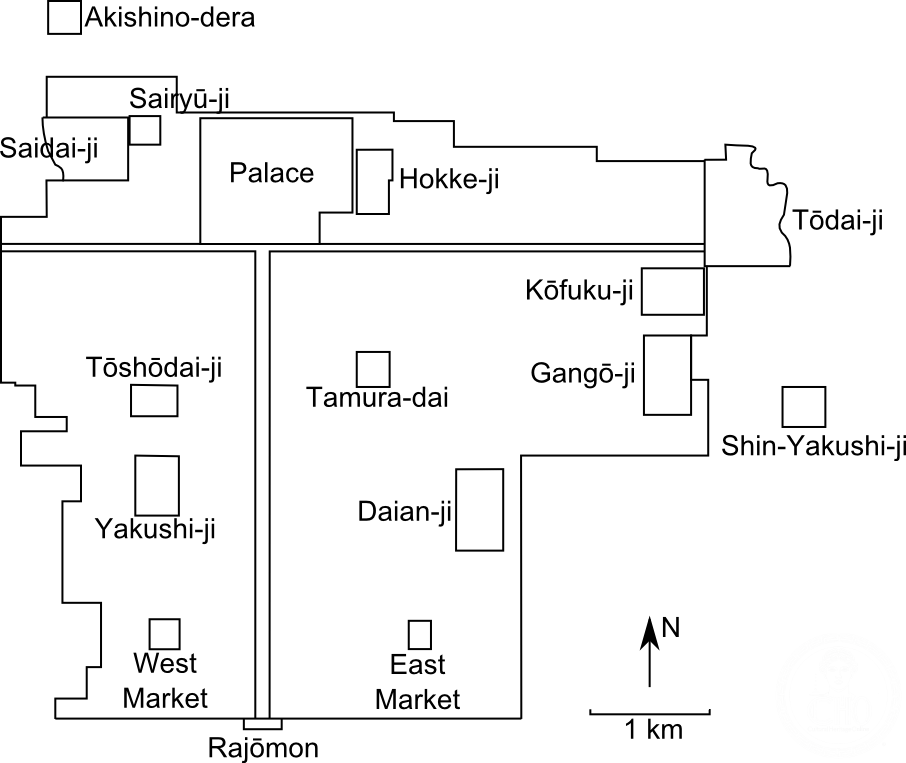
Heijō Palace served as the imperial residence and governmental centre of Nara from 710 to 794 AD. Built in the north-central area of the capital city Heijō-kyō (modern Nara), it comprised a large walled enclosure containing ceremonial and administrative buildings, with a separately fortified Inner Palace reserved for the emperor’s residence and family.
History
The palace was constructed to realise Japan’s seventh-century adoption of the Chinese centralised government model, establishing a new architectural and administrative framework. For most of the Nara period, it functioned as the seat of imperial power and the Daijō-kan, the council governing the Eight Ministries.
When the capital moved to Heian in 794, palace structures were either relocated or destroyed by fire and natural disasters. The site fell into agricultural use, and physical traces nearly vanished—though the location remained known through historical records. Systematic excavations began in the 1970s, with large-scale reconstruction efforts following from the 2000s onward, informed by contemporary literary sources and archaeological findings.
What you see
The palace’s layout reflected Chinese urban design principles. A substantial rectangular walled enclosure, the daidairi, contained government ministries and ceremonial halls. Within this stood the separately walled Inner Palace, housing the emperor’s living quarters, residences for imperial consorts, and ceremonial buildings directly associated with the imperial person.
Today’s visitors encounter archaeological remains and reconstructed structures based on excavation evidence and historical texts, revealing the spatial organisation and architectural ambitions of Nara’s imperial court.
Cultural significance
Heijō Palace represents a pivotal moment in Japanese history: the adoption and adaptation of Chinese governmental and architectural models. Its design and organisation demonstrate how Japan deliberately structured its state apparatus around a sacred imperial centre, a pattern that influenced subsequent capitals and political organisation for centuries.
The palace grounds also illuminate daily court life, elite residency patterns, and the relationship between ceremonial function and political authority in the ancient Japanese state.
Key facts
- Location: Nara, Japan
- Coordinates: 34.69°N, 135.80°E
- Period: 710–794 AD (Nara period)
- UNESCO World Heritage Site: Yes (1998, as part of Historic Monuments of Ancient Nara)
Practical information & getting there
The Heijō Palace archaeological site and museum complex is located within Nara. Visitors can access reconstructed palace buildings and excavation displays. For current opening hours, admission fees, and transport options, consult local visitor information—the site’s accessibility and exhibits are subject to seasonal variation and ongoing conservation work.
Sources & resources
Find it on the map
See this place and what’s around it →📷 Become a Cultural Heritage Online photographer
Share your photos of places: they stay published under your name as the author. The more they're seen, the more you get noticed — and soon a contest will reward the most appreciated photos.
Log in or sign up free to add a photoIs this page about you?
This page is read by travellers and heritage enthusiasts who find it on Google. Tell us how you are connected to this place and we will take it from there.