
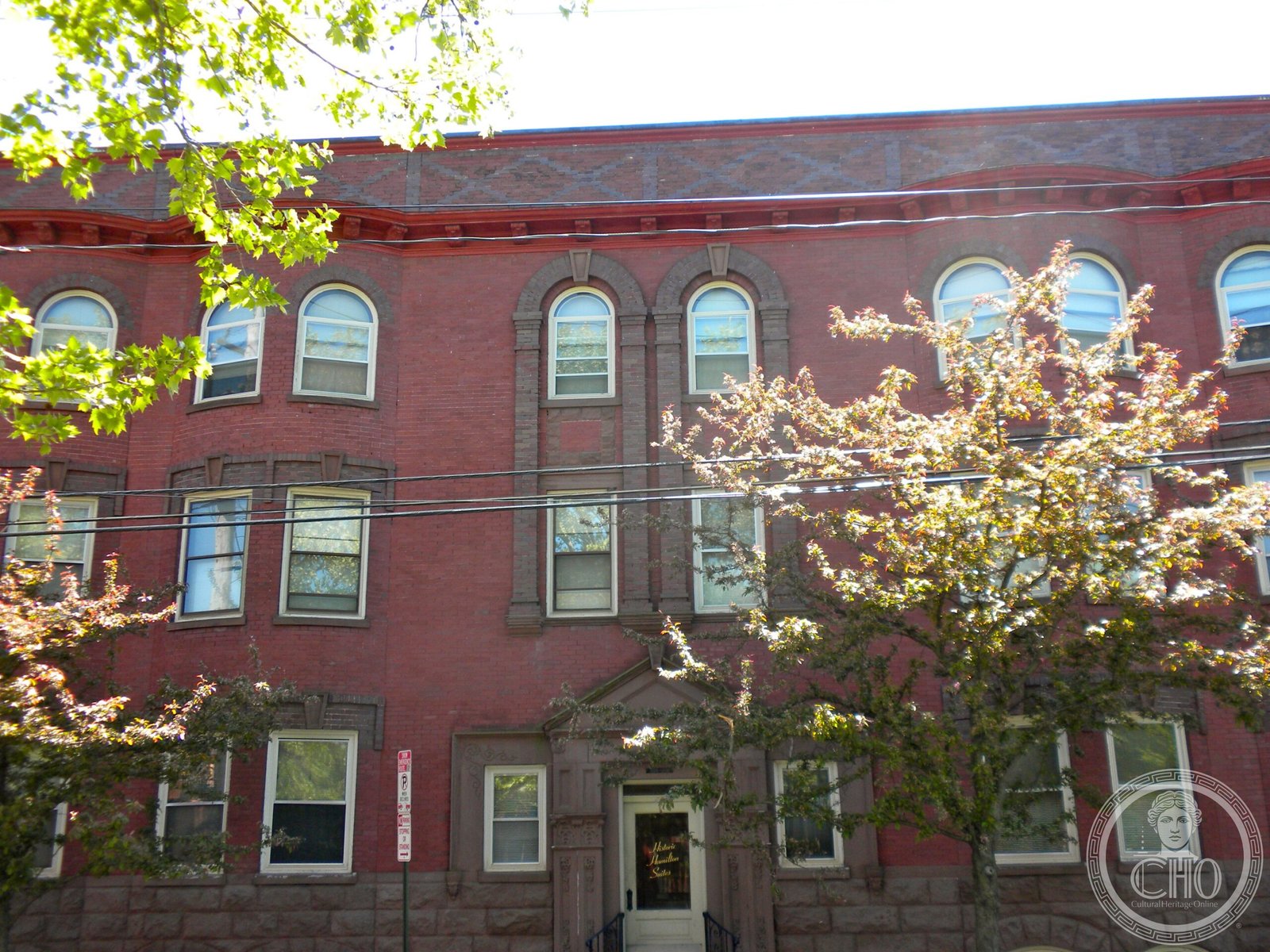
A pair of early twentieth-century residential buildings in brick and stone, the Hamilton Apartments represent the urban housing standards of Lancaster’s Edwardian era.
At a glance
Two three-story apartment buildings constructed in 1906, combining brick and stone in their facades. Both structures remain intact examples of early 1900s residential architecture in Lancaster County.
History
Built in 1906, the Hamilton Apartments emerged during Lancaster’s period of urban expansion at the turn of the twentieth century. The buildings were recognized for their historical significance and added to the National Register of Historic Places in 1984, acknowledging their role in the city’s architectural heritage.
What you see
Each building rises three stories and employs a mix of brick and stone in its construction. The materials and proportions reflect early twentieth-century residential design conventions, characteristic of urban apartment blocks developed for the middle classes.
Cultural significance
The Hamilton Apartments document residential building practices in Lancaster during the Edwardian period. Their preservation demonstrates the persistence of early commercial apartment architecture in Pennsylvania’s urban fabric.
Key facts
- Country: United States
- City: Lancaster, Pennsylvania
- Built: 1906
- Construction: Brick and stone
- Stories: Three
- National Register: Added 1984
- Coordinates: 40.0425, −76.3064
Practical information & getting there
The Hamilton Apartments are located in Lancaster, Pennsylvania. For detailed directions and visiting hours, contact Lancaster County’s visitor information services or check local heritage resources.
Sources & resources
Find it on the map
See this place and what’s around it →📷 Become a Cultural Heritage Online photographer
Share your photos of places: they stay published under your name as the author. The more they're seen, the more you get noticed — and soon a contest will reward the most appreciated photos.
Log in or sign up free to add a photoIs this page about you?
This page is read by travellers and heritage enthusiasts who find it on Google. Tell us how you are connected to this place and we will take it from there.