
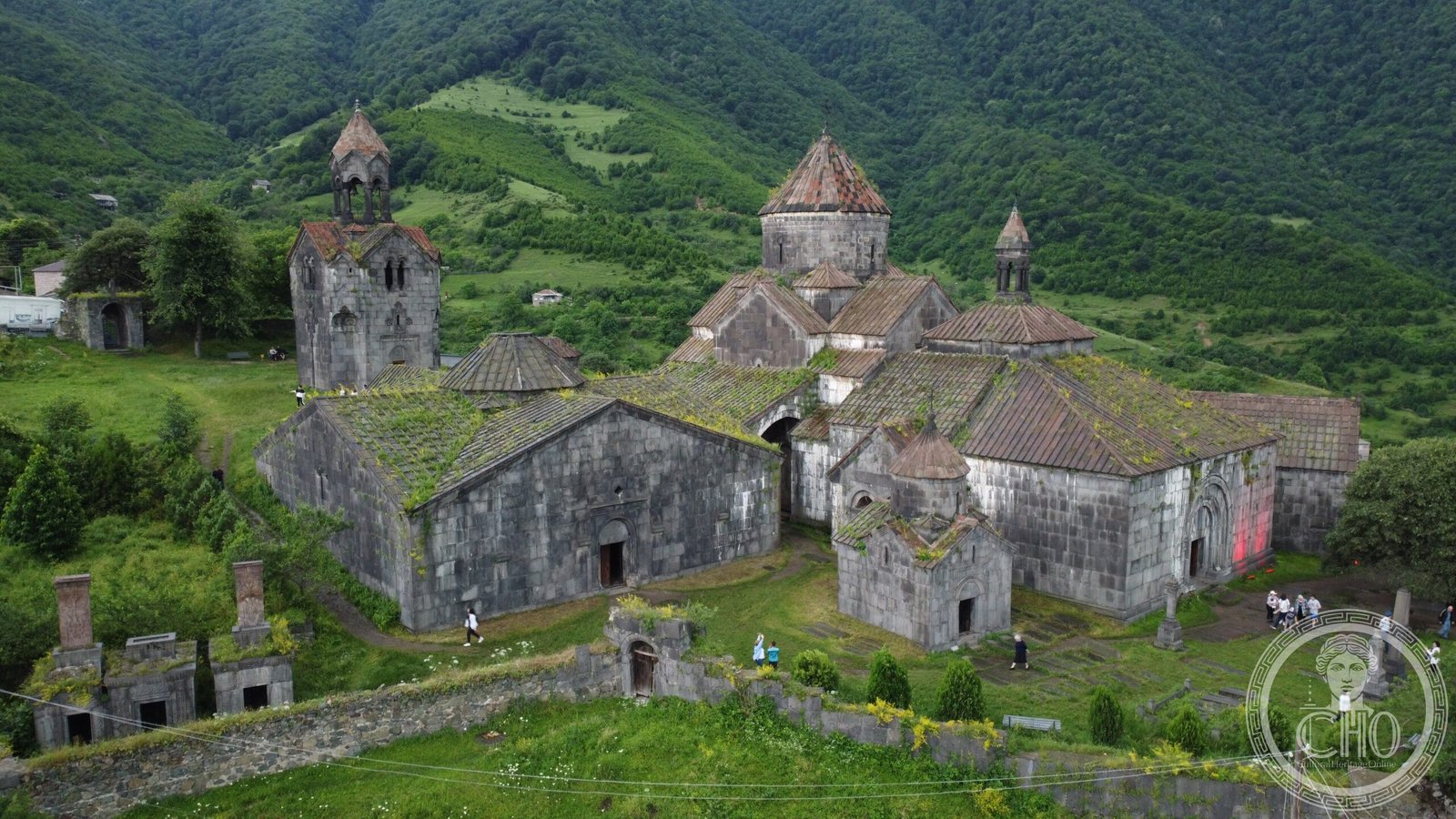
A medieval Armenian monastic complex whose stone churches and decorative reliefs embody centuries of theological learning and architectural refinement in the South Caucasus.
At a glance
Haghpat Monastery stands as a significant medieval religious centre in northern Armenia. Built over roughly three centuries, the complex reflects the theological and artistic priorities of its patrons and the master craftsmen who shaped its enduring form.
History
Construction of Haghpat Monastery began in the 10th century and continued through the 13th century, a period of considerable cultural and ecclesiastical activity in Armenia. The complex grew in stages, with successive generations adding churches, subsidiary buildings and carved monuments. The site functioned as a centre of monastic learning and pilgrimage throughout the medieval period.
What you see
The monastery comprises multiple stone churches and auxiliary structures arranged around courtyards. Armenian architectural traditions dominate—pointed arches, corbelled vaults and intricate geometric carving characterise the stonework. Khachkars (carved stone crosses) and relief panels adorning the exterior walls display the skilled stonemasonry for which medieval Armenian workshops were renowned. These decorative elements combine Christian iconography with abstract patterns refined over generations.
Cultural significance
Haghpat represents a distinctive phase of Armenian monastic culture when monasteries served as scriptoria, schools and centres of theological debate. The site preserves evidence of medieval Armenian approaches to sacred architecture, craftsmanship and religious practice. Its survival underscores the cultural continuity of the Armenian Christian tradition across the medieval centuries.
Key facts
- Country: Armenia
- Coordinates: 41.0939°N, 44.7119°E
- Period: 10th–13th century
- Also known as: Haghpatavank
Practical information & getting there
Haghpat Monastery is located in the village of Haghpat in northern Armenia. For current opening hours, access conditions and visitor services, consult local tourism resources or the monastery directly.
Sources & resources
Find it on the map
See this place and what’s around it →📷 Become a Cultural Heritage Online photographer
Share your photos of places: they stay published under your name as the author. The more they're seen, the more you get noticed — and soon a contest will reward the most appreciated photos.
Log in or sign up free to add a photoIs this page about you?
This page is read by travellers and heritage enthusiasts who find it on Google. Tell us how you are connected to this place and we will take it from there.