
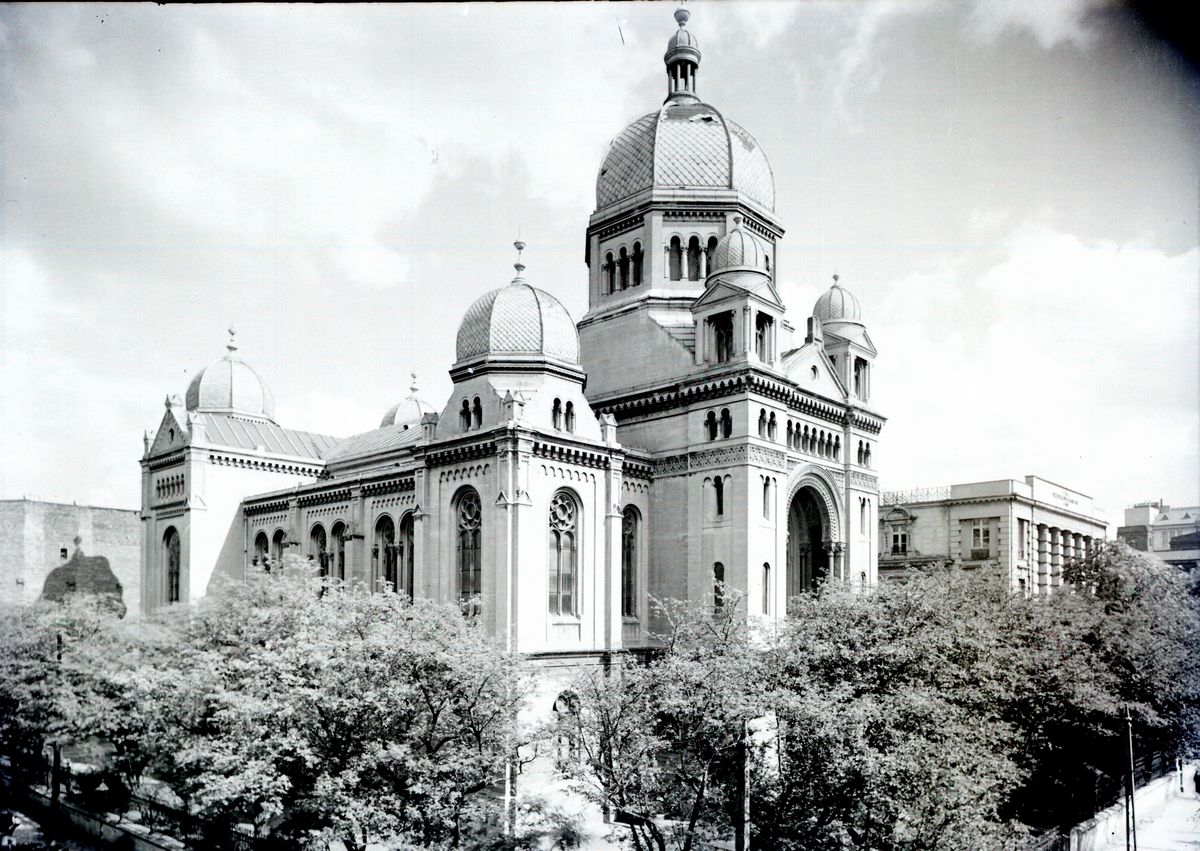
A Romanesque Revival synagogue that served Łódź’s Reform Jewish community until its destruction in 1939, now remembered as a lost landmark of Polish Jewish heritage.
At a glance
The Great Synagogue of Łódź was a major religious and architectural monument designed by Adolf Wolff and completed in 1887. It served the city’s thriving Jewish community as a Reform congregation house of prayer for over fifty years.
History
Construction finished in 1887, positioning the synagogue within Łódź’s period of rapid industrial expansion and Jewish population growth. The building functioned as a vital community center until World War II. On November 14, 1939, Nazi forces destroyed the synagogue, erasing a symbol of the city’s once-vibrant Jewish cultural life.
What you see
Wolff designed the structure in the Romanesque Revival style, a choice reflecting late-nineteenth-century European synagogue architecture. The building’s formal aesthetic expressed both aspirations of integration and pride in Jewish identity during the period before its destruction.
Cultural significance
The synagogue represented the flourishing of Jewish religious and cultural life in Łódź during the late nineteenth century. Its destruction remains a pivotal moment in the city’s wartime history. Today, memory of the Great Synagogue stands as testimony to the rich heritage lost during the Holocaust.
Key facts
- Country: Poland
- City: Łódź
- Completed: 1887
- Architect: Adolf Wolff
- Style: Romanesque Revival
- Destroyed: November 14, 1939
- Coordinates: 51.77°N, 19.45°E
Practical information & getting there
The synagogue no longer stands; the site is located in central Łódź. Visitors interested in the city’s Jewish heritage can consult historical records and memorials dedicated to communities lost during the Holocaust.
Sources & resources
Find it on the map
See this place and what’s around it →📷 Become a Cultural Heritage Online photographer
Share your photos of places: they stay published under your name as the author. The more they're seen, the more you get noticed — and soon a contest will reward the most appreciated photos.
Log in or sign up free to add a photoIs this page about you?
This page is read by travellers and heritage enthusiasts who find it on Google. Tell us how you are connected to this place and we will take it from there.