

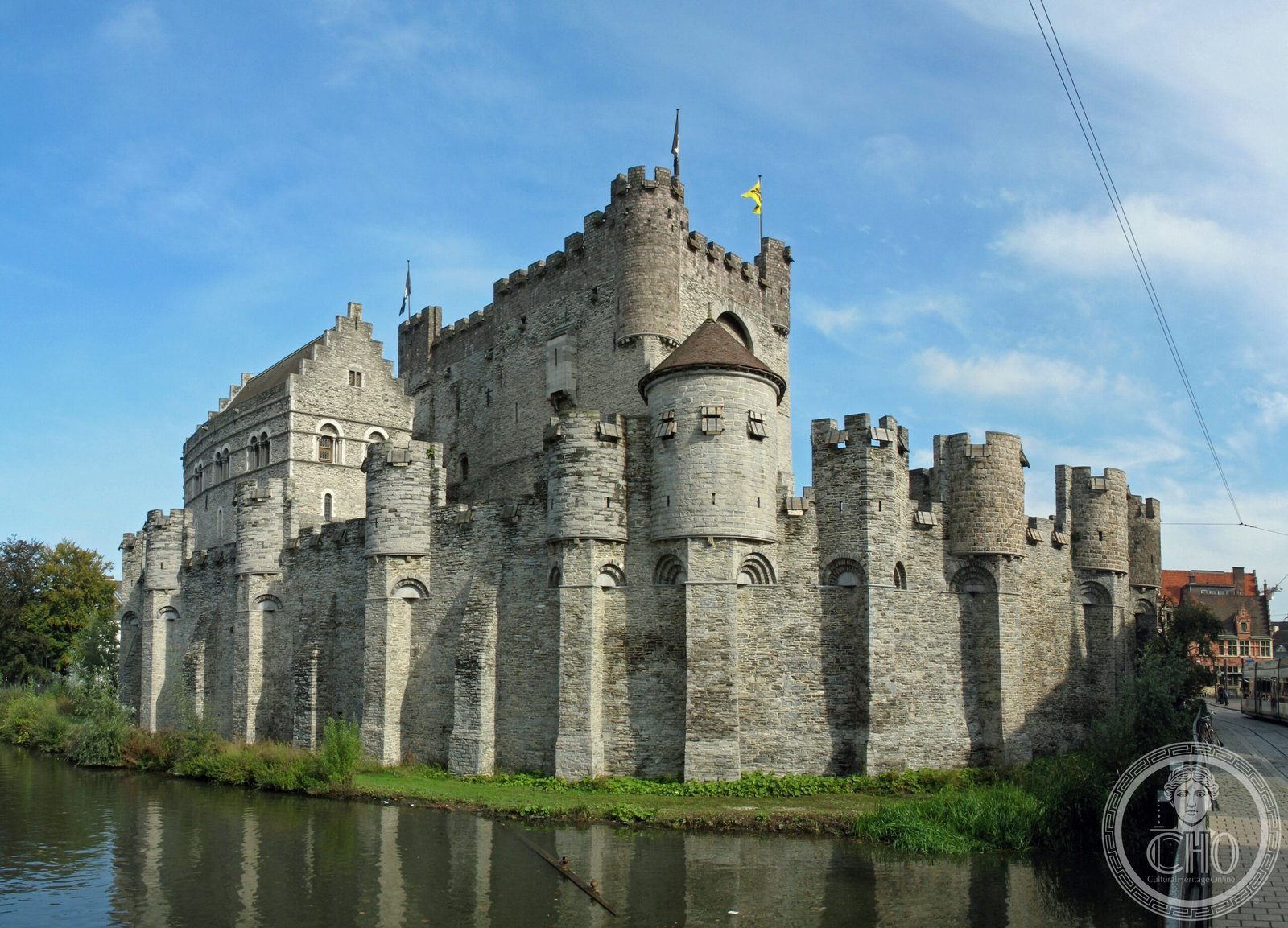
A fortified seat of medieval power, Ghent’s castle dominates the city skyline as a museum and symbol of Flemish sovereignty.
At a glance
The Gravensteen—literally “the Counts’ stone”—is a castle built in 1180 that served as the residence of the Counts of Flanders until the mid-14th century. Repurposed through the centuries as courthouse, prison, mint, and factory, it stands today as a restored museum and major Ghent landmark.
History
Constructed in 1180, the castle functioned as the seat of Flemish power and administration for the Counts of Flanders until 1353. After the counts departed, the building underwent successive transformations, serving as a court and prison. Later it housed a mint and, in an industrial turn, became a cotton mill. The castle underwent comprehensive restoration between 1893 and 1903, preserving its medieval character while adapting it for public use.
What you see
The castle displays characteristic medieval military architecture, with stone walls and fortified design typical of 12th-century Flemish strongholds. The structure combines defensive features with the residential spaces required of a princely residence.
Cultural significance
The Gravensteen represents the political and economic power of medieval Flanders. Its survival through centuries of changing use reflects the castle’s robust construction and the city’s commitment to preserving this emblem of civic identity. Today it anchors Ghent’s medieval quarter and draws visitors seeking to understand the region’s dynastic history.
Key facts
- Built: 1180
- Country: Belgium
- City: Ghent, East Flanders
- Coordinates: 51.0572, 3.7206
- Former uses: Residence, courthouse, prison, mint, cotton mill
- Restoration: 1893–1903
- Current status: Museum and landmark
Practical information & getting there
The castle is located in central Ghent and accessible to visitors as a museum. Consult current opening hours and admission details at the venue or tourism website before your visit.
Sources & resources
Find it on the map
See this place and what’s around it →📷 Become a Cultural Heritage Online photographer
Share your photos of places: they stay published under your name as the author. The more they're seen, the more you get noticed — and soon a contest will reward the most appreciated photos.
Log in or sign up free to add a photoIs this page about you?
This page is read by travellers and heritage enthusiasts who find it on Google. Tell us how you are connected to this place and we will take it from there.