
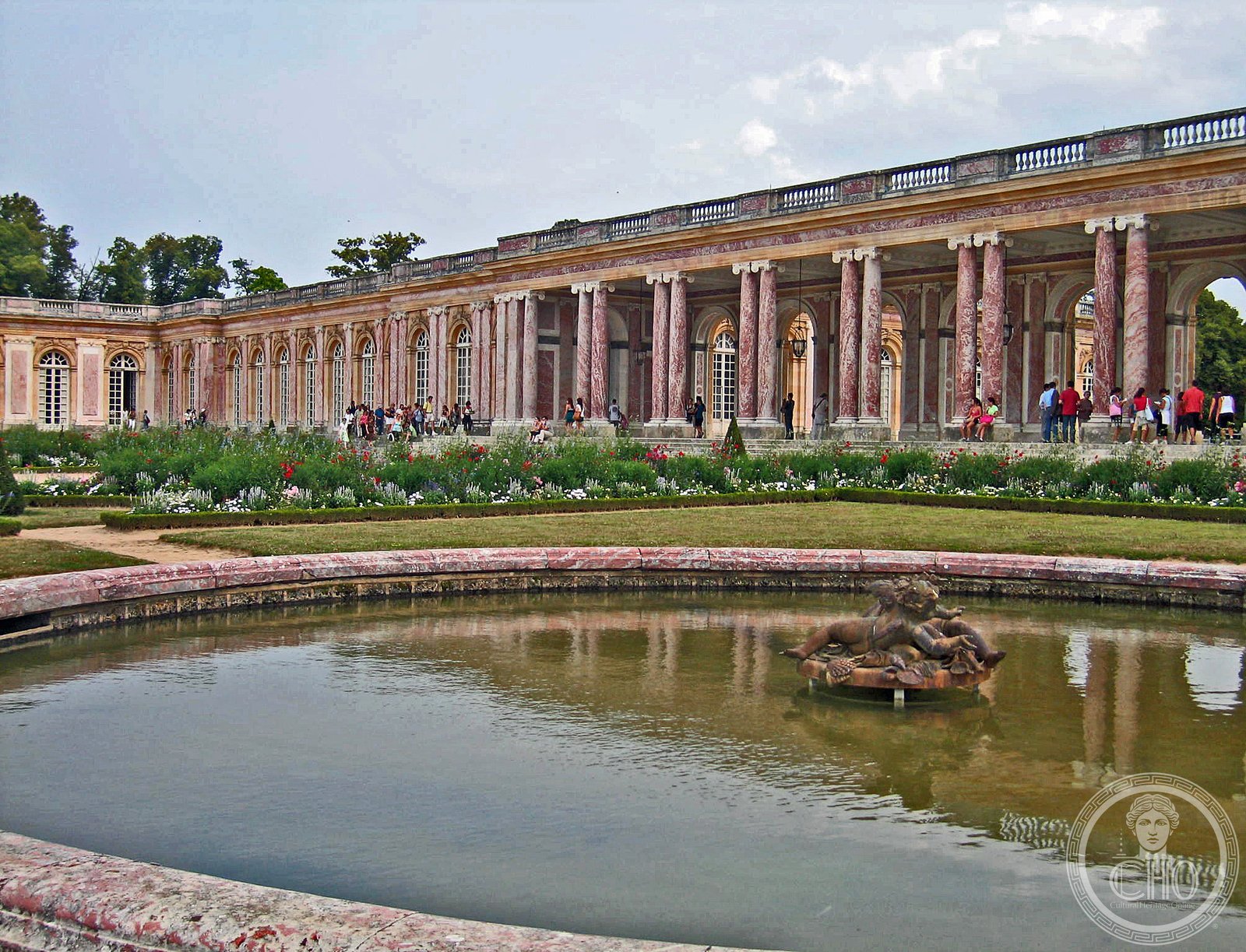
A French Baroque retreat within the Domain of Versailles, built by Louis XIV as an escape from court ceremony and a setting for intimate gatherings.
At a glance
The Grand Trianon stands in the northwestern sector of Versailles, a smaller château designed as a private sanctuary for the king and his guests. Unlike the formal palace, it offered a space for relaxed meals and leisure, away from the rigid protocols of the royal court.
History
Louis XIV commissioned the Grand Trianon as a personal retreat and to honor Madame de Montespan, his maîtresse-en-titre at the time. The structure exemplifies the king’s desire to create spaces within his vast domain that functioned separately from the ceremonial rigors of Versailles itself. The Grand Trianon sits within its own park, which later came to include the Petit Trianon, a smaller château erected in the 1760s under Louis XV.
What you see
The building embodies French Baroque style, characteristic of royal architecture during Louis XIV’s reign. Its design prioritized intimate scale and residential comfort over the monumental grandeur of the main palace.
Cultural significance
The Grand Trianon represents a shift in royal domestic life, reflecting the 17th-century aristocratic preference for private retreats and informal socializing. It demonstrates how even the most powerful monarchs sought respite from ceremony, establishing a model for royal country houses across Europe.
Key facts
- Location: Northwestern Domain of Versailles, France
- City: Versailles
- Coordinates: 48.81472222, 2.10472222
- Architectural style: French Baroque
- Commissioned by: Louis XIV
- Adjacent site: Petit Trianon (built 1760s, reign of Louis XV)
Practical information & getting there
The Grand Trianon is accessible as part of the Domain of Versailles. Consult the official Versailles website for current opening hours, admission prices, and guided tour options.
Sources & resources
Find it on the map
See this place and what’s around it →📷 Become a Cultural Heritage Online photographer
Share your photos of places: they stay published under your name as the author. The more they're seen, the more you get noticed — and soon a contest will reward the most appreciated photos.
Log in or sign up free to add a photoIs this page about you?
This page is read by travellers and heritage enthusiasts who find it on Google. Tell us how you are connected to this place and we will take it from there.