
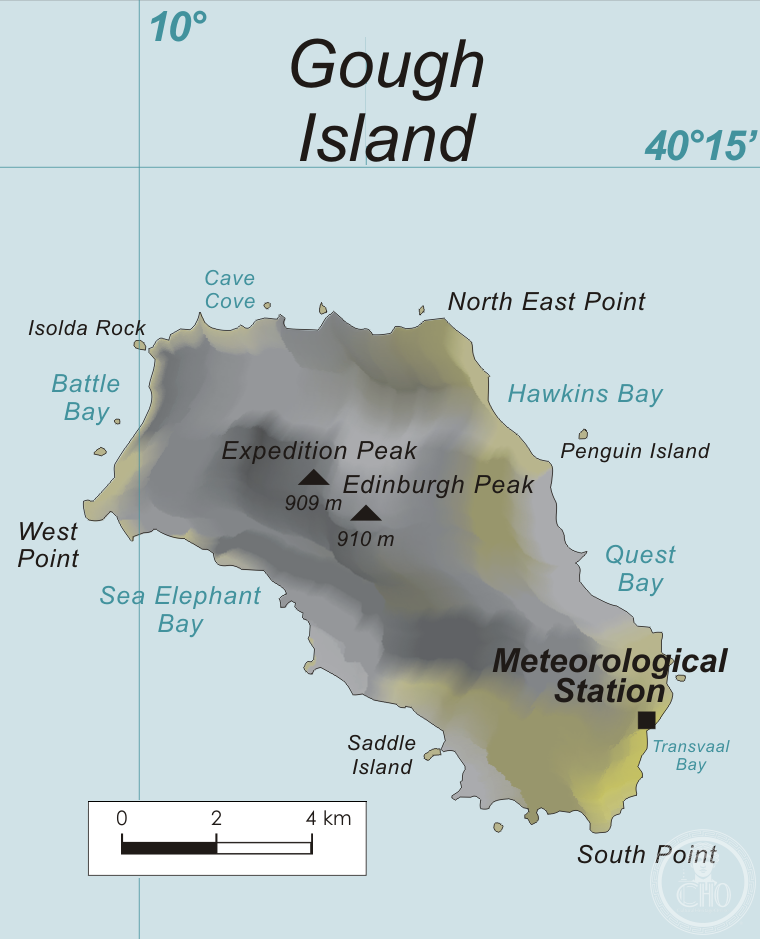
A remote volcanic island in the South Atlantic, Gough Island supports a weather station and ranks among the world’s most vital seabird sanctuaries.
At a glance
Gough Island is an uninhabited volcanic landmass roughly 400 kilometres south-east of the Tristan da Cunha archipelago. Its extreme isolation—over 3,200 kilometres from South America’s nearest point—makes it one of Earth’s remotest inhabited places. A small weather station operated by South Africa, with British permission, has maintained a year-round presence since 1956, typically staffed by six personnel.
History
Known historically as Gonçalo Álvares, the island entered modern records as a strategic location for meteorological observation. In 1956, South Africa established a weather station that continues operation today, making Gough Island part of a unique international arrangement within British territory.
What you see
The island’s landscape reflects its volcanic origin, with rugged terrain characterising its topography. The weather station remains the sole permanent structure—a functional outpost designed for scientific observation rather than aesthetic ambition.
Cultural significance
Gough Island holds immense ecological value as one of the world’s most important seabird colonies. Its designation as part of the UNESCO World Heritage Site “Gough and Inaccessible Islands” recognises its irreplaceable biodiversity. The island’s isolation has preserved endemic species and breeding grounds of global conservation importance.
Key facts
- Country: United Kingdom (dependency of Tristan da Cunha)
- Location: South Atlantic Ocean, 400 km south-east of Tristan da Cunha archipelago
- Coordinates: 40.32°S, 9.94°W
- Population: Six weather station personnel (no permanent residents)
- UNESCO World Heritage Site: “Gough and Inaccessible Islands”
- Weather station operational since: 1956
Practical information & getting there
Gough Island is not accessible to casual visitors. The weather station personnel are rotated periodically by ship, typically during the austral summer months when conditions permit. Scientific research and official business comprise the island’s only human activity. For information about the site’s conservation status and research programmes, consult UNESCO’s World Heritage documentation or South Africa’s National Antarctic Programme.
Sources & resources
Find it on the map
See this place and what’s around it →📷 Become a Cultural Heritage Online photographer
Share your photos of places: they stay published under your name as the author. The more they're seen, the more you get noticed — and soon a contest will reward the most appreciated photos.
Log in or sign up free to add a photo