

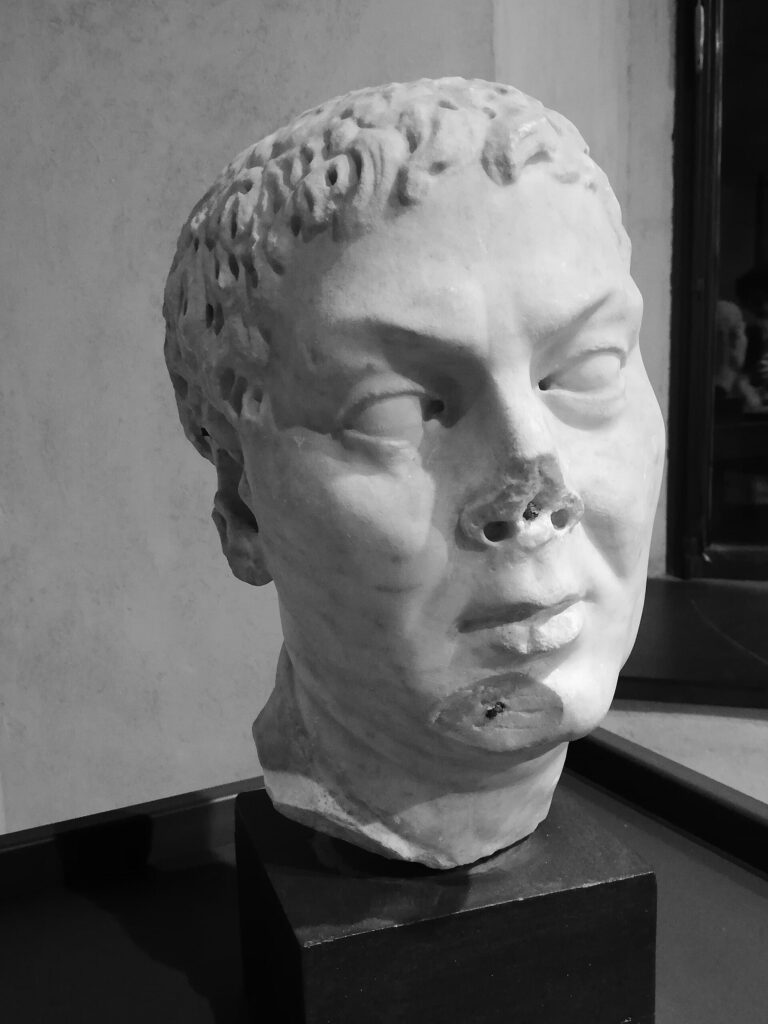
The Girolamo Rossi Civic Archaeological Museum is housed since 1989 in the Fortress of the Annunziata in Ventimiglia, on the Ligurian Riviera near the French border. Named after the 19th-century scholar Girolamo Rossi who pioneered the study of local antiquities, the museum presents finds from the Roman city of Albintimilium and from the prehistoric and medieval occupation of the Roia valley.
At a glance
- Type
- Civic archaeological museum inside a medieval fortress
- Period
- Fortress: built 1831–1836 for the Savoy government; collections span prehistoric to medieval eras
- Style
- Medieval military architecture; museum fit-out 20th century
- Location
- Fortezza dell’Annunziata, Ventimiglia, Province of Imperia, Liguria, Italy
- Coordinates
- 43.7904° N, 7.5956° E
Overview
Ventimiglia sits at the westernmost tip of the Italian Riviera, separated from France only by the Roia River, and its archaeological record reflects millennia of habitation at this strategic coastal crossing. The museum within the Fortezza dell’Annunziata gathers evidence from the Ligurian tribes, the Roman colony of Albintimilium, and the subsequent medieval phases of the town. It serves as the principal repository for antiquities excavated in the Ventimiglia area since the 19th century.
History
The fortress was built between 1831 and 1836 for the Savoy government, as the outwork of the Forte San Paolo, on the site of the Franciscan convent of the Annunziata founded in 1503; the young Camillo Benso, count of Cavour, supervised the preparatory works while stationed at Ventimiglia in 1828 and 1829. The museum owes its foundation largely to Girolamo Rossi (1831–1898), local historian and archaeologist whose excavations at the Roman theatre of Albintimilium and along the Via Julia Augusta generated the core collection. Finds were systematically assembled during the 20th century into a coherent display, and the institution was formally dedicated to Rossi in recognition of his foundational role.
What you see
The collections span prehistoric lithic tools, Iron Age Ligurian objects, and an extensive Roman section featuring sculpture, inscriptions, glass, ceramics, and everyday objects recovered from Albintimilium — whose excavated Roman theatre lies just below in the lower town. Medieval artefacts complete the sequence, illustrating continuity of settlement across the Roia valley. The fortress architecture itself, with its solid masonry and panoramic position above Ventimiglia Alta, is an attraction in its own right.
Cultural significance
As the custodian of Albintimilium’s material legacy, the Girolamo Rossi Museum is indispensable for understanding Roman Liguria and the ancient road corridor linking Italy to Gaul. It also preserves evidence of Ligurian tribal culture that predates Roman conquest, giving the institution a range unusual among smaller provincial museums.
Practical information
The museum is on the road that climbs from the centre of Ventimiglia towards Latte, about 200 metres from the historic centre and not in the upper town. Opening hours vary seasonally; check the official website of the Comune di Ventimiglia or contact the museum directly before visiting. Admission fees apply; reduced rates typically available for students and seniors.
Getting there
Ventimiglia is served by regional trains on the Genoa–Nice line; the station is in the lower town, approximately 15 minutes on foot or by local bus to Ventimiglia Alta. By car, take the A10 motorway to the Ventimiglia exit and follow signs for Ventimiglia Alta. Parking is limited in the historic upper town.
Sources
Il Forte dell'Annunziata — Museo Civico Archeologico Girolamo Rossi — Comune di Ventimiglia
Find it on the map
See this place and what’s around it →📷 Become a Cultural Heritage Online photographer
Share your photos of places: they stay published under your name as the author. The more they're seen, the more you get noticed — and soon a contest will reward the most appreciated photos.
Log in or sign up free to add a photoIs this page about you?
This page is read by travellers and heritage enthusiasts who find it on Google. Tell us how you are connected to this place and we will take it from there.
This entry stays online and free either way — and a free account lets you add to it yourself.