
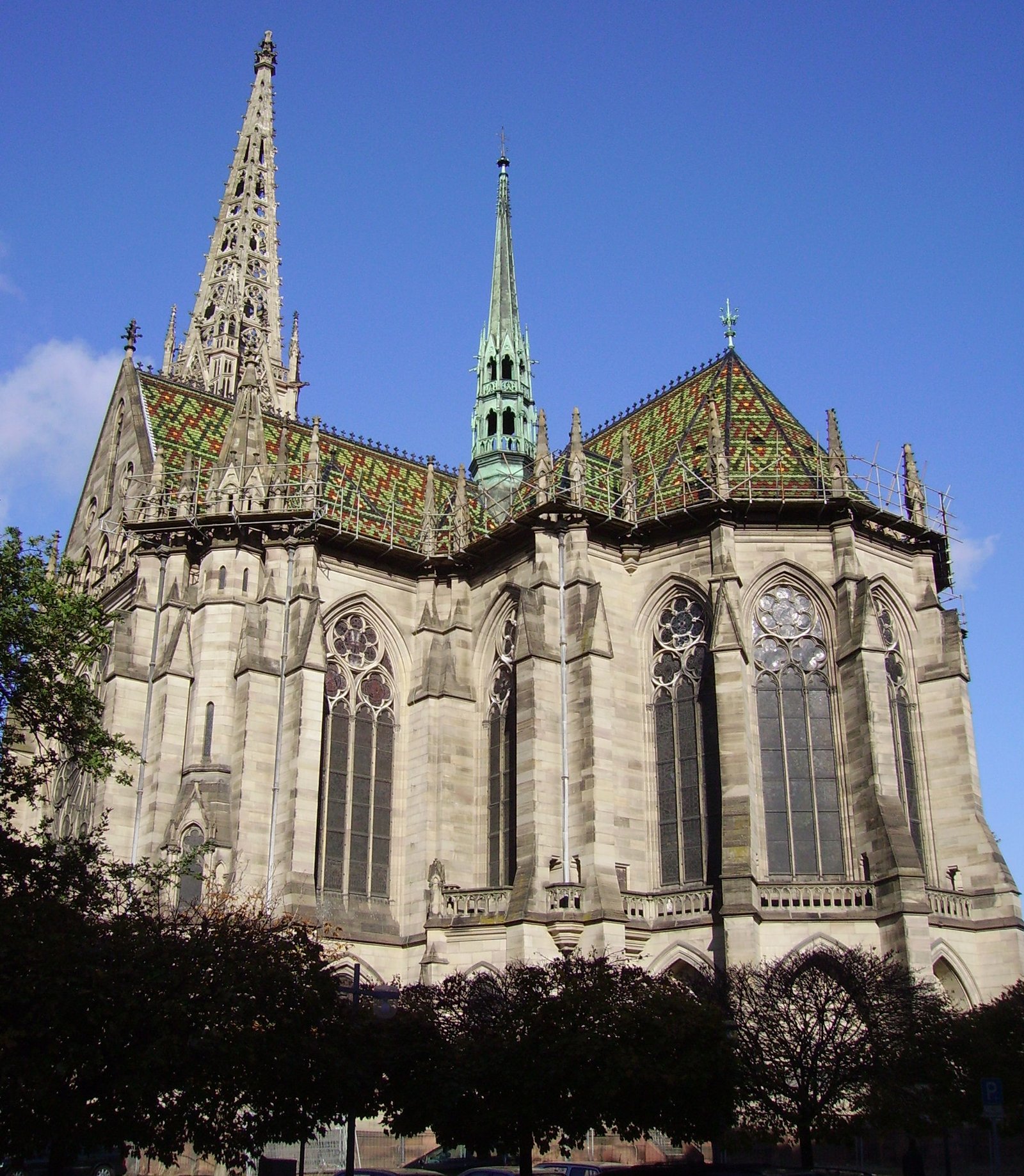
A monument to Protestant defiance, this twin-confession church in Speyer commemorates the pivotal 1529 protest against religious suppression at the Diet of the Holy Roman Empire.
At a glance
The Memorial Church of the Protestation unites Lutheran and Reformed traditions under one roof. Its tower, rising 100 metres, stands as the Palatinate’s tallest bell tower—a vertical declaration of faith built more than three centuries after the event it honors.
History
In 1529, Protestant rulers of the Holy Roman Empire made their formal protest at the Diet of Speyer, refusing to accept the majority’s decision to suppress the evangelical faith. Nearly four centuries later, between 1893 and 1904, this church was erected to commemorate that act of religious conscience. The building embodies the historical memory of a moment when princes chose doctrinal conviction over political convenience.
What you see
The church’s most striking feature is its bell tower—a commanding 100-metre structure that dominates Speyer’s skyline and claims status as the region’s highest. The building expresses both Lutheran and Reformed aesthetic sensibilities, reflecting the dual confessional identity of its congregation and founders.
Cultural significance
This church stands as a tangible bridge between Reformation history and modern religious practice. It represents not only commemoration but active ecumenical witness, housing a united Protestant community in a city deeply marked by centuries of religious conflict and dialogue.
Key facts
- Location: Speyer, Rhineland-Palatinate, Germany
- Coordinates: 49.3147, 8.43
- Construction: 1893–1904
- Denominations: Lutheran and Reformed Protestant
- Bell tower height: 100 metres (330 feet)—tallest in the Palatinate
- Commemorates: The Protestation at the Diet of Speyer, 1529
Practical information & getting there
The church is located in Speyer’s city centre. For visiting hours, services, and access information, consult the congregation’s website or contact Speyer’s tourist office.
Sources & resources
Find it on the map
See this place and what’s around it →📷 Become a Cultural Heritage Online photographer
Share your photos of places: they stay published under your name as the author. The more they're seen, the more you get noticed — and soon a contest will reward the most appreciated photos.
Log in or sign up free to add a photoIs this page about you?
This page is read by travellers and heritage enthusiasts who find it on Google. Tell us how you are connected to this place and we will take it from there.