
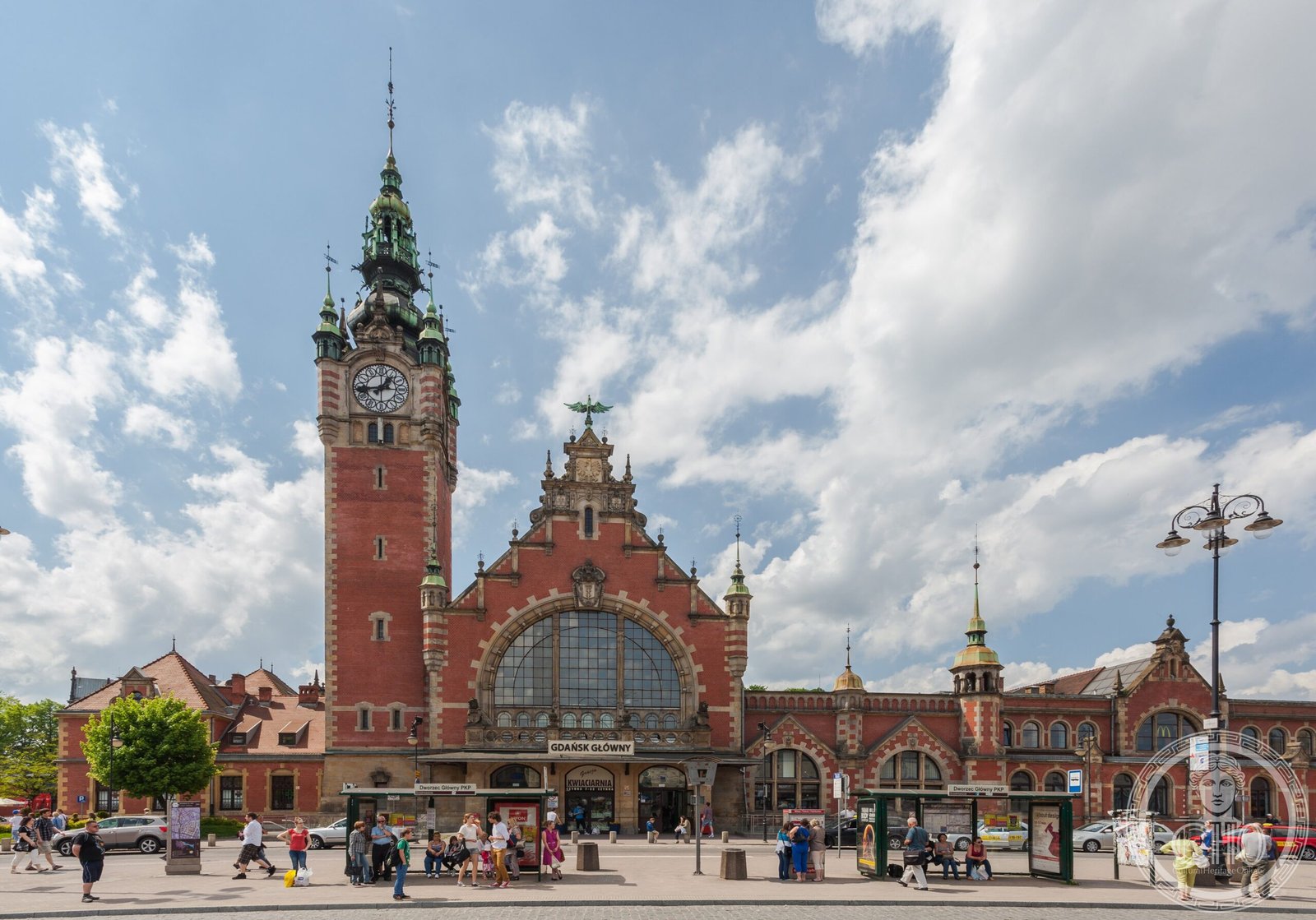
Poland’s principal gateway to the Baltic coast, this early 20th-century station anchors Gdańsk’s transport network and remains a vital junction for regional and national rail services.
At a glance
Gdańsk Główny—meaning “Gdańsk Main”—is the chief railway station serving Poland’s major port city on the Pomeranian coast. Opened in 1900, it sits at the intersection of five railway lines and handles passenger services from multiple operators daily.
History
The station opened in 1900, a period when Gdańsk was experiencing rapid industrial and commercial expansion. Its construction reflected the city’s strategic importance as a transportation hub connecting Warsaw, the Baltic Sea, and wider European networks.
What you see
Built around the turn of the century, the station reflects early 20th-century railway architecture. Details of its design and structure are preserved in its continued service to contemporary travelers.
Cultural significance
Gdańsk Główny remains central to the city’s identity as a trading and transport center. The station has served generations of travelers and continues to embody the connections between Gdańsk and Poland’s interior and European neighbors.
Key facts
- Country: Poland
- City: Gdańsk
- Opened: 1900
- Coordinates: 54.3556°N, 18.6447°E
Practical information & getting there
The station is served by PKP, Polregio, and SKM Tricity trains operating regular services. Masovian Railways trains run seasonal summer services. The station connects Warsaw–Gdańsk, Gdańsk–Stargard, and local Pomeranian routes.
Sources & resources
Find it on the map
See this place and what’s around it →📷 Become a Cultural Heritage Online photographer
Share your photos of places: they stay published under your name as the author. The more they're seen, the more you get noticed — and soon a contest will reward the most appreciated photos.
Log in or sign up free to add a photoIs this page about you?
This page is read by travellers and heritage enthusiasts who find it on Google. Tell us how you are connected to this place and we will take it from there.