

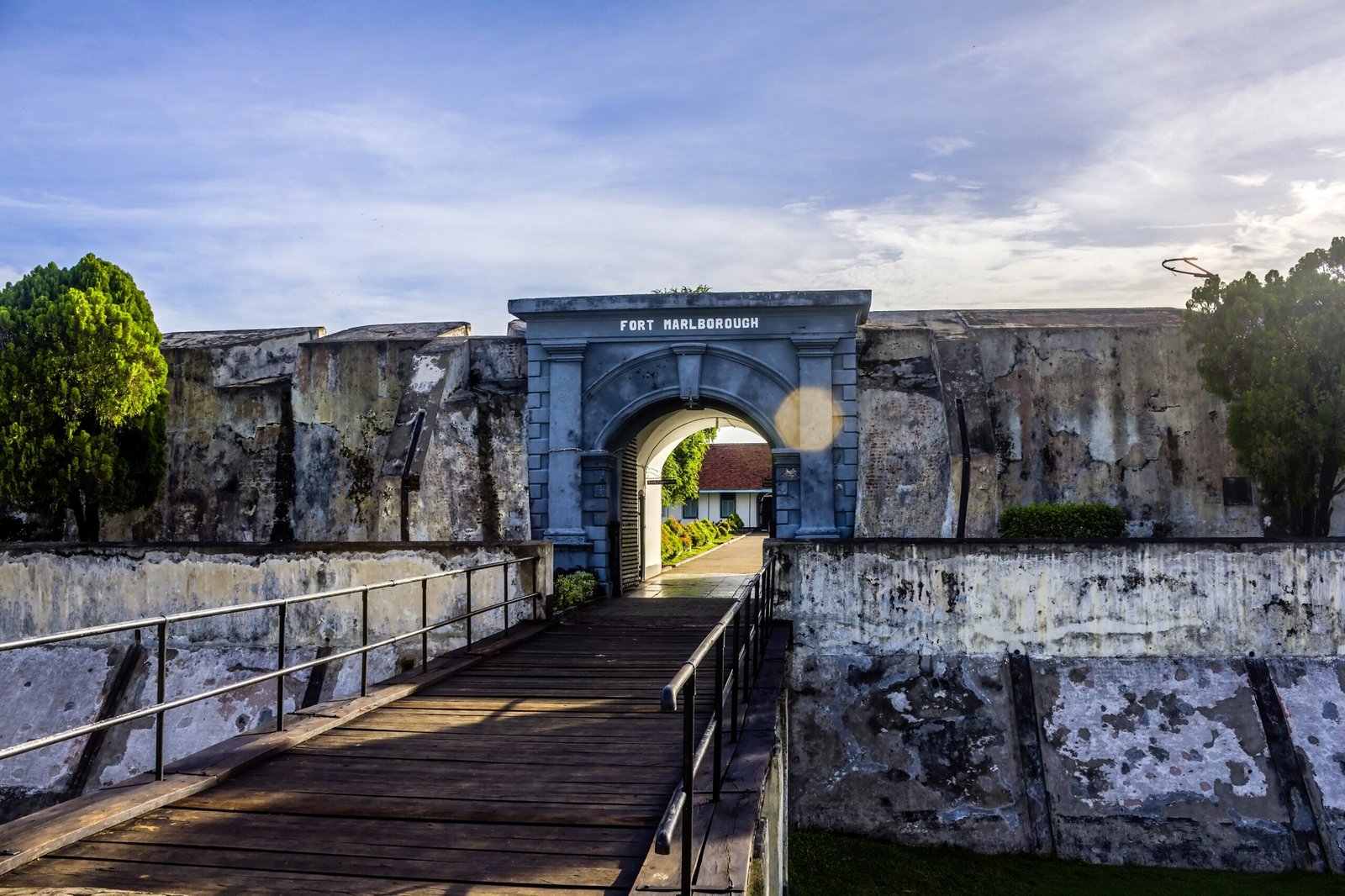
A formidable British East India Company stronghold built in the early 18th century to defend colonial interests in Sumatra, second only to Fort St. George in Madras among Eastern fortifications.
At a glance
Fort Marlborough stands as one of the most powerful British military installations in the eastern territories during the height of East India Company expansion. Constructed over six years under Governor Joseph Collett’s direction, it served as a defensive bastion for the company’s Residency in Bengkulu.
History
Built between 1713 and 1719, Fort Marlborough was established by the East India Company during its consolidation of regional control in Southeast Asia. Governor Joseph Collett oversaw its construction as a critical defensive position protecting British commercial and administrative interests in Sumatra.
What you see
The fort represents 18th-century military engineering adapted for tropical conditions. Its design reflects the strategic priorities of the East India Company, built to command the local geography and withstand regional threats.
Cultural significance
Fort Marlborough embodies a crucial chapter in colonial history and the broader story of European commercial expansion in Asia. As the second-strongest British fort in the Eastern territories, it demonstrates the scale of the East India Company’s ambitions and the architectural means by which distant territories were claimed and held.
Key facts
- Country: Indonesia
- City: Bengkulu City, Sumatra
- Built: 1713–1719
- Builder: East India Company under Governor Joseph Collett
- Coordinates: -3.787093, 102.251848
- Regional importance: Second-strongest British fort in the Eastern territories, after Fort St. George, Madras
Practical information & getting there
Fort Marlborough is located in Bengkulu City on the west coast of Sumatra. Access via Bengkulu International Airport or by road from Jakarta. Local guides and the Bengkulu Museum can provide context for visiting the site.
Sources & resources
Find it on the map
See this place and what’s around it →📷 Become a Cultural Heritage Online photographer
Share your photos of places: they stay published under your name as the author. The more they're seen, the more you get noticed — and soon a contest will reward the most appreciated photos.
Log in or sign up free to add a photoIs this page about you?
This page is read by travellers and heritage enthusiasts who find it on Google. Tell us how you are connected to this place and we will take it from there.