

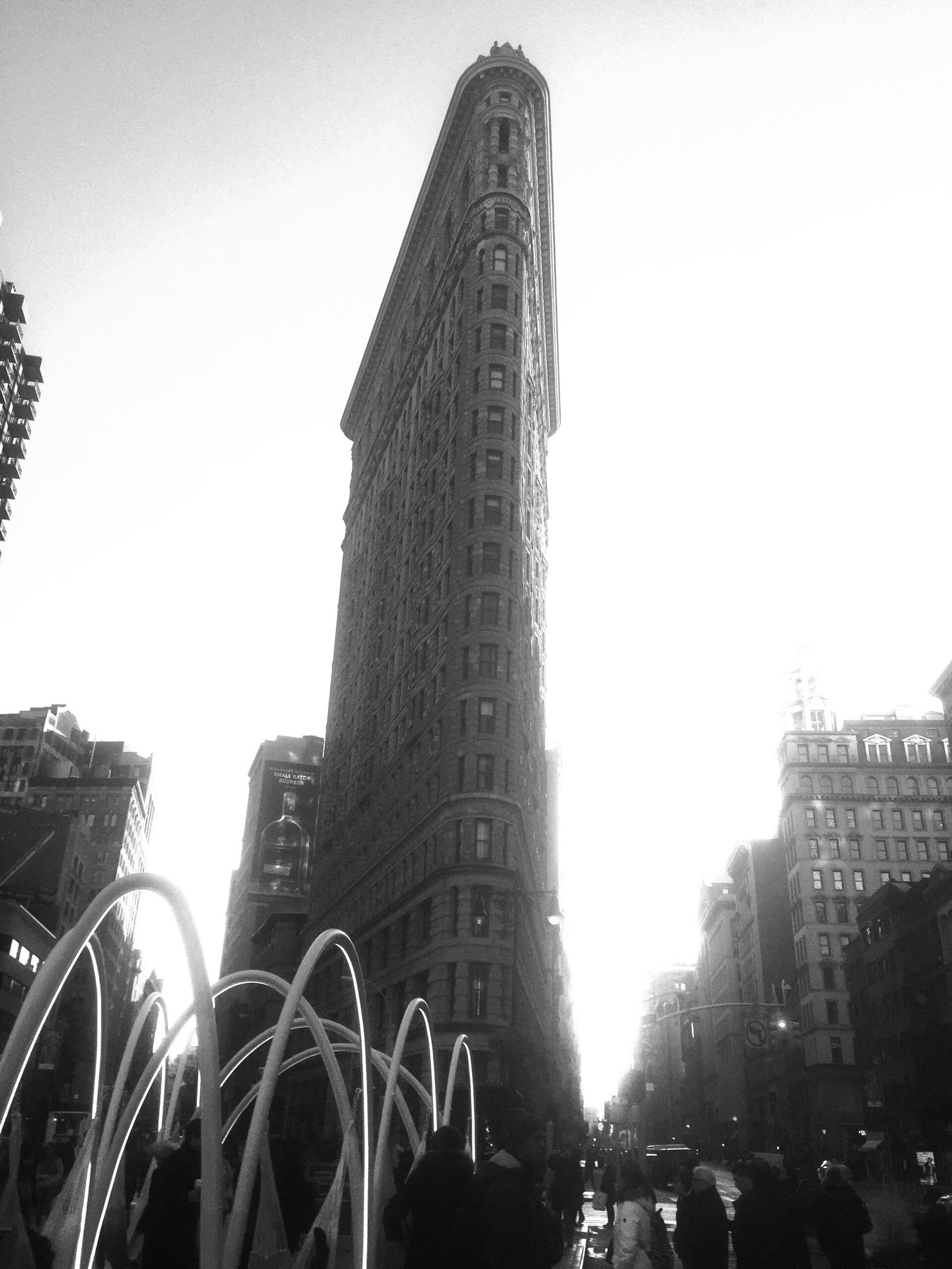
A skyscraper shaped like the wedge of land it stands on, sharp enough at the point to look like the prow of a ship.
At a glance
The Flatiron Building stands where Fifth Avenue crosses Broadway at 23rd Street, filling a triangular block so completely that the building becomes the shape of the site. Completed in 1902, it is among the oldest and most photographed skyscrapers in New York.
History
Built as the Fuller Building and soon nicknamed the Flatiron for its likeness to a clothes iron, it was designed by Daniel Burnham’s Chicago firm and finished in 1902. At twenty-two storeys it was among the tallest in the city; its steel frame carried a height the narrow site could never have held in masonry alone.
What you see
The limestone and terracotta facade wears its Beaux-Arts detail lightly — the real drama is the geometry. The building narrows to a point only a couple of metres wide at the apex, and from 23rd Street the wedge looks impossibly thin. That is precisely why photographers have never left it alone.
Significance
The Flatiron helped teach New York what a skyscraper could be, and showed how an awkward corner could be turned into an icon rather than a problem.
Practical information
- An office building, not generally open to visitors inside
- The classic view is from Madison Square Park, across the street
- Best photographed in low, raking light
Getting there
The building rises at Madison Square, served by the 23rd Street subway stations on several lines. It is an easy walk from Union Square and the Empire State Building.
Gallery
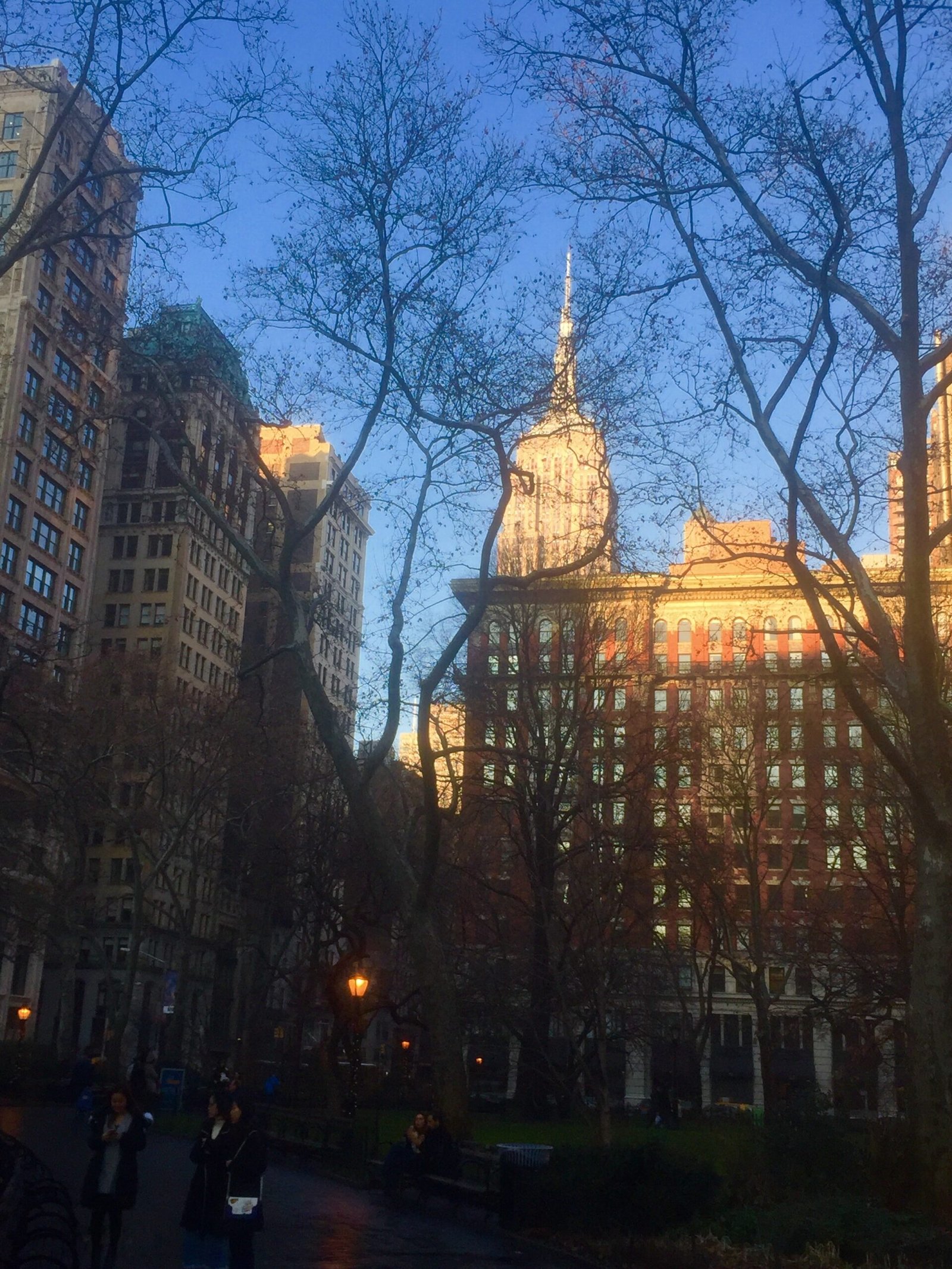
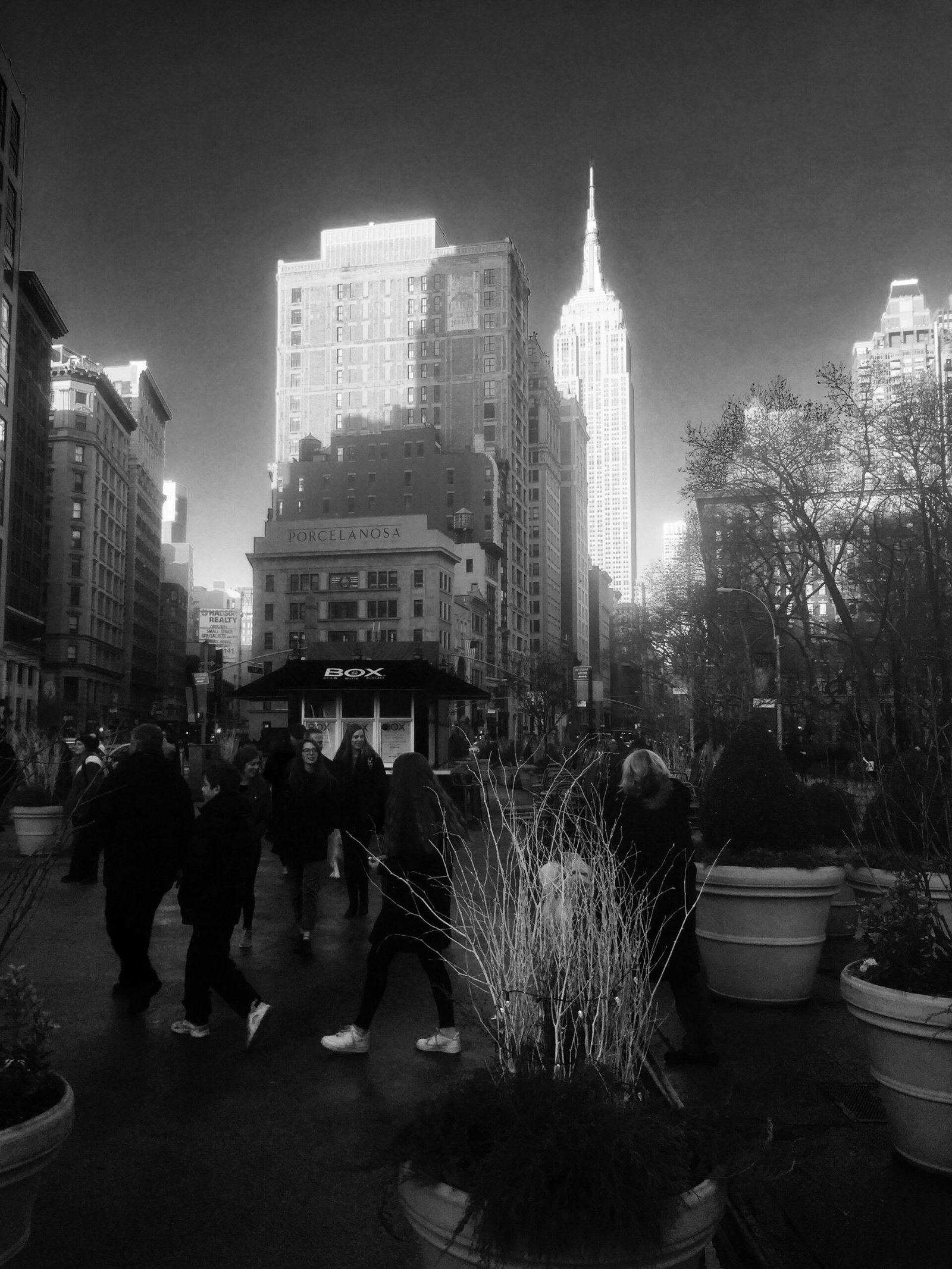
The Flatiron District, photographed by Luigi De Marchi.
Sources
- NYC Landmarks Preservation Commission
- NYC Tourism (nyctourism.com)
Find it on the map
See this place and what’s around it →📷 Become a Cultural Heritage Online photographer
Share your photos of places: they stay published under your name as the author. The more they're seen, the more you get noticed — and soon a contest will reward the most appreciated photos.
Log in or sign up free to add a photoIs this page about you?
This page is read by travellers and heritage enthusiasts who find it on Google. Tell us how you are connected to this place and we will take it from there.