

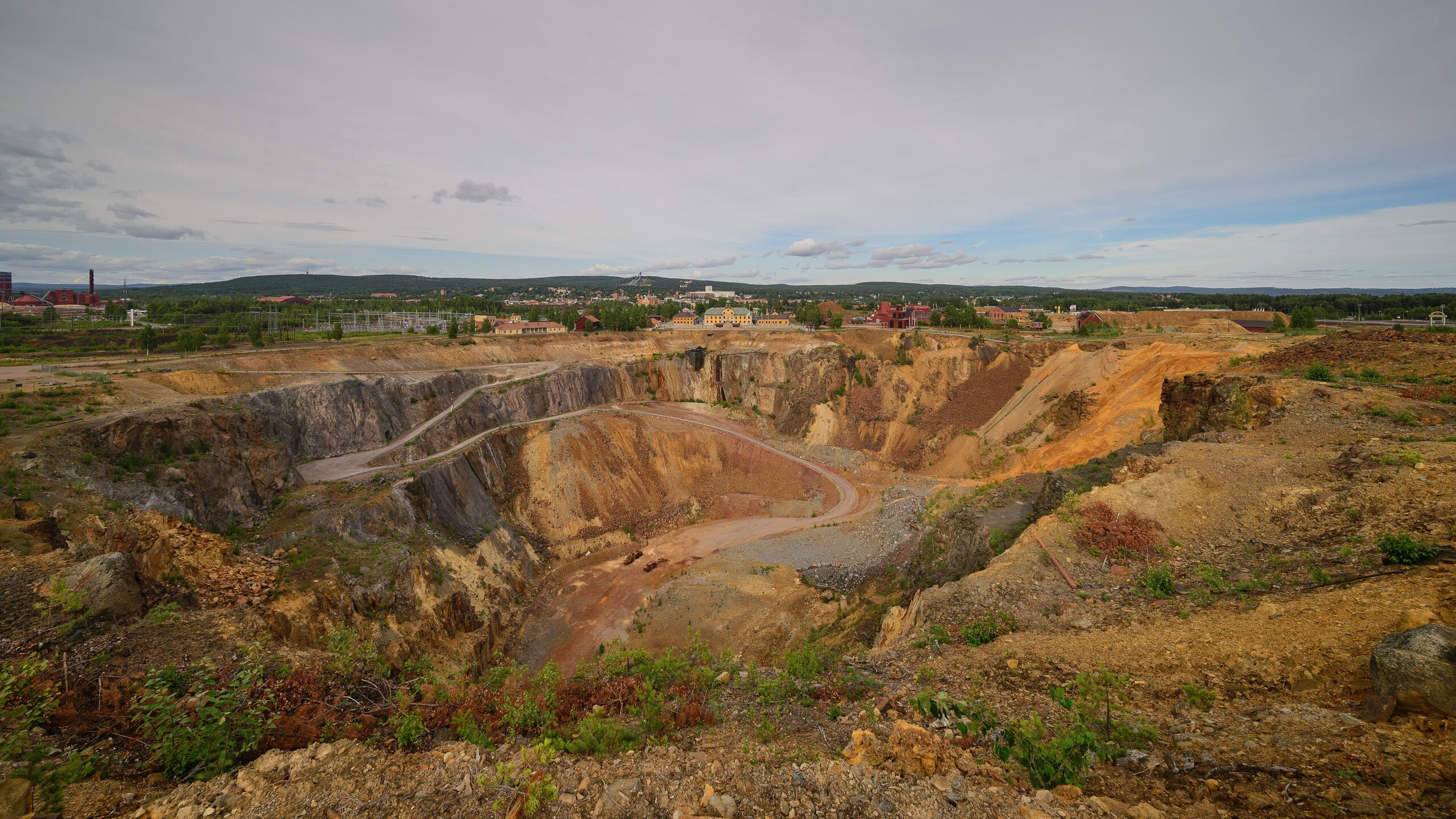
For a thousand years, this Swedish copper mine powered European industry and warfare. Now a UNESCO World Heritage Site, it stands as a monument to mining innovation and extraction on a continental scale.
At a glance
Falun Mine operated continuously from the 10th century until 1992, making it one of Europe’s longest-working industrial sites. At its peak, it supplied as much as two-thirds of the continent’s copper. The mine’s technological advances shaped global mining practices for two centuries and became a crucial economic engine for Sweden, particularly during the nation’s 17th-century military campaigns.
History
Mining began in Falun during the 10th century, though large-scale operations developed over subsequent centuries. By the 17th century, the mine had become vital to Swedish state finances and military expansion across Northern Europe. Production continued for nearly 1,000 years until closure in 1992, making it a singular example of sustained industrial extraction across medieval, early modern, and contemporary periods.
What you see
Today the mine comprises both underground passages and surface features, including the dramatic Great Pit—a massive crater created by centuries of copper extraction. Visitors encounter the physical evidence of extraction methods spanning ten centuries, from hand tools to industrial machinery, preserved within the working landscape.
Cultural significance
Falun Mine transformed European copper supply and mining technology. Innovations developed here—in ventilation, water management, and extraction techniques—influenced mining operations worldwide and established practices still recognized in industrial heritage today. The site embodies the relationship between resource extraction and state power in early modern Europe.
Key facts
- Country: Sweden
- Location: Falun
- Operating period: 10th century–1992
- Coordinates: 60.599°N, 15.612°E
- UNESCO World Heritage Site: designated 2001
Practical information & getting there
The site now functions as a museum. Falun lies in central Sweden, roughly 200 kilometres northwest of Stockholm. For current visiting hours, admission fees, and guided tours, consult the site directly or regional tourism information.
Sources & resources
- Falun Mine – Wikipedia
- Cultural Heritage Online
Find it on the map
See this place and what’s around it →📷 Become a Cultural Heritage Online photographer
Share your photos of places: they stay published under your name as the author. The more they're seen, the more you get noticed — and soon a contest will reward the most appreciated photos.
Log in or sign up free to add a photo