
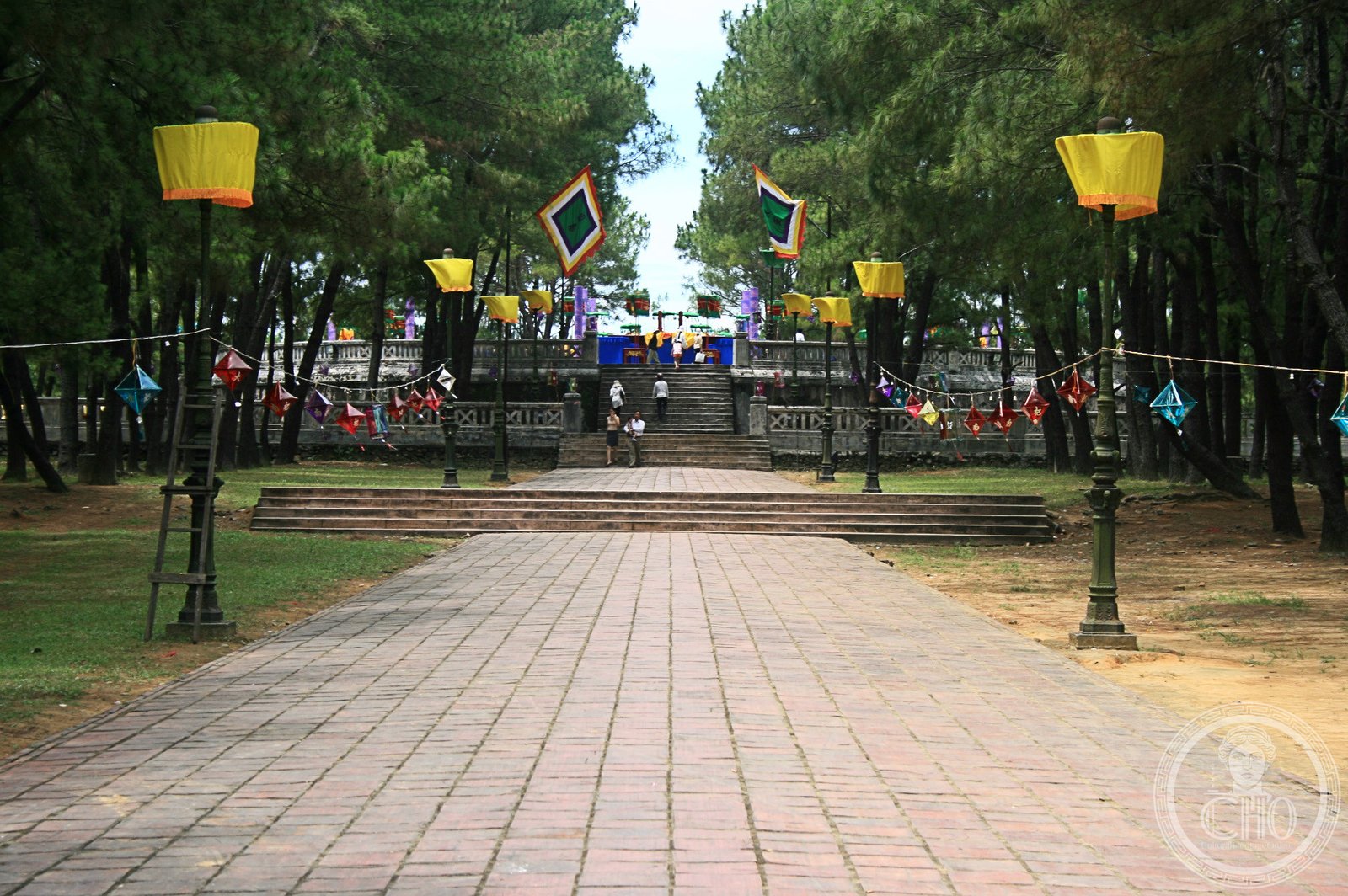
An imperial altar south of Huế where Nguyễn dynasty monarchs performed annual ceremonies of prayer to Heaven and Earth.
At a glance
The Nam Giao altar stands as a sacred ceremonial complex dedicated to the spiritual powers of heaven and earth. Built for the emperors of Vietnam’s last reigning dynasty, it served as the focal point for state rituals that reinforced the ruler’s mandate from above.
History
The Esplanade functioned as the primary venue for annual ceremonies conducted by Nguyễn dynasty monarchs. These rituals were central to imperial authority—the emperor’s ability to commune with the heavens validated his right to rule. The complex’s location south of Huế reflected cosmological principles governing sacred space within the capital.
What you see
The altar comprises layered stone platforms arranged according to principles of imperial Chinese ceremonial architecture, adapted to the Vietnamese landscape. The geometric arrangement and orientation encode religious and cosmological meaning, with the design emphasizing the connection between earthly power and celestial authority.
Cultural significance
Nam Giao represents a critical intersection of Vietnamese and East Asian imperial traditions. The ceremonies performed here were acts of state theology—through ritual, the emperor demonstrated his role as intermediary between heaven, earth, and humanity. The altar’s preservation documents the spiritual and political structures of Nguyễn-era Vietnam.
Key facts
- Country: Vietnam
- City: Huế
- Coordinates: 16.4377, 107.5826
- Alternative names: Nam Giao altar, Đàn Nam Giao
Practical information & getting there
The Esplanade lies south of central Huế. Most visitors access it as part of cultural tours exploring the imperial city’s religious and administrative heritage. Local guides can contextualize the ceremonial significance within the broader landscape of Nguyễn imperial sites.
Sources & resources
Find it on the map
See this place and what’s around it →📷 Become a Cultural Heritage Online photographer
Share your photos of places: they stay published under your name as the author. The more they're seen, the more you get noticed — and soon a contest will reward the most appreciated photos.
Log in or sign up free to add a photoIs this page about you?
This page is read by travellers and heritage enthusiasts who find it on Google. Tell us how you are connected to this place and we will take it from there.