
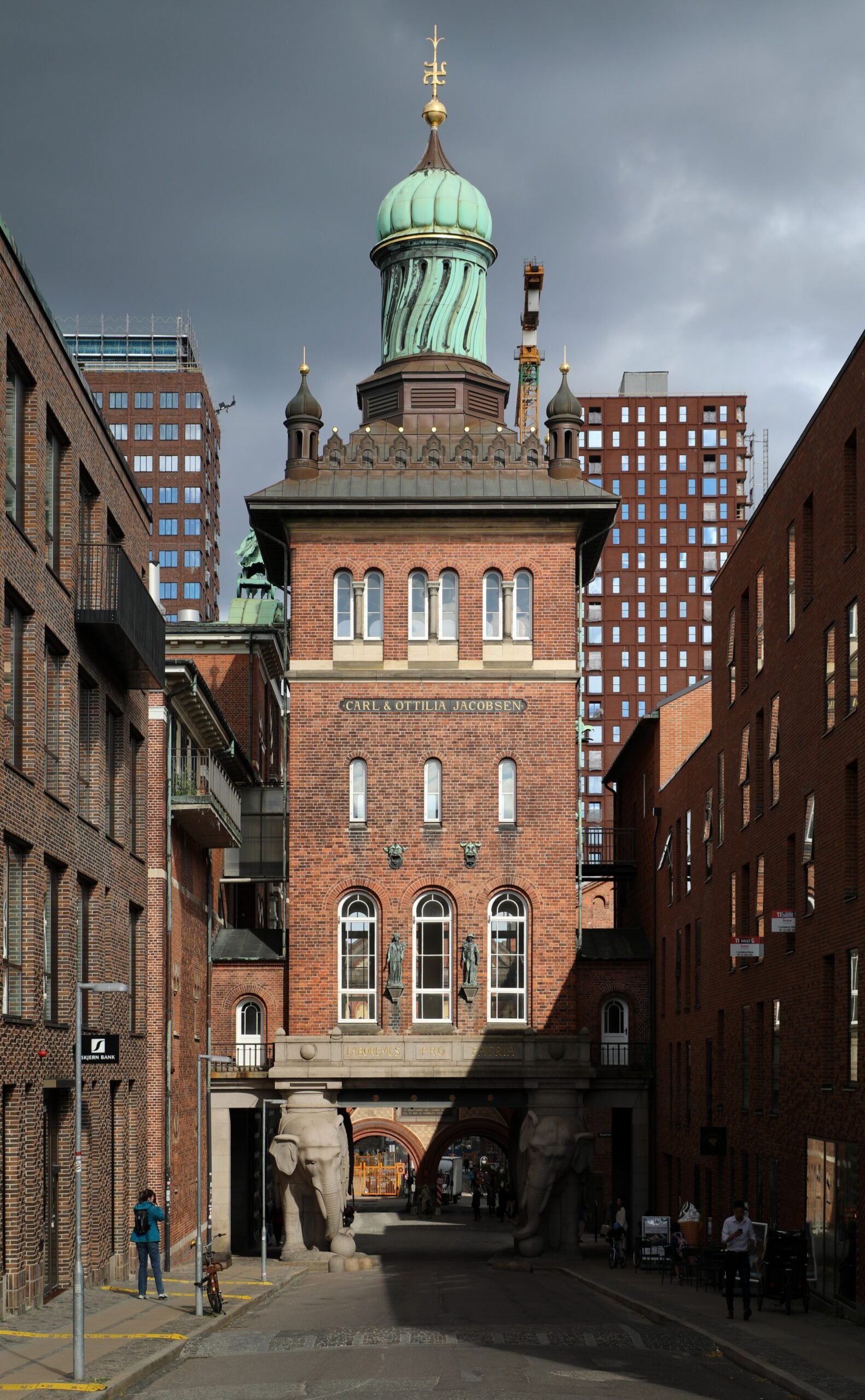
Four colossal granite elephants stand back to back, their collective strength supporting an iconic tower that once anchored Copenhagen’s legendary brewery.
At a glance
The Elephant Tower—also known as the Elephant Gate—marks the entrance to the Carlsberg district, the original site of Carlsberg Breweries in Copenhagen. Today, the landmark stands as the most recognizable symbol of this evolving neighbourhood, which is undergoing redevelopment.
History
Built to guard the entrance to the brewery, the tower embodied Carlsberg’s ambitions and heritage. The structure anchored the industrial heart of Copenhagen’s brewing trade for generations, becoming inseparable from the city’s cultural and commercial identity.
What you see
Four monumental granite elephants form the architectural centerpiece, positioned back to back in a heroic display of strength. They carry the tower upon their collective backs—a striking metaphor rendered in stone. The sculptural composition demonstrates both engineering confidence and theatrical grandeur typical of the era.
Cultural significance
The tower embodies the ambition of 19th-century industrial Denmark and the cultural prominence of Carlsberg, which extended far beyond brewing into art and architecture. As the neighbourhood transforms, the Elephant Tower remains a cherished anchor point for Copenhagen’s memory and identity.
Key facts
- Location: Copenhagen Municipality, Denmark
- Coordinates: 55.6673°N, 12.5323°E
- Distinctive feature: Four granite elephants supporting the structure
- Status: Original Carlsberg Breweries site, now under neighbourhood redevelopment
Practical information & getting there
The tower is located in the Carlsberg district of Copenhagen. Access details and visiting hours depend on current redevelopment phases; verify locally before planning a visit.
Sources & resources
Find it on the map
See this place and what’s around it →📷 Become a Cultural Heritage Online photographer
Share your photos of places: they stay published under your name as the author. The more they're seen, the more you get noticed — and soon a contest will reward the most appreciated photos.
Log in or sign up free to add a photoIs this page about you?
This page is read by travellers and heritage enthusiasts who find it on Google. Tell us how you are connected to this place and we will take it from there.