

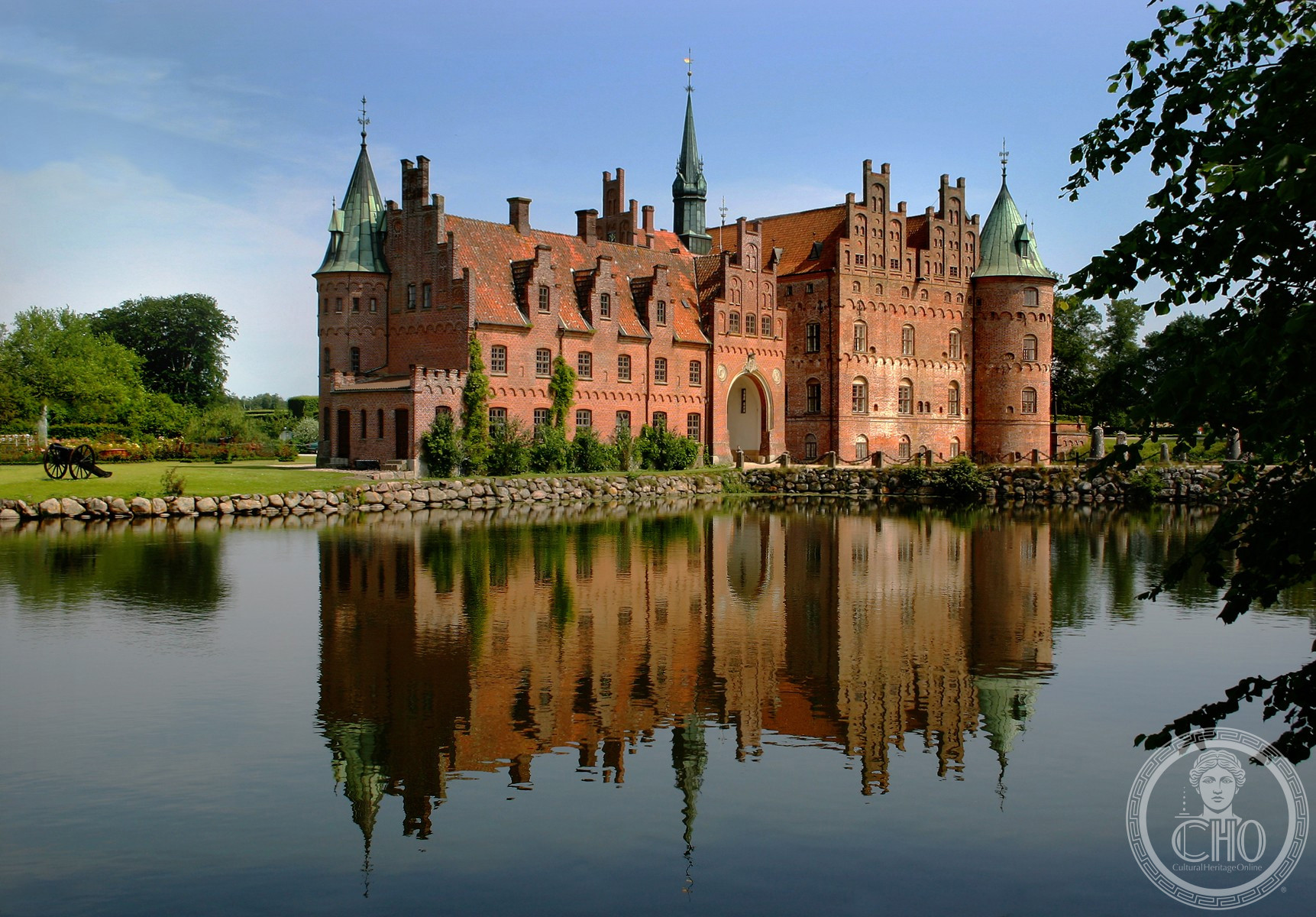
Europe’s best preserved Renaissance water castle, Egeskov stands on the Danish island of Funen as a masterwork of 16th-century defensive architecture and aristocratic ambition.
At a glance
Egeskov Castle is a fortified Renaissance palace surrounded by water, combining military practicality with the aesthetic refinement of its era. Its dual moats and distinctive architecture make it one of Europe’s most recognizable castles of the period.
History
Built during the Renaissance, Egeskov represents the evolution of medieval fortification into early modern aristocratic residence. The castle was designed to project power and permanence, its water defenses reflecting both practical necessity and symbolic authority in a strategically important region of Denmark.
What you see
The castle’s defining feature is its sophisticated water system—concentric moats that serve both defensive and aesthetic purposes. The structure exemplifies Renaissance principles of symmetry and proportion, with towers, crenellations, and carefully orchestrated façades that demonstrate the craftsmanship of its builders.
Cultural significance
Egeskov stands as an exceptional survivor. While many Renaissance castles across Europe have been altered or ruined, Egeskov has retained its original character and integrity. It represents a crucial moment in European architectural history when fortification and refinement merged.
Key facts
- Location: Near Kværndrup, south Funen, Denmark
- Coordinates: 55.1764°N, 10.4894°E
- Classification: Renaissance water castle
- Status: Europe’s best preserved example of its type
Practical information & getting there
Egeskov is situated in southern Funen, accessible by road from Kværndrup. For current visiting hours, admission fees, and guided tour availability, consult the castle’s official website or contact the local tourism office in the region.
Sources & resources
Find it on the map
See this place and what’s around it →📷 Become a Cultural Heritage Online photographer
Share your photos of places: they stay published under your name as the author. The more they're seen, the more you get noticed — and soon a contest will reward the most appreciated photos.
Log in or sign up free to add a photoIs this page about you?
This page is read by travellers and heritage enthusiasts who find it on Google. Tell us how you are connected to this place and we will take it from there.