

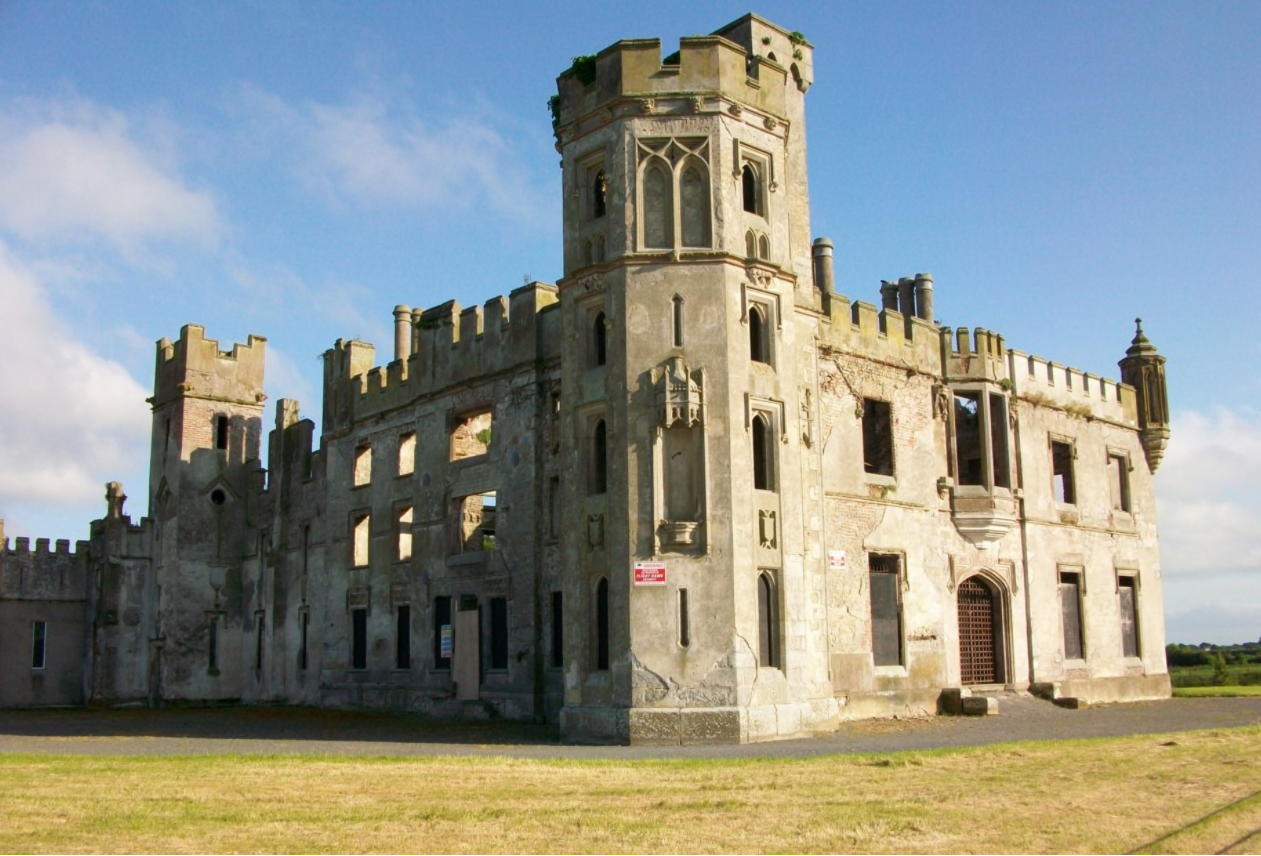
A ruined great house that once anchored a vast landed estate, now transformed into public gardens open to all.
At a glance
Duckett’s Grove stands as the remains of a 19th-century country house in County Carlow, Ireland, built by the Duckett family. The residence once served as the centerpiece of a 12,000-acre estate that shaped the region’s landscape for over two centuries. Today, the roofless shell is closed to visitors, but its surrounding grounds have been reclaimed as a public park.
History
The house belonged to the Duckett family, Anglo-Irish landowners whose grip on the estate extended across thousands of acres. For more than 200 years, Duckett’s Grove dominated its locality as a symbol of gentry power and wealth. A catastrophic fire in the 1930s destroyed the interior, leaving only the external walls and rendering the structure unsafe and inaccessible. The estate’s fortunes shifted dramatically in the decades that followed.
What you see
The house itself now stands as a roofless ruin, its interior lost to fire and time. The surrounding landscape preserves two inter-connecting walled gardens, typical of 19th-century estate design. These formal gardens once served the great house and its occupants; they now form the core of a public park managed by Carlow County Council and maintained for community use.
Cultural significance
Duckett’s Grove embodies the rise and decline of the Anglo-Irish landed gentry. The transition from private estate to public park reflects broader changes in Irish land ownership and use in the 20th century. The walled gardens, carefully preserved, offer insight into the horticultural practices and aesthetic values of the 19th-century Irish gentry class.
Key facts
- Country: Ireland
- County: Carlow
- Nearest village: Killerrig
- Coordinates: 52.8575, −6.8128
- Estate size: 12,000 acres (49 km²)
- Period: 19th century
- Damaged: Major fire, 1930s
- Status: Ruined; interior inaccessible
Practical information & getting there
The grounds and walled gardens are open to the public as a park managed by Carlow County Council. The house itself remains closed due to its unsafe condition. Visit during daylight hours to explore the gardens and appreciate the estate landscape. Check with Carlow County Council for seasonal access information and any special events.
Sources & resources
Find it on the map
See this place and what’s around it →📷 Become a Cultural Heritage Online photographer
Share your photos of places: they stay published under your name as the author. The more they're seen, the more you get noticed — and soon a contest will reward the most appreciated photos.
Log in or sign up free to add a photoIs this page about you?
This page is read by travellers and heritage enthusiasts who find it on Google. Tell us how you are connected to this place and we will take it from there.