

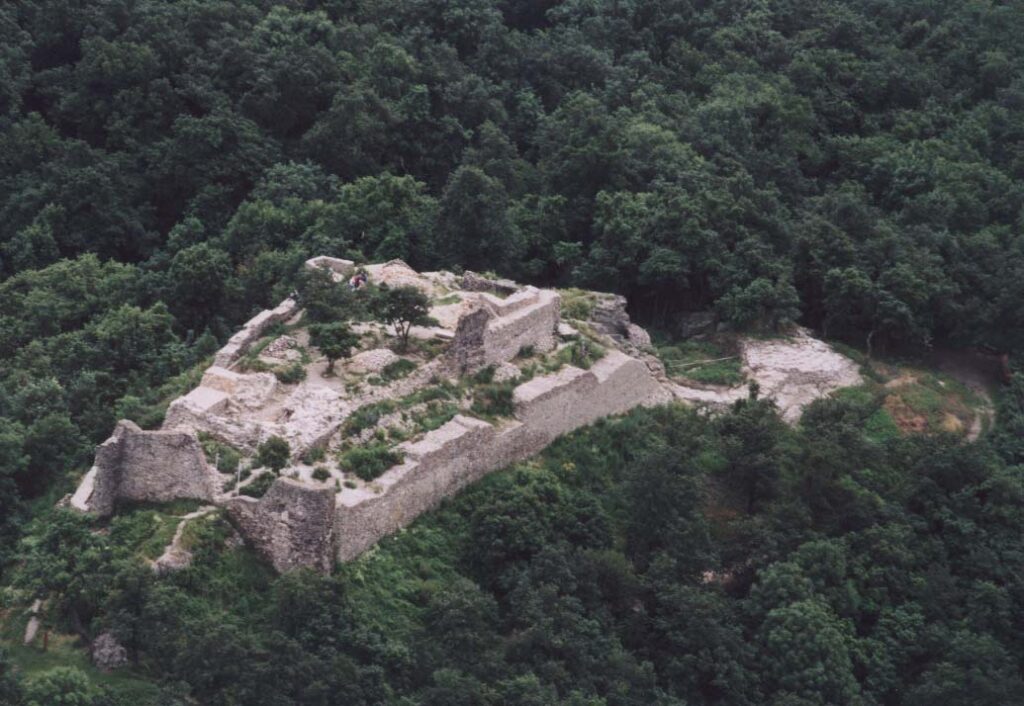
A hilltop fortress from the medieval period, Drégely Castle commands views across Nógrád County from its rugged stone foundations. Though reduced to ruins, the castle is undergoing restoration work that promises to reveal more of its historical character.
At a glance
Drégely Castle is a 13th-century hilltop stronghold in northern Hungary. The fortress stands in partial ruin but is currently being restored. Its elevated position on a hilltop made it strategically significant in medieval times.
History
Built in the 13th century, Drégely Castle served as a defensive structure in the Nógrád region during the medieval period. Its sixteenth-century history is well documented, and the siege of 1552 is its best-known episode.
What you see
The castle survives primarily as ruins perched on a hilltop. Stone foundations and fragmentary walls indicate medieval construction methods. Ongoing restoration efforts are gradually stabilizing the structure and clarifying its original layout and defensive features.
Cultural significance
Drégely Castle represents an important chapter in Hungary’s medieval fortification history. As restoration work continues, the site promises to contribute to scholarly understanding of 13th-century Hungarian defensive architecture and regional settlement patterns.
Key facts
- Country: Hungary
- County: Nógrád
- Period: 13th century
- Coordinates: 48.016619, 19.036088
- Current status: Ruins undergoing restoration
Practical information & getting there
Drégely Castle is located in Nógrád County in northern Hungary. The site is accessible to visitors, though conditions may vary depending on restoration work in progress. Contact local tourism offices for current access information and visiting hours.
In July 1552 Ali Pasha of Buda besieged Drégely with more than ten thousand men; the garrison under György Szondi numbered 146, and after four days of fighting the survivors were cut down. Szondi’s grave has never been found.
Sources & resources
Find it on the map
See this place and what’s around it →
Advertisement. Pictured, from the Cleveland Museum of Art (CC0) and not for sale: Latz commode, Meissen group, Paul Storr tureen. How we handle this
📷 Become a Cultural Heritage Online photographer
Share your photos of places: they stay published under your name as the author. The more they're seen, the more you get noticed — and soon a contest will reward the most appreciated photos.
Log in or sign up free to add a photoIs this page about you?
This page is read by travellers and heritage enthusiasts who find it on Google. Tell us how you are connected to this place and we will take it from there.
This entry stays online and free either way — and a free account lets you add to it yourself.