
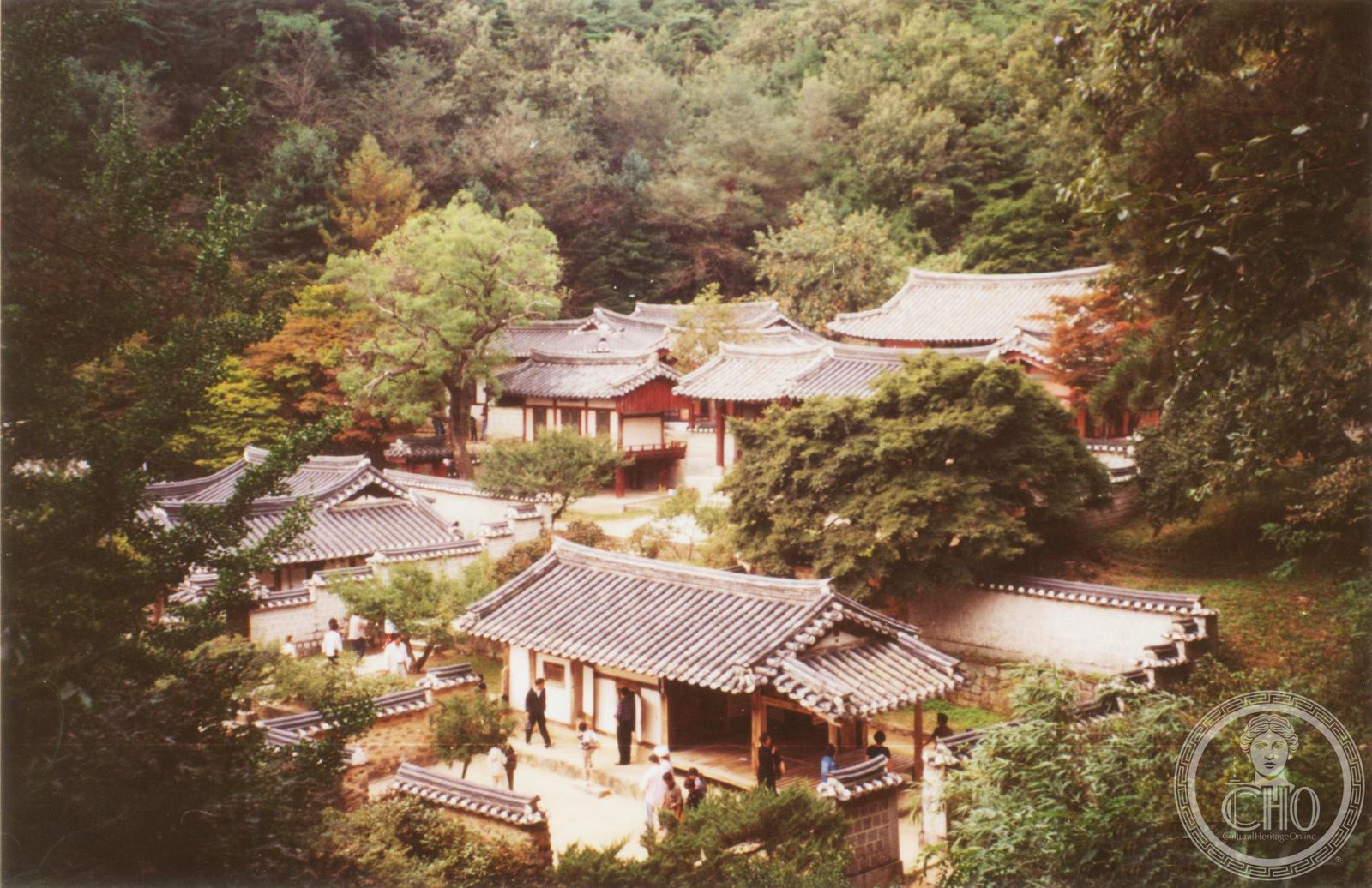
A Confucian academy founded in 1574 to honor scholar Yi Hwang, Dosan Seowon became one of Korea’s most influential centers of classical learning and remains active in ritual practice.
At a glance
Dosan Seowon is a private Confucian academy established four years after the death of Yi Hwang, a towering figure in Korean intellectual history. The academy served dual purposes: educating students in the Confucian classics and conducting memorial rites honoring the sages. While formal education ended long ago, commemorative ceremonies continue twice yearly.
History
Yi Hwang retired to this Andong location in 1549 and began constructing the facility himself. After his death in 1570, his disciples and fellow Confucian authorities formally established Dosan Seowon in 1574 as a lasting memorial. King Seonjo granted the academy a royal charter the following year, in 1575, affirming its prestige and significance.
For over four centuries, Dosan Seowon housed the Toegyé School of Thought, one of Korea’s most distinguished philosophical traditions. The academy’s renown extended across the peninsula as a leading center of classical study.
What you see
The architectural information available is limited, though the site reflects traditional Korean Confucian academy design principles suited to scholarly retreat and ritual observance.
Cultural significance
Dosan Seowon represents the enduring Korean commitment to Confucian learning and ancestor veneration. Its prominence in Korean culture was acknowledged when the academy appeared on the reverse of the South Korean 1,000 won bill from 1975 to 2007. The site embodies Yi Hwang’s intellectual legacy and continues to function as a space for ritual and remembrance.
Key facts
- Established: 1574
- Location: Andong, South Korea
- Coordinates: 36.727°N, 128.843°E
- Royal charter granted: 1575 by King Seonjo
- Founded to honor: Yi Hwang (d. 1570)
- Housed the Toegyé School of Thought for over 400 years
Practical information & getting there
Dosan Seowon is located in present-day Andong, South Korea. The site remains active as a space for commemorative ceremonies held twice annually. Current visiting hours and access details are best confirmed locally before planning a visit.
Sources & resources
Find it on the map
See this place and what’s around it →📷 Become a Cultural Heritage Online photographer
Share your photos of places: they stay published under your name as the author. The more they're seen, the more you get noticed — and soon a contest will reward the most appreciated photos.
Log in or sign up free to add a photoIs this page about you?
This page is read by travellers and heritage enthusiasts who find it on Google. Tell us how you are connected to this place and we will take it from there.