
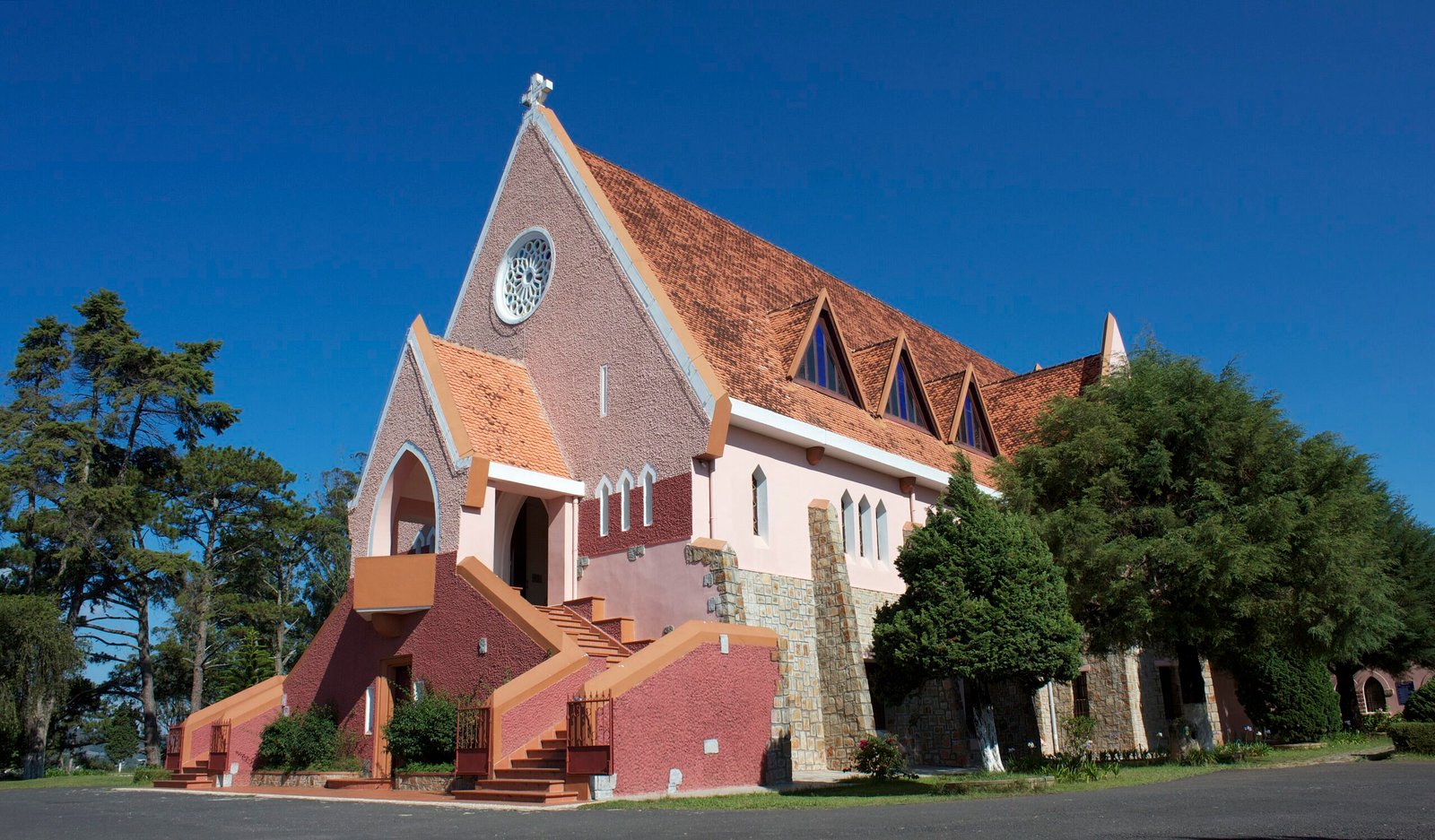
A Catholic convent blending French and Vietnamese architectural traditions, the Domaine de Marie serves as both a spiritual center and educational hub in the highlands of Da Lat.
At a glance
Built in 1940, the Domaine de Marie is a working convent of the Roman Catholic Diocese of Đà Lạt. The site combines religious worship with active community engagement through its on-site nunnery and school for local children.
History
The convent was constructed in 1940 during the French colonial period in Indochina. It became part of the institutional infrastructure of the Roman Catholic Diocese of Đà Lạt, which oversees Catholic communities across the region.
What you see
The Domaine de Marie exhibits a synthesis of French colonial and Vietnamese design principles. This architectural dialogue reflects the cultural context of its founding, marrying European ecclesiastical tradition with local building sensibilities and materials.
Cultural significance
The convent represents an important example of Catholic institutional life in Vietnam. Beyond its religious function, it has sustained educational outreach to local children for decades, embodying the Church’s historical role in regional schooling and social services.
Key facts
- Country: Vietnam
- City: Da Lat
- Founded: 1940
- Coordinates: 11.9495°N, 108.4303°E
- Affiliated with the Roman Catholic Diocese of Đà Lạt
Practical information & getting there
The Domaine de Marie remains an active religious community; visitors should respect operating hours and the privacy of the nuns and schoolchildren. Da Lat is accessible by road from Ho Chi Minh City, approximately 300 kilometers to the south.
Sources & resources
Find it on the map
See this place and what’s around it →📷 Become a Cultural Heritage Online photographer
Share your photos of places: they stay published under your name as the author. The more they're seen, the more you get noticed — and soon a contest will reward the most appreciated photos.
Log in or sign up free to add a photoIs this page about you?
This page is read by travellers and heritage enthusiasts who find it on Google. Tell us how you are connected to this place and we will take it from there.