
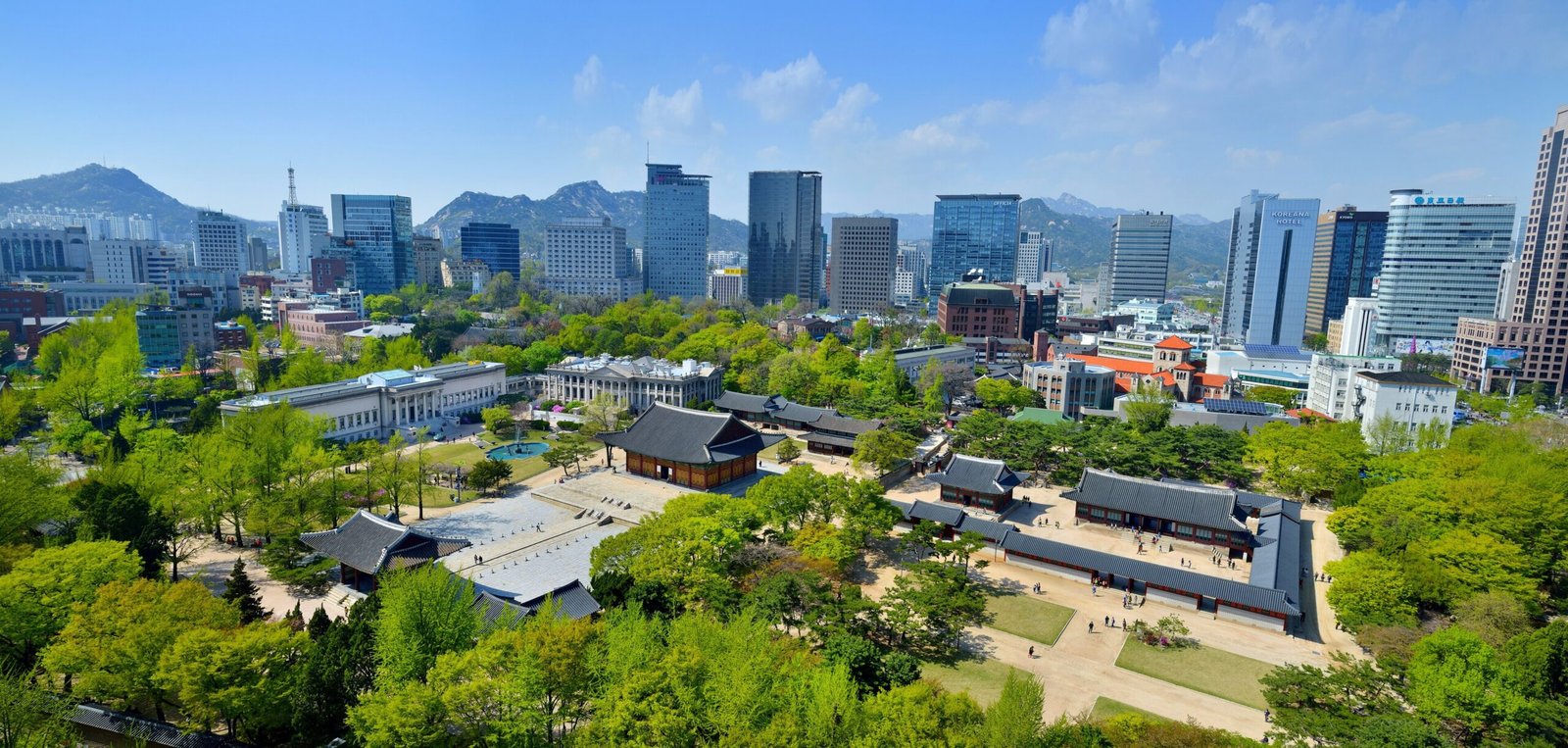
A former Korean royal palace blending Eastern and Western architecture, Deoksugung served as the capital’s main palace during the brief Korean Empire (1897–1910) and stands today as a testament to a nation’s modernization efforts amid colonial upheaval.
At a glance
Deoksugung is a palace complex in central Seoul that embodies Korea’s turbulent transition to modernity. Originally a temporary refuge during wartime, it became the symbolic seat of the Korean Empire under Emperor Gojong, who attempted to position it as a beacon of national progress. Today it houses cultural institutions and welcomes visitors to explore its layered architectural and historical narrative.
History
King Seonjo first used the palace as temporary quarters during the 1592–1598 Imjin War, when other royal residences lay in ruins. In 1611, it received official status as Gyeongungung and remained largely dormant for nearly three centuries. In 1897, Emperor Gojong declared the Korean Empire and elevated this palace to its primary seat, initiating ambitious expansion and construction campaigns. Gojong was forced to abdicate in 1907; Korea fell under Japanese colonial rule in 1910. He remained in the palace until his death in 1919.
The colonial period brought systematic dismantling. By 1930, only 18 of the original structures survived. After 1945 liberation, the palace functioned as a public park while its footprint continued to shrink. Restoration efforts intensified from the 1980s onward, with a 2004 comprehensive plan guiding the recreation and relocation of buildings based on historical evidence.
What you see
The palace displays a striking fusion of Korean and Western design vocabularies. Major buildings such as Junghwajeon and Seokjojeon were constructed under Gojong’s modernization push. Seokjojeon received a Western Wing addition in 1938 and later housed the Yi Royal Family Art Museum. Current structures represent approximately one-third of the palace’s peak size, with ongoing reconstruction efforts gradually restoring pre-colonial configurations based on historical documentation.
Cultural significance
Deoksugung encapsulates Korea’s complex late-19th and early-20th-century history. It symbolizes both imperial ambition and colonial subjugation, making it essential to understanding this pivotal era. The palace now serves as a major cultural venue, housing the Daehan Empire History Museum and the National Museum of Modern and Contemporary Art, Deoksugung branch, ensuring its continued relevance to contemporary Korean cultural life.
Key facts
- Country: South Korea
- City: Seoul
- Coordinates: 37.5661°N, 126.975°E
- Original name: Gyeongungung (renamed Deoksugung in 1907)
- Peak period: Korean Empire (1897–1910)
- Current site area: approximately 1/3 of original size
Practical information & getting there
Deoksugung is located in central Seoul and functions as a public cultural site. The palace grounds are home to museums open to visitors year-round. For current hours, admission details, and guided-tour information, consult the official Seoul cultural heritage website or contact the palace directly before your visit.
Sources & resources
Find it on the map
See this place and what’s around it →📷 Become a Cultural Heritage Online photographer
Share your photos of places: they stay published under your name as the author. The more they're seen, the more you get noticed — and soon a contest will reward the most appreciated photos.
Log in or sign up free to add a photoIs this page about you?
This page is read by travellers and heritage enthusiasts who find it on Google. Tell us how you are connected to this place and we will take it from there.