

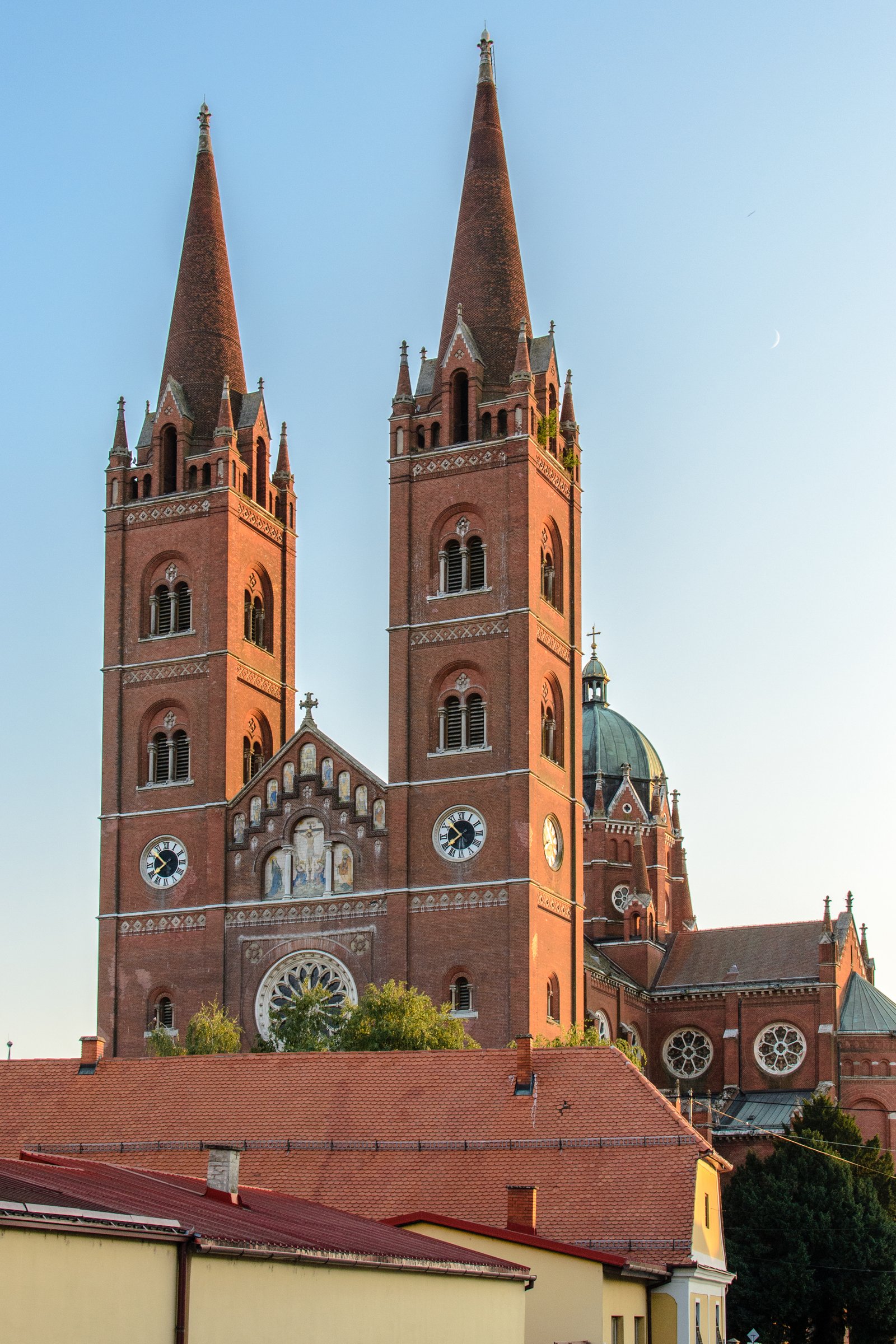
A monumental Neo-Gothic basilica and the grandest sacral building of Croatian historicism, Đakovo Cathedral stands as both a spiritual center and architectural landmark.
At a glance
The Cathedral Basilica of St. Peter serves as the cathedral of the Roman Catholic Archdiocese of Đakovo-Osijek. Its Neo-Gothic design by Viennese architects Carl Roesner and Friedrich von Schmidt marks a defining achievement in 19th-century Croatian religious architecture. The interior features exceptional fresco cycles by renowned painters, while the surrounding 19th-century landscaped park remains a protected horticultural monument.
History
Bishop Josip Juraj Strossmayer commissioned the cathedral during his tenure as bishop of the diocese of Đakovo and Srijem. Construction proceeded from 1866 to 1882—a four-year building campaign followed by twelve years of interior decoration. The ambitious schedule reflected both the bishop’s vision and the resources of the growing Austro-Hungarian diocese. Strossmayer’s patronage secured master craftsmen from Vienna and Rome to realize the project’s artistic ambitions.
What you see
The cathedral embodies Neo-Gothic principles in its soaring proportions and vertical emphasis. The interior unfolds in distinctive theological zones: Old Testament scenes fill the nave in fresco, while the chancel displays New Testament episodes from the life of St. Peter. Roman painters Alexander Maximilian and Lodovico Seitz executed most of these frescoes, with Achille Ansiglioni contributing two works. Friedrich Overbeck, a leading Nazarene painter, supplied preparatory drawings that guided the decorative scheme. The landscaped park adjoining the bishop’s palace retains its 19th-century character, complemented by the nearby Mali Park from the century’s turn.
Cultural significance
Đakovo Cathedral represents the apex of Croatian historicist ambition in sacred architecture. Its scale, artistic decoration, and international provenance—blending Viennese architectural expertise with Italian and Germanic painting traditions—demonstrate the cosmopolitan reach of the Austro-Hungarian cultural sphere. The cathedral remains Đakovo’s most important sacral object and foremost landmark.
Key facts
- Country: Croatia
- City: Đakovo
- Coordinates: 45.3075, 18.4111
- Built: 1866–1882
- Architects: Carl Roesner and Friedrich von Schmidt (Vienna)
- Patron: Bishop Josip Juraj Strossmayer
- Principal fresco painters: Alexander Maximilian, Lodovico Seitz, Achille Ansiglioni
Practical information & getting there
Đakovo Cathedral is located in the town of Đakovo in eastern Croatia, accessible by road from larger regional centers. The surrounding park and cathedral grounds invite leisurely exploration. For visiting hours, current information, and any liturgical schedules, contact the Archdiocese of Đakovo-Osijek or local tourism services.
Sources & resources
Find it on the map
See this place and what’s around it →📷 Become a Cultural Heritage Online photographer
Share your photos of places: they stay published under your name as the author. The more they're seen, the more you get noticed — and soon a contest will reward the most appreciated photos.
Log in or sign up free to add a photoIs this page about you?
This page is read by travellers and heritage enthusiasts who find it on Google. Tell us how you are connected to this place and we will take it from there.