
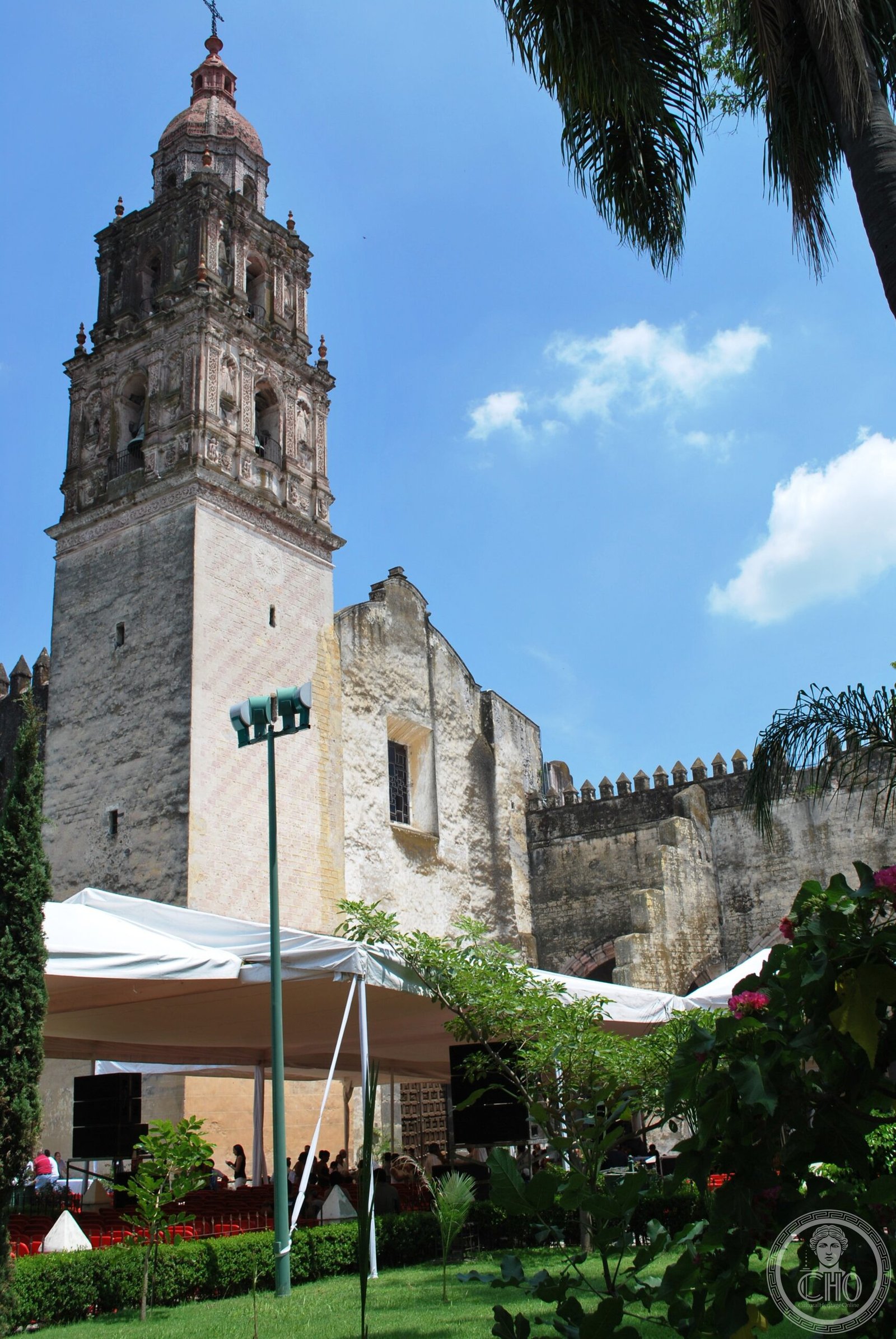
A rare early colonial monastery-cathedral complex south of Mexico City, built to evangelize indigenous peoples after the Spanish conquest and now housing a monumental 17th-century mural of martyred missionaries.
At a glance
The Cathedral of the Assumption of Mary stands as the Roman Catholic church of the Diocese of Cuernavaca and part of a UNESCO-inscribed early 16th-century monastery cluster. Unusually for a Mexican cathedral, it sits in its own walled compound rather than facing the city’s main plaza. Decades of renovation culminated in 1957, when a remarkable 17th-century mural spanning 400 square metres was revealed beneath the interior walls.
History
The monastery was constructed in the early 16th century as part of the Spanish evangelization campaign following the conquest of the Aztec Empire. By the 18th century, the monastery church had become the city’s parish church. In the late 19th century, it received cathedral status. The most significant modern intervention came in 1957, when restoration work stripped away later interior decorations and uncovered the hidden mural beneath the walls.
What you see
The cathedral occupies an autonomous walled precinct unlike typical Mexican cathedrals and shares its compound with several ancillary structures. The interior underwent substantial modernization in 1957, replacing older decorative schemes with simpler contemporary finishes. The dominant feature is the 17th-century mural covering the interior walls, depicting the passion and crucifixion of Philip of Jesus and twenty-three fellow missionaries executed in Japan.
Cultural significance
The cathedral exemplifies the colonial missionary enterprise and remains one of Mexico’s most important early monastery complexes. The internal mural represents a rare surviving example of Counter-Reformation iconography in Mexico, directly linking local religious architecture to global Catholic martyrdom narratives. Its UNESCO designation recognises the significance of the entire Popocatépetl monastery cluster in understanding 16th-century Spanish evangelization strategy.
Key facts
- Location: Cuernavaca, Morelos, Mexico
- Coordinates: 18.92°N, 99.24°W
- Founded: Early 16th century
- UNESCO World Heritage Site (as part of Early 16th-Century Monasteries on Popocatépetl Slopes)
- Interior mural: 400 square metres, 17th century, depicts Philip of Jesus and 23 missionaries
- Current status: Cathedral of the Diocese of Cuernavaca
Practical information & getting there
The cathedral is located in central Cuernavaca, approximately 85 kilometres south of Mexico City. You can reach it by car from Mexico City in roughly ninety minutes via the Mexico City–Cuautla highway. The building remains active as a place of worship; visiting hours and services follow the Diocese of Cuernavaca schedule. Photography policies may be restricted during services.
Sources & resources
Find it on the map
See this place and what’s around it →📷 Become a Cultural Heritage Online photographer
Share your photos of places: they stay published under your name as the author. The more they're seen, the more you get noticed — and soon a contest will reward the most appreciated photos.
Log in or sign up free to add a photoIs this page about you?
This page is read by travellers and heritage enthusiasts who find it on Google. Tell us how you are connected to this place and we will take it from there.