

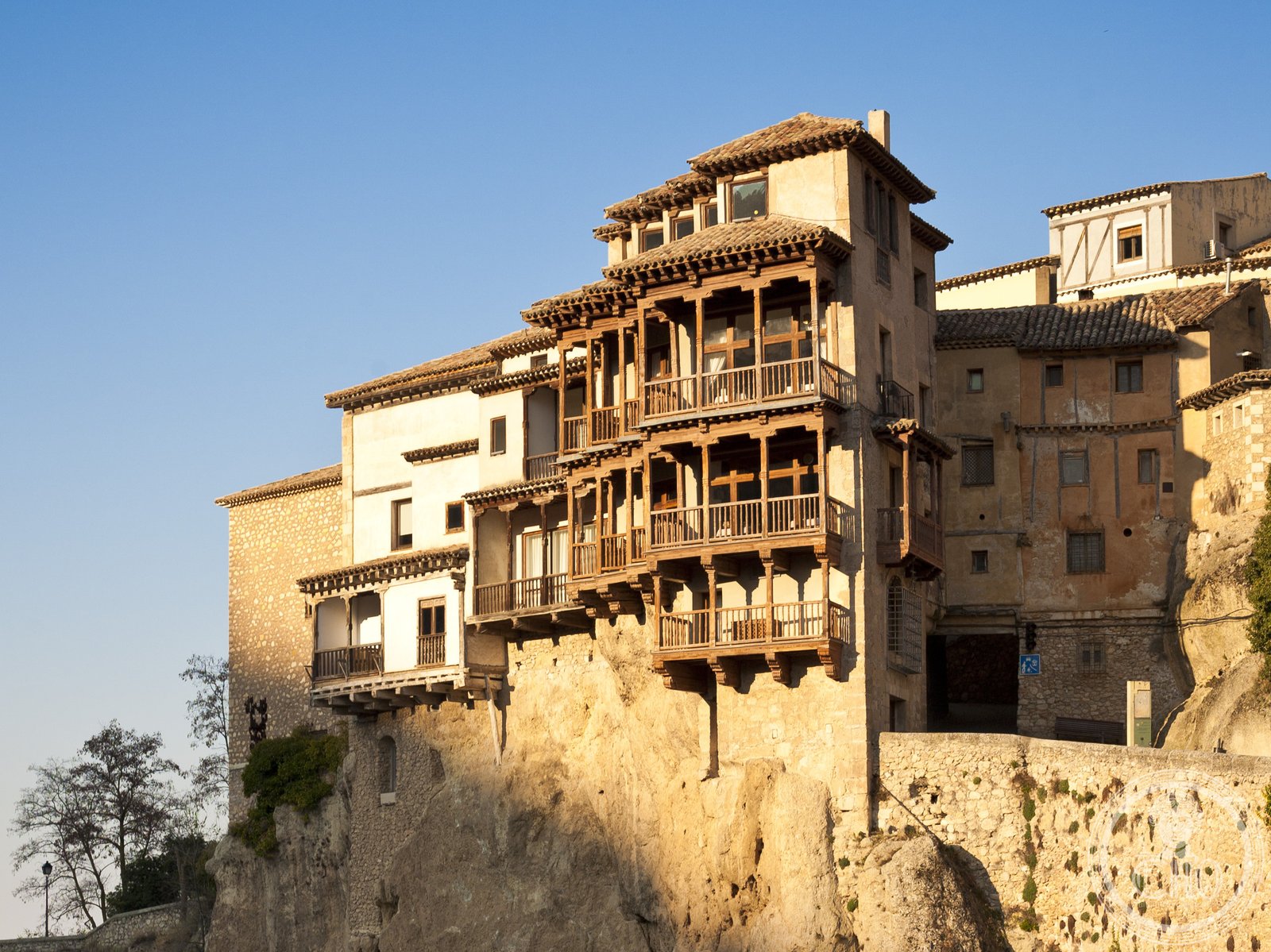
A medieval city carved into a dramatic escarpment between two rivers, Cuenca commands the landscape of Castilla–La Mancha. Its fortress origins and later prosperity as a textile centre shaped a layered urban fabric that endures today.
At a glance
Cuenca is the capital of its province and sits on Spain’s central plateau, perched on a narrow escarpment between the Júcar and Huécar rivers. The setting is exceptional—mountains frame the city, rivers define its edges, and medieval stone rises above both.
History
The city was probably founded towards the 10th century CE as a settlement of the Banū Zennum, an Arabised Berber lineage. They built Qal’at Kūnka, a fortress that dominated the escarpment for generations. In 1177, the fortress fell to forces of the Kingdom of Castile, marking a decisive shift in the peninsula’s political map.
By the early modern period, Cuenca had transformed into a centre of textile and tapestry manufacture, its merchants and craftspeople bringing wealth and cultural refinement to the remote plateau.
What you see
The primitive urban core remains the city’s heart: a narrow, intricate network of medieval streets and stone buildings clustered on the escarpment. The fortress foundations and defensive logic of the layout reflect its Berber and Castilian heritage, while later additions from the early modern era reveal Cuenca’s commercial confidence.
Cultural significance
Cuenca represents a crucial moment in Spanish history—the reconquest and incorporation of Muslim-held territories into Christian kingdoms. Its textile industry made it a magnet for skilled craftspeople and a hub for Spanish tapestry production at a time when such work commanded respect across Europe. The city’s physical form—constrained by geography, shaped by conquest, enriched by trade—tells that story visibly.
Key facts
- Capital of the province of Cuenca, Castilla–La Mancha, Spain
- Coordinates: 40.067° N, 2.150° W
- Probable founding date: 10th century CE
- Fortress (Qal’at Kūnka) conquered by Castile in 1177
- Early modern textile and tapestry manufacturing centre
Practical information & getting there
Cuenca is accessible by road and rail from Madrid and other major Spanish cities. The old town requires pedestrian exploration; wear sturdy shoes for the medieval streets and steep escarpment paths. Details on opening hours, entry fees, and guided tours are best confirmed locally before your visit.
Sources & resources
Find it on the map
See this place and what’s around it →📷 Become a Cultural Heritage Online photographer
Share your photos of places: they stay published under your name as the author. The more they're seen, the more you get noticed — and soon a contest will reward the most appreciated photos.
Log in or sign up free to add a photo