
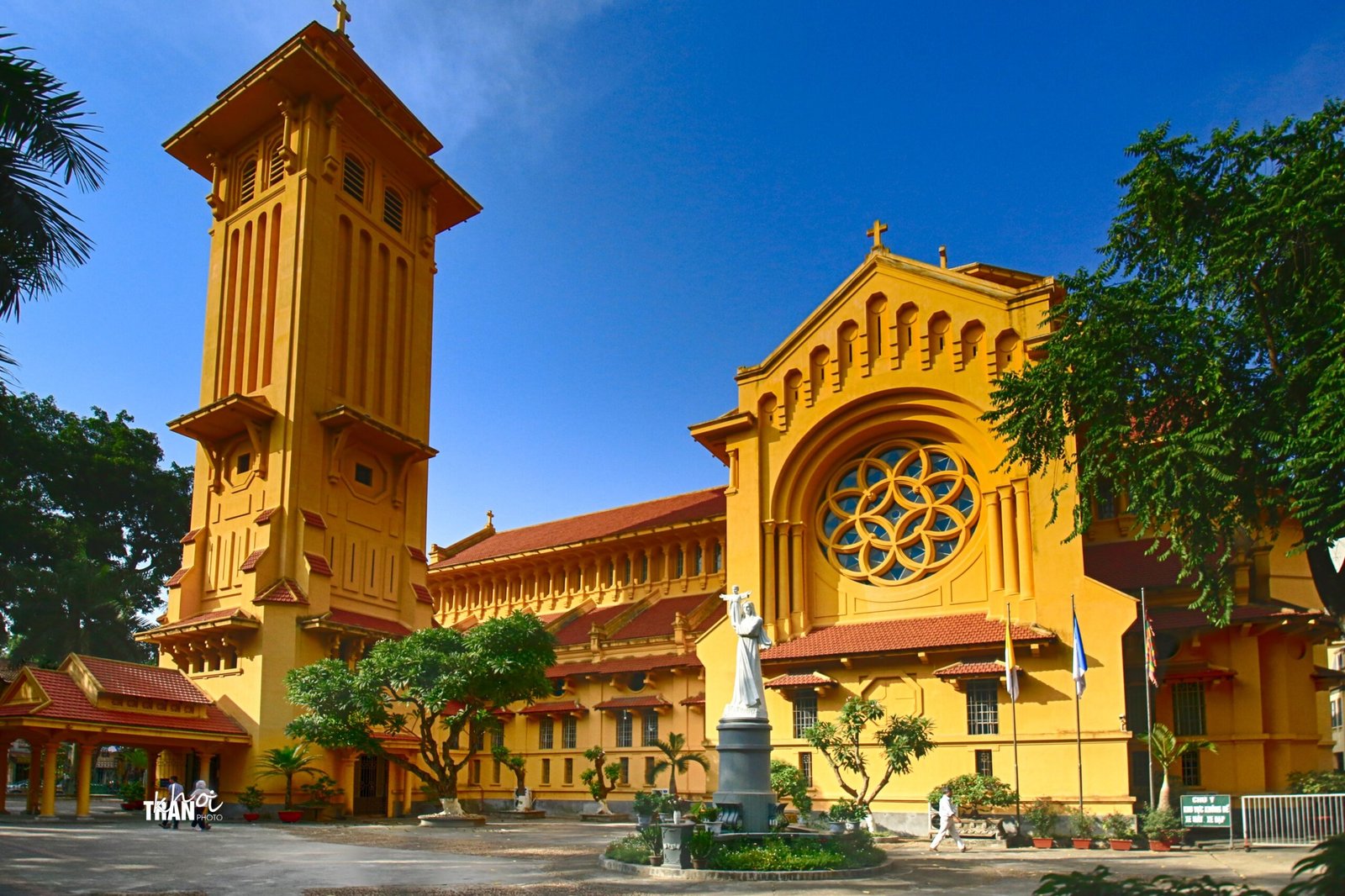
A modernist Catholic church built as part of Hanoi’s French-supervised urban renewal, Cửa Bắc ranks among the capital’s three most significant religious structures and has hosted interfaith worship at the highest levels of state.
At a glance
Cửa Bắc Church—whose name translates to “Northern Gate Church”—stands as one of Hanoi’s principal Catholic sanctuaries. Originally dedicated to Our Lady of the Martyrs, it represents a key moment in the city’s architectural modernization under French colonial administration.
History
Constructed in 1931, the church was built by the French administration of Indochina as part of Hanoi’s urban plan overseen by architect Ernest Hébrard. The timing placed it among early twentieth-century religious commissions that balanced Catholic institutional needs with colonial urban vision.
In November 2006, Cửa Bắc Church hosted a joint worship service uniting Vietnamese Catholics and Protestants. The event gained international prominence as the venue for an official service during U.S. President George W. Bush’s visit to Vietnam.
What you see
The church’s architectural character reflects early twentieth-century Catholic modernism adapted to an Indochinese urban context. Its design responds to Hébrard’s broader vision for Hanoi’s planned expansion.
Cultural significance
Cửa Bắc Church occupies a distinctive position in Vietnam’s religious landscape. It stands alongside Hàm Long Church and Saint Joseph Cathedral as one of three major churches defining Hanoi’s Catholic identity. The 2006 interfaith service underscored its contemporary role as a venue capable of bridging Christian traditions at state level.
Key facts
- Built: 1931
- Country: Vietnam
- City: Hanoi
- Coordinates: 21.041368, 105.840708
- Original dedication: Church of Our Lady of the Martyrs
- Urban planner: Ernest Hébrard
Practical information & getting there
Cửa Bắc Church is located in central Hanoi. Detailed visiting hours and current accessibility information can be confirmed with local tourism authorities or the Hanoi Archdiocese.
Sources & resources
Find it on the map
See this place and what’s around it →📷 Become a Cultural Heritage Online photographer
Share your photos of places: they stay published under your name as the author. The more they're seen, the more you get noticed — and soon a contest will reward the most appreciated photos.
Log in or sign up free to add a photoIs this page about you?
This page is read by travellers and heritage enthusiasts who find it on Google. Tell us how you are connected to this place and we will take it from there.