
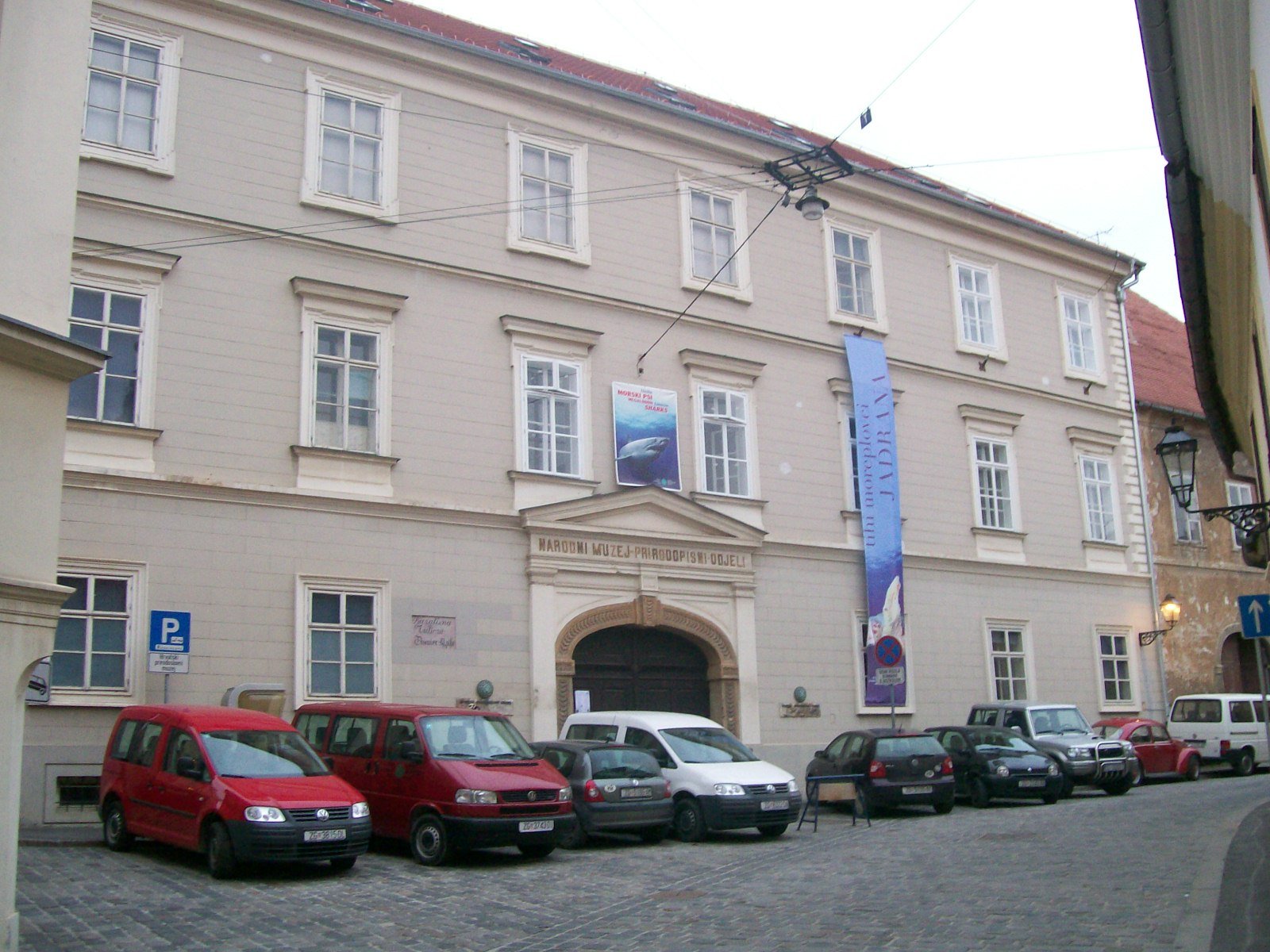
Croatia’s oldest and largest natural history institution, housing over 2 million artefacts and hosting the celebrated Krapina Neanderthal remains.
At a glance
The Croatian Natural History Museum is the primary repository for natural history research, preservation and collection in the country. Its collections span mineralogy, petrology, zoology and palaeontology, anchored in the remarkable fossil record of the region.
History
Founded in 1846 as the National Museum, the institution underwent significant restructuring in the late 20th century. The original National Museum was divided into five separate entities; in 1986, three of these merged to form the Croatian Natural History Museum as it exists today. The building itself stands in Gornji Grad, one of Zagreb’s oldest neighbourhoods, on Dimitrije Demeter Street. Following the 2020 Zagreb earthquake, the museum closed for comprehensive reconstruction and reopened to the public in 2024.
What you see
The permanent display integrates mineralogical, petrographical and zoological collections with distinctive installations in the atrium: the Rock Map of Croatia and the Geological Pole. These exhibits anchor the narrative of the region’s natural environment and geological history. The collection encompasses over 1.1 million animal specimens alongside extensive mineral and rock samples.
Cultural significance
The museum is best known as the home of the Krapina Neanderthal remains—a critical archive for understanding European prehistoric populations. Beyond its artefacts, the institution publishes Natura Croatica, the first Croatian natural history scientific journal, and maintains a large scientific library open to the public. It represents the cornerstone of Croatian natural sciences and paleontological understanding.
Key facts
- Country: Croatia
- City: Zagreb
- Founded: 1846
- Collection size: Over 2 million artefacts, including 1.1+ million animal specimens
- Coordinates: 45.817115, 15.972314
- Notable holdings: Krapina Neanderthal remains
Practical information & getting there
The museum is located in Gornji Grad on Dimitrije Demeter Street in central Zagreb. The facility reopened in 2024 following earthquake reconstruction. The scientific library is accessible to the public. For current hours, admission details and access information, consult the museum’s official website or contact them directly.
Sources & resources
Find it on the map
See this place and what’s around it →📷 Become a Cultural Heritage Online photographer
Share your photos of places: they stay published under your name as the author. The more they're seen, the more you get noticed — and soon a contest will reward the most appreciated photos.
Log in or sign up free to add a photoIs this page about you?
This page is read by travellers and heritage enthusiasts who find it on Google. Tell us how you are connected to this place and we will take it from there.