
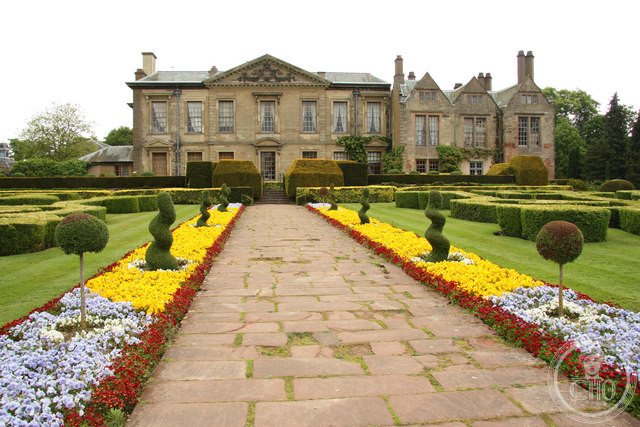
A former Cistercian monastery transformed into a country house and now operating as a hotel, Coombe Abbey stands as a Grade I listed building in rural Warwickshire.
At a glance
Coombe Abbey occupies Combe Fields near Rugby in the English Midlands. Originally a Cistercian religious community, the monastery was adapted for domestic use in the 16th century. The property retains its historic character while serving modern guests.
History
The abbey was founded as a Cistercian monastery, the monastic order dedicated to agricultural improvement and spiritual discipline. During the Protestant Reformation and dissolution of religious houses in the 16th century, Coombe Abbey was converted into a country residence, a fate shared by many English abbeys. This transformation allowed the building to survive and evolve through subsequent centuries.
What you see
The structure reflects both its monastic origins and later domestic adaptations. As a Grade I listed building, it represents significant architectural and historical merit within the English heritage system.
Cultural significance
Coombe Abbey exemplifies how religious institutions were repurposed following the Reformation, preserving medieval architecture within new contexts. Its survival as a recognizable building offers insights into both monastic life and 16th-century country house culture.
Key facts
- Location: Combe Fields, Borough of Rugby, Warwickshire, England
- Country: United Kingdom
- Coordinates: 52.41457, −1.4082
- Grade I listed building
- Original grounds now form Coombe Country Park, managed by Coventry City Council
Practical information & getting there
Coombe Abbey now operates as a hotel. The surrounding grounds form a public country park open to visitors. For accommodation, events, and visiting hours, consult the hotel directly.
Sources & resources
Find it on the map
See this place and what’s around it →📷 Become a Cultural Heritage Online photographer
Share your photos of places: they stay published under your name as the author. The more they're seen, the more you get noticed — and soon a contest will reward the most appreciated photos.
Log in or sign up free to add a photoIs this page about you?
This page is read by travellers and heritage enthusiasts who find it on Google. Tell us how you are connected to this place and we will take it from there.