
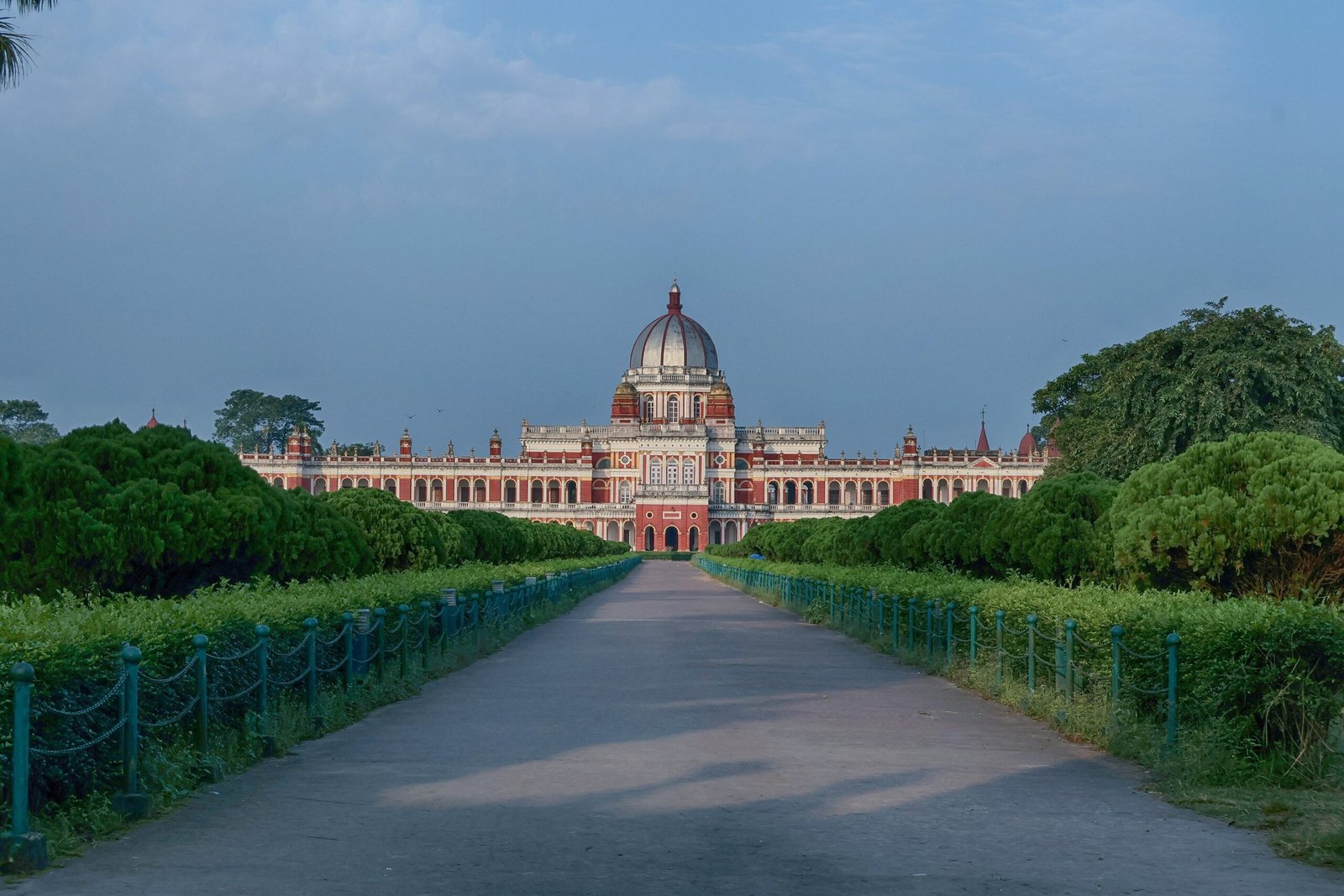
A striking Italian Renaissance palace built for a Koch dynasty maharaja, now serving as a museum in West Bengal.
At a glance
Cooch Behar Palace stands as one of West Bengal’s most distinctive heritage buildings. Its bold Italian Renaissance design reflects late 19th-century royal aesthetics and ambitions in northeastern India. The palace functions today as a museum, preserving the material culture of the region’s former rulers.
History
The palace was completed in 1887 under the patronage of Maharaja Nripendra Narayan of the Koch dynasty. Its construction represented the dynasty’s power and cosmopolitan taste during the height of the Raj era. The building has since transitioned from a royal residence to a public cultural institution.
What you see
The palace exemplifies Italian Renaissance architectural principles, adapted to its Indian location. Formal proportions, classical detailing, and structured facades characterize the exterior. The interior layout and period furnishings reflect late 19th-century royal life in Cooch Behar.
Cultural significance
The palace documents the intersection of European architectural fashion and princely state patronage in colonial India. It remains a landmark of Cooch Behar city and an important repository of local royal heritage. The building exemplifies how Indian nobility engaged with international design languages during this period.
Key facts
- Country: India
- City: Cooch Behar, West Bengal
- Completed: 1887
- Architectural style: Italian Renaissance
- Patron: Maharaja Nripendra Narayan
- Current use: Museum
- Coordinates: 26.3269°N, 89.4386°E
Practical information & getting there
The palace is located in Cooch Behar city and is open to the public as a museum. For current visiting hours, admission fees, and guided tour availability, check with the local tourism office or contact the palace directly. The nearest railway station and airport are accessible via regional transport networks.
Sources & resources
- Cooch Behar Palace – Wikipedia
- Cultural Heritage Online
Find it on the map
See this place and what’s around it →📷 Become a Cultural Heritage Online photographer
Share your photos of places: they stay published under your name as the author. The more they're seen, the more you get noticed — and soon a contest will reward the most appreciated photos.
Log in or sign up free to add a photoIs this page about you?
This page is read by travellers and heritage enthusiasts who find it on Google. Tell us how you are connected to this place and we will take it from there.