
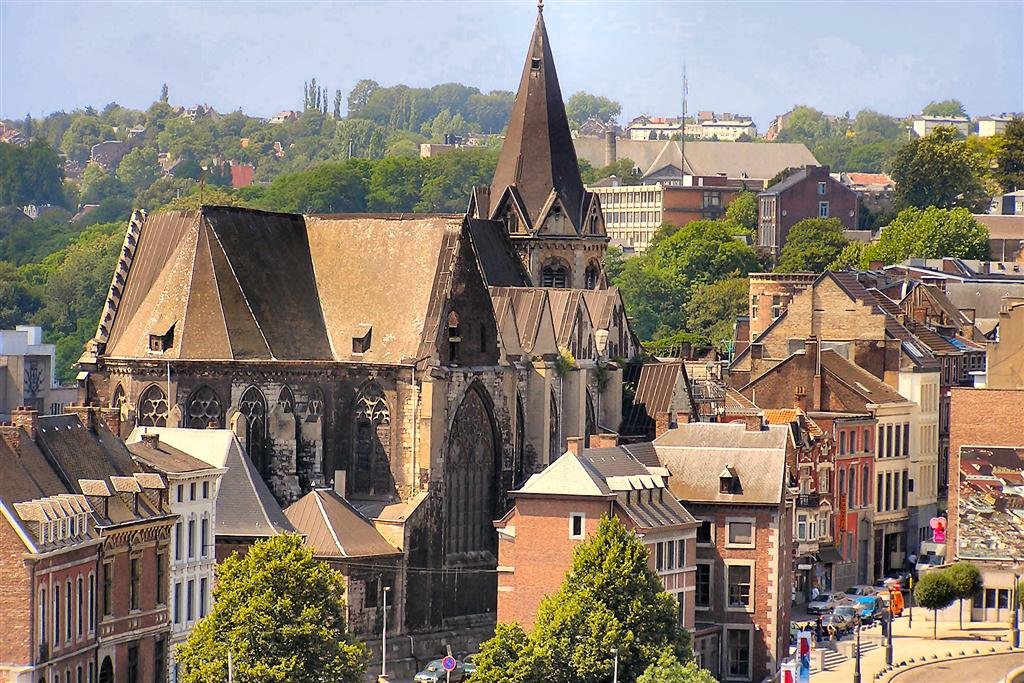
Founded by bishop Notger in the late 10th century, this Liège church served as a collegiate institution for nearly eight centuries before its secular canons were suppressed during the French Revolutionary period.
At a glance
The Collegiate Church of the Holy Cross stands on the Place Verte in central Liège, at the intersection of Rue Sainte-Croix and Rue Haute-Sauvenière. Founded between 976 and 986, it represents an important example of medieval ecclesiastical foundations in the Prince-Bishopric of Liège. The church transitioned from collegiate status to parochial use following the French Revolution.
History
Bishop Notger established this collegiate church in the final quarter of the 10th century, a period of significant religious and cultural renewal in the Meuse region. The church inherited custody of St Hubert’s Key, a sacred relic previously held in the treasury of St. Peter’s Church, adding to its religious prestige and pilgrimage significance.
The chapter of secular canons—clergy living according to a rule but remaining in the world—functioned continuously until the Liège Revolution brought sweeping ecclesiastical reforms. In 1797, the secular chapter was suppressed as revolutionary changes reshaped religious institutions across the region. The building itself was restored to worship in 1802 under the Napoleonic concordat, ensuring its survival and continued use.
What you see
The architectural character of this church reflects its medieval origins and later modifications. Specific details of its stylistic features await detailed study and documentation.
Cultural significance
As one of bishop Notger’s ecclesiastical foundations, the church embodies the cultural and religious ambitions of a key Ottonian-era churchman. Its role as keeper of St Hubert’s Key connected it to broader pilgrimage networks and devotional traditions across medieval Europe. The church remains a testament to Liège’s importance as a major ecclesiastical center.
Key facts
- Founded: between 976 and 986
- Founder: Bishop Notger
- Location: Place Verte, Liège
- Country: Belgium
- City: Liège
- Coordinates: 50.6454, 5.57
- Original religious treasure: St Hubert’s Key (from St. Peter’s Church treasury)
- Chapter suppressed: 1797
- Restored for worship: 1802
Practical information & getting there
The church is located on the Place Verte in Liège’s historic center. For current visiting hours, services, and accessibility information, check with local Liège tourism resources or contact the church directly.
Sources & resources
Find it on the map
See this place and what’s around it →📷 Become a Cultural Heritage Online photographer
Share your photos of places: they stay published under your name as the author. The more they're seen, the more you get noticed — and soon a contest will reward the most appreciated photos.
Log in or sign up free to add a photoIs this page about you?
This page is read by travellers and heritage enthusiasts who find it on Google. Tell us how you are connected to this place and we will take it from there.