
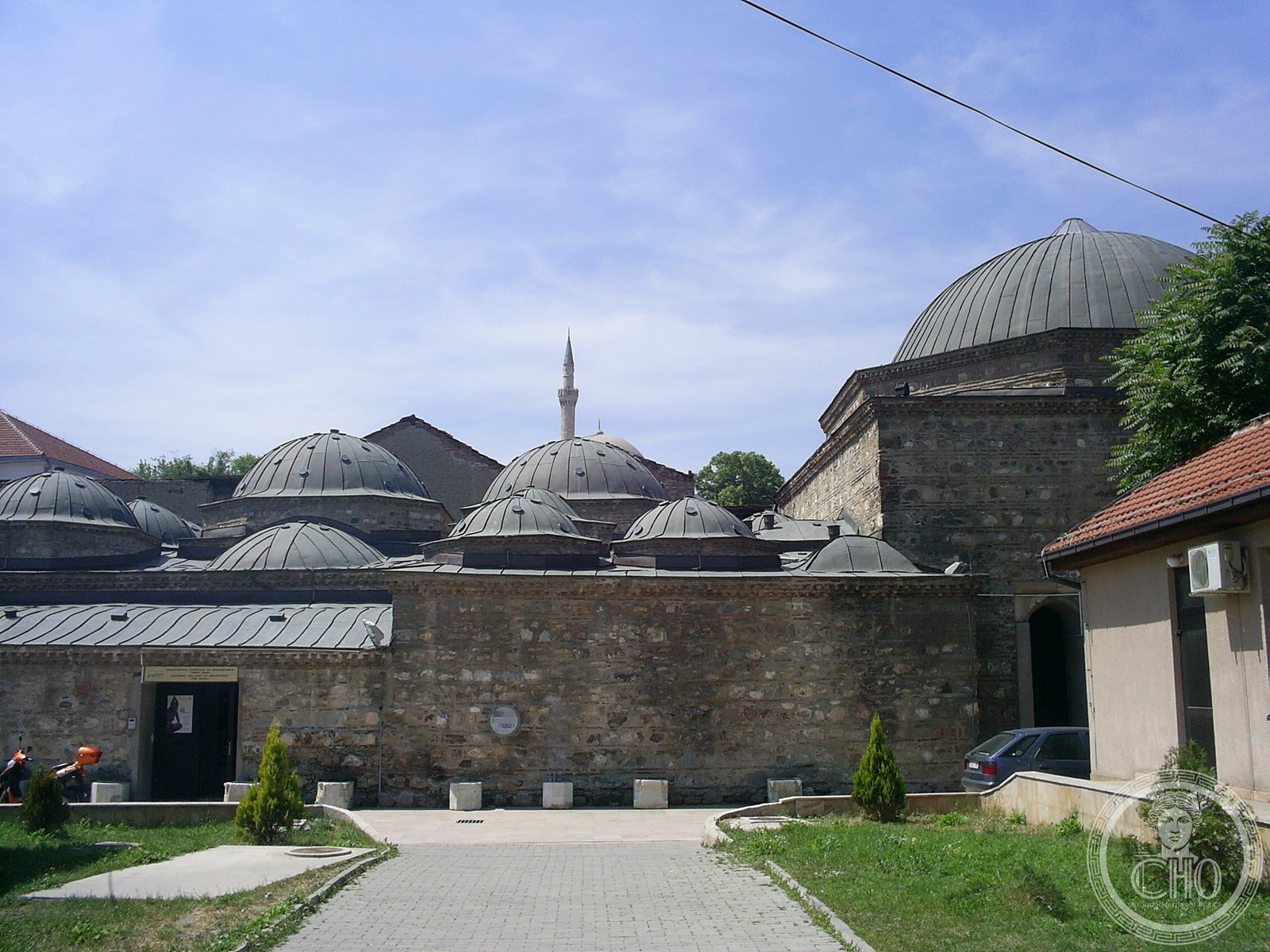
A double hammam in Skopje’s Old Bazaar, built in the mid-15th century as a revenue-generating endowment by Bosnian military leader Isa-Beg Ishaković.
At a glance
Čifte Hammam is a Ottoman-era bathhouse located within Skopje’s historic Old Bazaar. The structure exemplifies the architectural and economic patterns of Ottoman public institutions, designed not merely for bathing but as a sustainable income source for charitable or administrative foundations.
History
Built in the mid-15th century, Čifte Hammam was commissioned by Isa-Beg Ishaković, a Bosnian general who sought to establish a enduring revenue stream through the bathhouse. Its construction reflects the period when Ottoman infrastructure was consolidating across the Balkans, with public facilities serving both practical and financial purposes for their patrons.
What you see
The name Čifte—meaning “double” in Turkish—indicates the hammam’s dual-chamber design, a common Ottoman arrangement separating male and female bathing areas or providing distinct temperature zones. The structure remains situated in the Old Bazaar, among other medieval and Ottoman-period buildings that define Skopje’s urban fabric.
Cultural significance
Čifte Hammam represents the interconnected worlds of Ottoman administration, Balkan regional power, and public infrastructure in the 15th century. As both a practical facility and an endowed institution, it illustrates how architectural patronage sustained civic institutions and reflected the ambitions of military elites.
Key facts
- Country: North Macedonia
- City: Skopje
- Coordinates: 42.0011, 21.4373
- Built: Mid-15th century
- Patron: Isa-Beg Ishaković, Bosnian general
- Location: Old Bazaar of Skopje
Practical information & getting there
Čifte Hammam is accessible in the heart of Skopje’s Old Bazaar, a compact medieval quarter in the city center. Visitors can reach the site on foot from central Skopje. Current opening hours and admission details should be confirmed locally, as restoration status and public access may vary.
Sources & resources
Find it on the map
See this place and what’s around it →📷 Become a Cultural Heritage Online photographer
Share your photos of places: they stay published under your name as the author. The more they're seen, the more you get noticed — and soon a contest will reward the most appreciated photos.
Log in or sign up free to add a photoIs this page about you?
This page is read by travellers and heritage enthusiasts who find it on Google. Tell us how you are connected to this place and we will take it from there.