
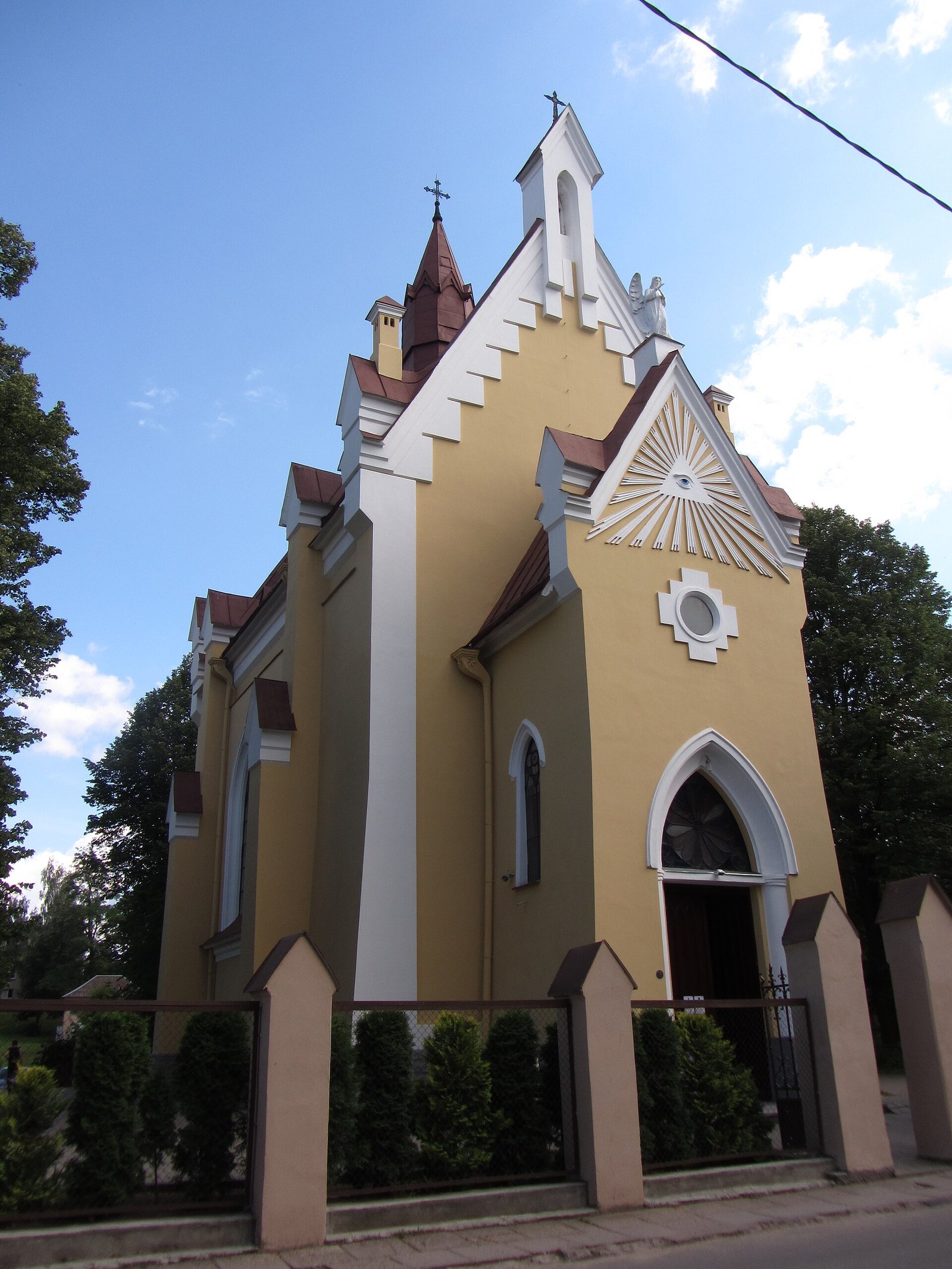
A Gothic Revival church completed in early 20th-century Vilnius, designed by architect Antanas Vivulskis and serving the Vilkpėdė neighborhood.
At a glance
The Church of the Providence of God stands in Vilkpėdė, a residential neighborhood of Lithuania’s capital. Completed in 1913, it represents the Gothic Revival style that gained prominence across Europe during the 19th and early 20th centuries. The church remains a Roman Catholic parish church.
History
The church was built to serve the growing Vilkpėdė community in the expanding outskirts of Vilnius. Its construction, completed in 1913, occurred during a period of architectural development in the Lithuanian capital under Russian Imperial rule.
What you see
Designed by Antanas Vivulskis, the church embodies Gothic Revival principles. The style emphasizes verticality, pointed arches, and decorative detailing characteristic of the revival movement that drew inspiration from medieval Gothic forms.
Cultural significance
The church reflects Vilnius’s architectural heritage and the role of religious institutions in shaping Lithuanian neighborhoods. As part of the city’s Roman Catholic tradition, it represents early 20th-century construction in a period of cultural development.
Key facts
- Country: Lithuania
- City: Vilnius (Vilkpėdė neighborhood)
- Completed: 1913
- Architect: Antanas Vivulskis
- Style: Gothic Revival
- Coordinates: 54.66944444, 25.24444444
- Denomination: Roman Catholic
Practical information & getting there
The church is located in Vilkpėdė, a neighborhood of Vilnius. Visitors can reach the area by public transport or car from Vilnius city center. For current opening hours and Mass times, contact the parish directly or check local Catholic church resources.
Sources & resources
Find it on the map
See this place and what’s around it →📷 Diventa un fotografo di Cultural Heritage Online
Condividi le tue foto dei luoghi: restano pubblicate con la tua firma come autore. Più vengono viste, più ti fai conoscere — e presto un concorso premierà le foto più apprezzate.
Accedi o registrati gratis per aggiungere una fotoDo you manage this place?
This page is read by travellers and heritage enthusiasts who find it on Google. Keep it accurate — and make it work for you. Free for non-profit heritage institutions.