
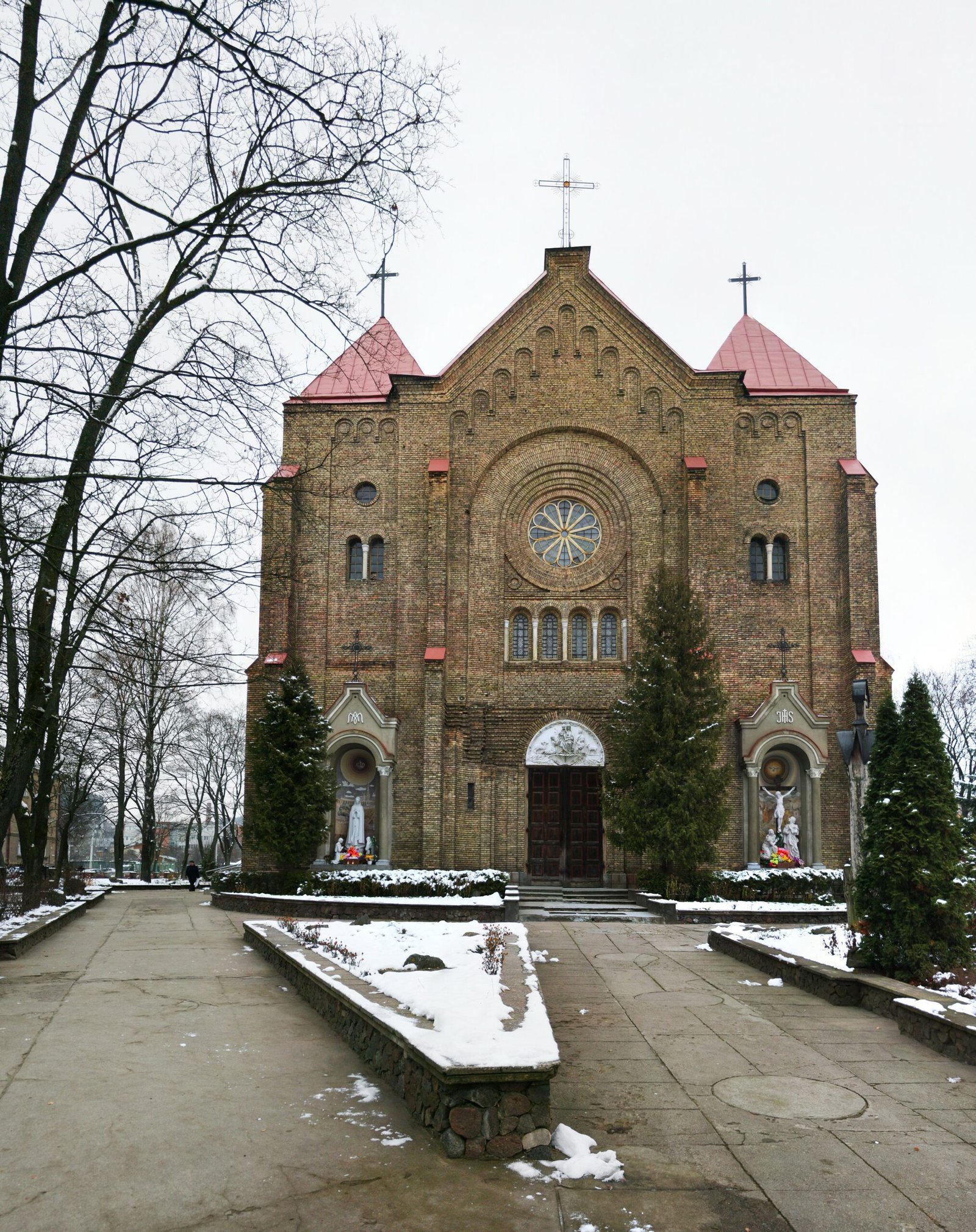
A Roman Catholic church in Žvėrynas, Vilnius, completed in 1925 but never finished according to its original design—its towers remain unbuilt.
At a glance
This early-twentieth-century Roman Catholic parish church stands in the Žvėrynas neighborhood of Vilnius. Its construction was largely finished in 1925, though the architects’ original vision included twin towers that were never realized.
History
The church was for the most part completed in 1925. Economic and political circumstances prevented full realization of the initial design. The Great Depression and World War II interrupted construction, leaving the planned towers unbuilt. The church has remained in this incomplete state ever since.
What you see
The Church of the Immaculate Conception exhibits the architectural character of early-twentieth-century Roman Catholic design. The absence of the intended towers is the most striking departure from the original project, altering the intended proportions and silhouette of the structure.
Cultural significance
The church serves the Catholic community of Žvėrynas and represents the religious life of interwar Vilnius. Its incomplete form—a tangible consequence of historical disruption—offers insight into the impact of twentieth-century upheaval on architectural ambitions in Lithuania.
Key facts
- Country: Lithuania
- City: Vilnius
- Completed: 1925
- Coordinates: 54.698°N, 25.253°E
- Denomination: Roman Catholic
- District: Žvėrynas
Practical information & getting there
The church is located in the Žvėrynas neighborhood of Vilnius. Further details regarding visiting hours and access should be confirmed locally before travel.
Sources & resources
Find it on the map
See this place and what’s around it →📷 Become a Cultural Heritage Online photographer
Share your photos of places: they stay published under your name as the author. The more they're seen, the more you get noticed — and soon a contest will reward the most appreciated photos.
Log in or sign up free to add a photoIs this page about you?
This page is read by travellers and heritage enthusiasts who find it on Google. Tell us how you are connected to this place and we will take it from there.