
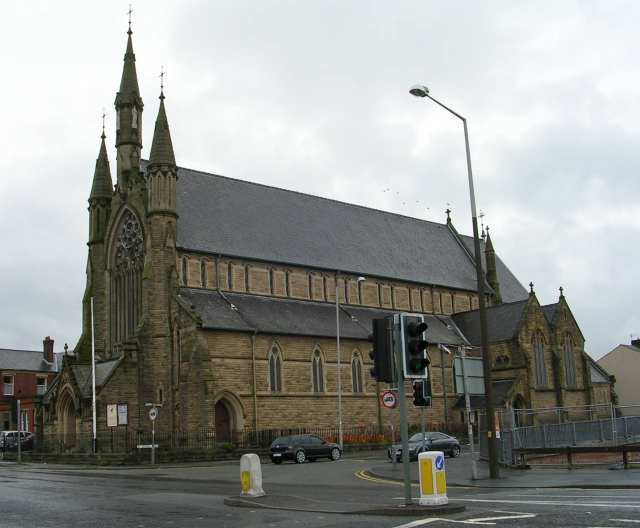
A Roman Catholic parish church designed by Edward Welby Pugin, dedicated to English Catholic martyrs and serving as a shrine for the Diocese of Lancaster.
At a glance
This brick church stands prominently in central Preston at the corner of the A6, between Aqueduct Street and St George’s Road. Designed by the distinguished Victorian architect Edward Welby Pugin, it functions both as a working parish church and as a shrine dedicated to the English Martyrs.
History
The church was designed by Edward Welby Pugin, a leading figure in the Gothic Revival movement and son of the renowned architect Augustus Pugin. It serves as a shrine church within the Diocese of Lancaster, part of the Parish of St John XXIII in Preston.
What you see
Pugin’s design reflects the principles of Victorian Gothic Revival architecture. The church’s prominent corner location on the A6 makes it a striking landmark in Preston’s urban fabric.
Cultural significance
The church commemorates English Catholic martyrs, a theme central to its dedication and spiritual purpose. As a shrine church of the Diocese of Lancaster, it holds particular importance for Catholic pilgrimage and worship in Lancashire.
Key facts
- Location: Preston, Lancashire, United Kingdom
- Architect: Edward Welby Pugin
- Type: Roman Catholic parish church and shrine
- Diocese: Lancaster
- Coordinates: 53.7692, -2.7043
Practical information & getting there
The church is located near Preston city centre on the A6 between Aqueduct Street and St George’s Road, making it easily accessible by car and public transport. For current opening times, services and visitor information, we recommend contacting the church directly or visiting the Diocese of Lancaster website.
Sources & resources
Find it on the map
See this place and what’s around it →📷 Become a Cultural Heritage Online photographer
Share your photos of places: they stay published under your name as the author. The more they're seen, the more you get noticed — and soon a contest will reward the most appreciated photos.
Log in or sign up free to add a photoIs this page about you?
This page is read by travellers and heritage enthusiasts who find it on Google. Tell us how you are connected to this place and we will take it from there.