
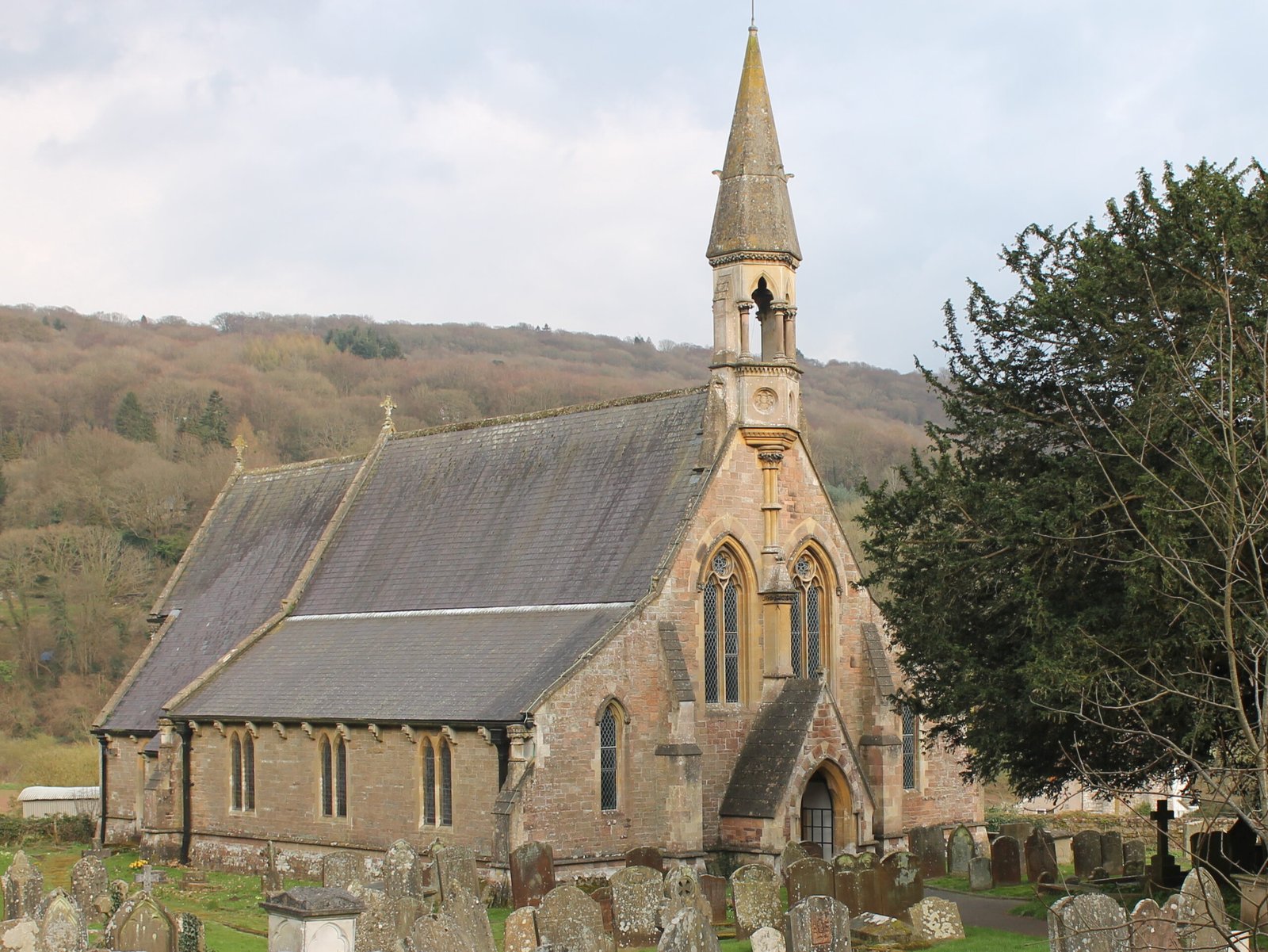
A Victorian parish church designed by John Pollard Seddon, distinguished by its richly painted interior and devotion to an early Welsh saint.
At a glance
Built between 1859 and 1861, this Grade II* listed church honours St Oudoceus, a seventh-century Bishop of Llandaff who is said to have retired and died in the village around AD 700. The church remains an active parish centre, combining Victorian ecclesiastical design with reverence for early Welsh Christianity.
History
St Oudoceus (also known as Euddogwy) served as an early Bishop of Llandaff before withdrawing to Llandogo, where local tradition holds he died circa AD 700. The church bearing his name was constructed during the Victorian revival of church building in rural Wales. John Pollard Seddon, a leading ecclesiastical architect of the period, designed the structure to serve the spiritual needs of the local parish.
What you see
Seddon’s design reflects Victorian Gothic sensibilities adapted to parish use. The church’s most striking feature is its painted interior, which distinguishes it from many contemporaneous rural churches. The architectural vocabulary speaks to mid-nineteenth-century Anglican renewal and the period’s commitment to enriching worship spaces beyond their exteriors.
Cultural significance
The church exemplifies the Victorian era’s engagement with Welsh ecclesiastical history and saints’ cults. Seddon’s involvement elevates it within the canon of nineteenth-century religious architecture in Wales. Its continued active use as a parish church demonstrates the enduring role of Victorian ecclesiastical structures in community life.
Key facts
- Country: United Kingdom
- Region: Monmouthshire
- Built: 1859–1861
- Architect: John Pollard Seddon
- Listed status: Grade II*
- Coordinates: 51.7334, -2.6867
Practical information & getting there
The church is located in Llandogo, Monmouthshire. As an active parish church, visiting hours may vary; contact local information services or the parish for current access details. The surrounding Wye Valley offers additional architectural and natural heritage sites worth exploring.
Sources & resources
Find it on the map
See this place and what’s around it →📷 Become a Cultural Heritage Online photographer
Share your photos of places: they stay published under your name as the author. The more they're seen, the more you get noticed — and soon a contest will reward the most appreciated photos.
Log in or sign up free to add a photoIs this page about you?
This page is read by travellers and heritage enthusiasts who find it on Google. Tell us how you are connected to this place and we will take it from there.