
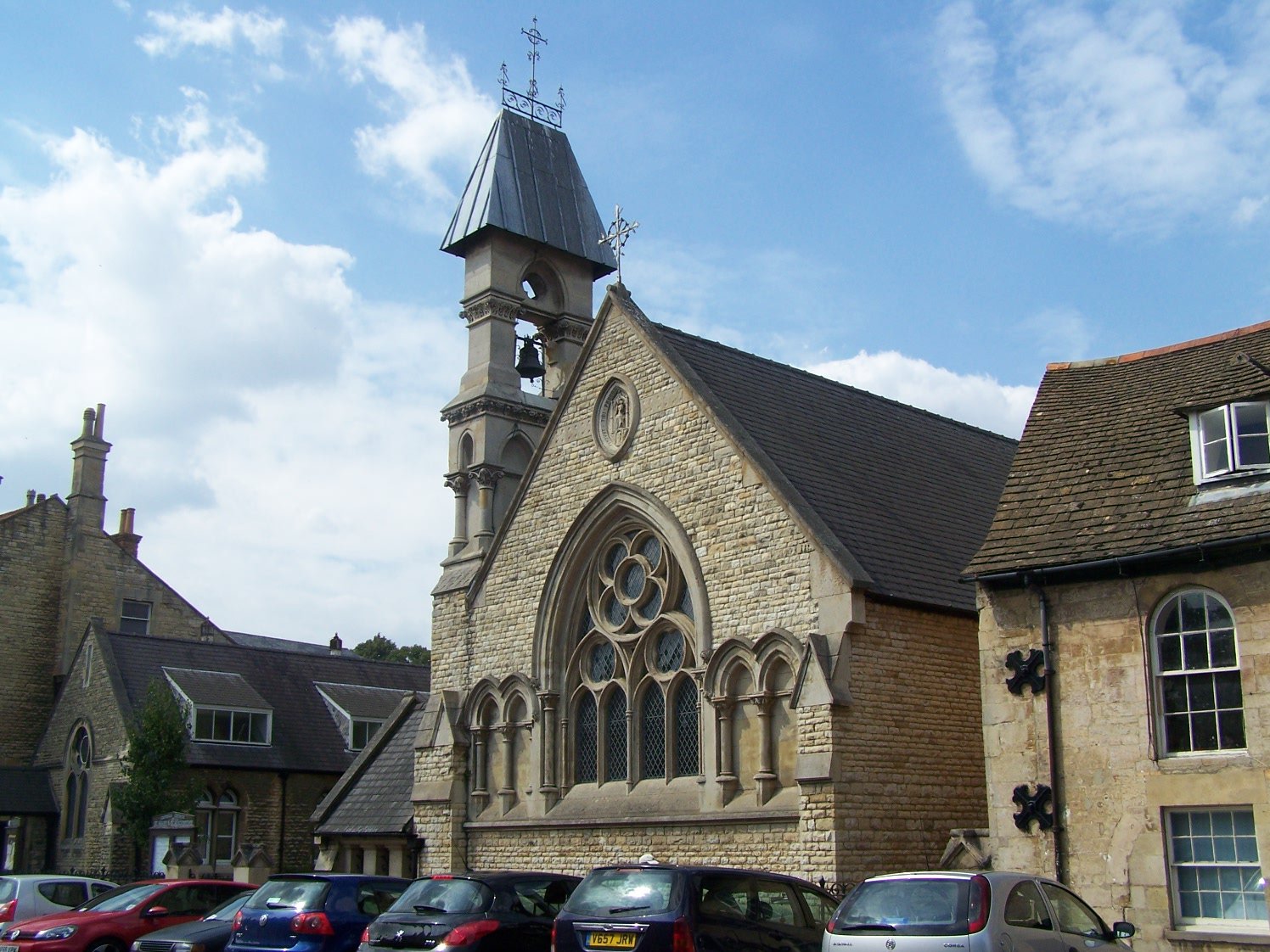
A boldly proportioned Victorian Catholic church, designed by George Goldie and built in the robust High English style during the mid-nineteenth century.
At a glance
St Augustine’s serves as the parish church for Stamford’s Roman Catholic congregation. The building exemplifies Victorian ecclesiastical architecture with its confident Early English Revival forms. Its design reflects the ambitious church-building programme of the nineteenth-century Catholic restoration in England.
History
Constructed between 1862 and 1864, the church emerged from a period of renewed Catholic presence and confidence in Victorian England. Architect George Goldie created the building for the Diocese of Nottingham, which continues to oversee the congregation today. The dates of construction mark a significant moment in English Catholic institutional life.
What you see
The church displays the “robust High Victorian Early English” idiom characteristic of Goldie’s practice. Its architectural vocabulary draws on medieval English precedent, reinterpreted through Victorian sensibilities and building techniques. The design conveys strength and permanence befitting its role as a community focal point.
Cultural significance
St Augustine’s represents the mid-Victorian moment when English Catholics regained confidence in public religious expression following centuries of restriction. Goldie’s commission demonstrates the emerging architectural ambitions of the restored Catholic hierarchy. The church stands as testimony to Victorian pluralism and the evolving English ecclesiastical landscape.
Key facts
- Location: Stamford, Lincolnshire, United Kingdom
- Completed: 1864
- Architect: George Goldie
- Coordinates: 52.6537, −0.4775
- Diocese: Roman Catholic Diocese of Nottingham
Practical information & getting there
The church is located in Stamford, a historic stone-built market town in Lincolnshire. Visit during publicly advertised services or contact the Diocese of Nottingham for visiting information.
Sources & resources
Find it on the map
See this place and what’s around it →📷 Become a Cultural Heritage Online photographer
Share your photos of places: they stay published under your name as the author. The more they're seen, the more you get noticed — and soon a contest will reward the most appreciated photos.
Log in or sign up free to add a photoIs this page about you?
This page is read by travellers and heritage enthusiasts who find it on Google. Tell us how you are connected to this place and we will take it from there.