
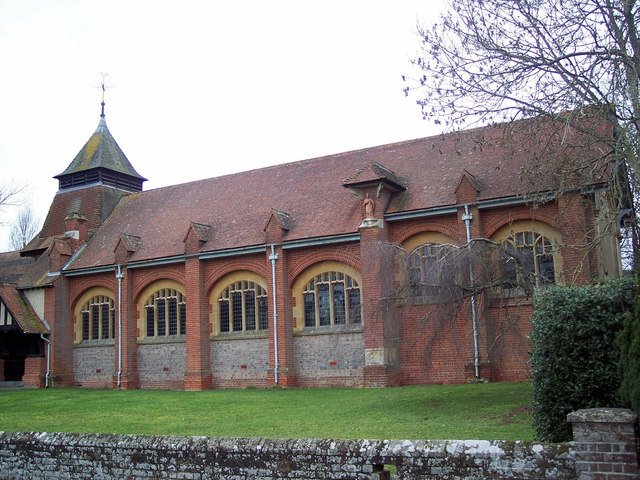
A Victorian parish church designed by Charles Ponting and built in the 1890s, this Grade II listed building remains an exemplary work of late-nineteenth-century ecclesiastical architecture in rural Wiltshire.
At a glance
The Church of St Birinus stands in Morgan’s Vale, a small settlement near Redlynch in Wiltshire. Completed in 1896, it represents the architectural vision of Charles Ponting during the height of the Victorian Gothic Revival. The church earned Grade II listed status in 1985, recognizing its architectural and historical merit.
History
Construction of the Church of St Birinus took place between 1894 and 1896 under the direction of architect Charles Ponting. The building emerged during a period of church expansion across rural England, when new parishes required purpose-built worship spaces. Its listing in 1985 formalized the building’s significance within Wiltshire’s architectural heritage.
What you see
Charles Ponting’s design reflects the Victorian era’s affection for Gothic Revival principles. The church exhibits the characteristic features of late-nineteenth-century ecclesiastical design, though further architectural detail requires direct observation or specialized documentation.
Cultural significance
As a Grade II listed building, the Church of St Birinus contributes to Wiltshire’s rich architectural record. The structure exemplifies the Victorian commitment to providing dedicated worship spaces in rural communities—a movement that shaped England’s ecclesiastical landscape.
Key facts
- Location: Morgan’s Vale, Redlynch, Wiltshire, United Kingdom
- Coordinates: 50.9887°N, 1.7182°W
- Architect: Charles Ponting
- Construction: 1894–1896
- Listed status: Grade II (since 1985)
- Denomination: Church of England
Practical information & getting there
The Church of St Birinus serves the Morgan’s Vale community in the parish of Redlynch. As a working Church of England building, visiting hours and access may vary. Contact the local parish or Wiltshire’s heritage resources for current visiting information and service times.
Sources & resources
Find it on the map
See this place and what’s around it →📷 Become a Cultural Heritage Online photographer
Share your photos of places: they stay published under your name as the author. The more they're seen, the more you get noticed — and soon a contest will reward the most appreciated photos.
Log in or sign up free to add a photoIs this page about you?
This page is read by travellers and heritage enthusiasts who find it on Google. Tell us how you are connected to this place and we will take it from there.