
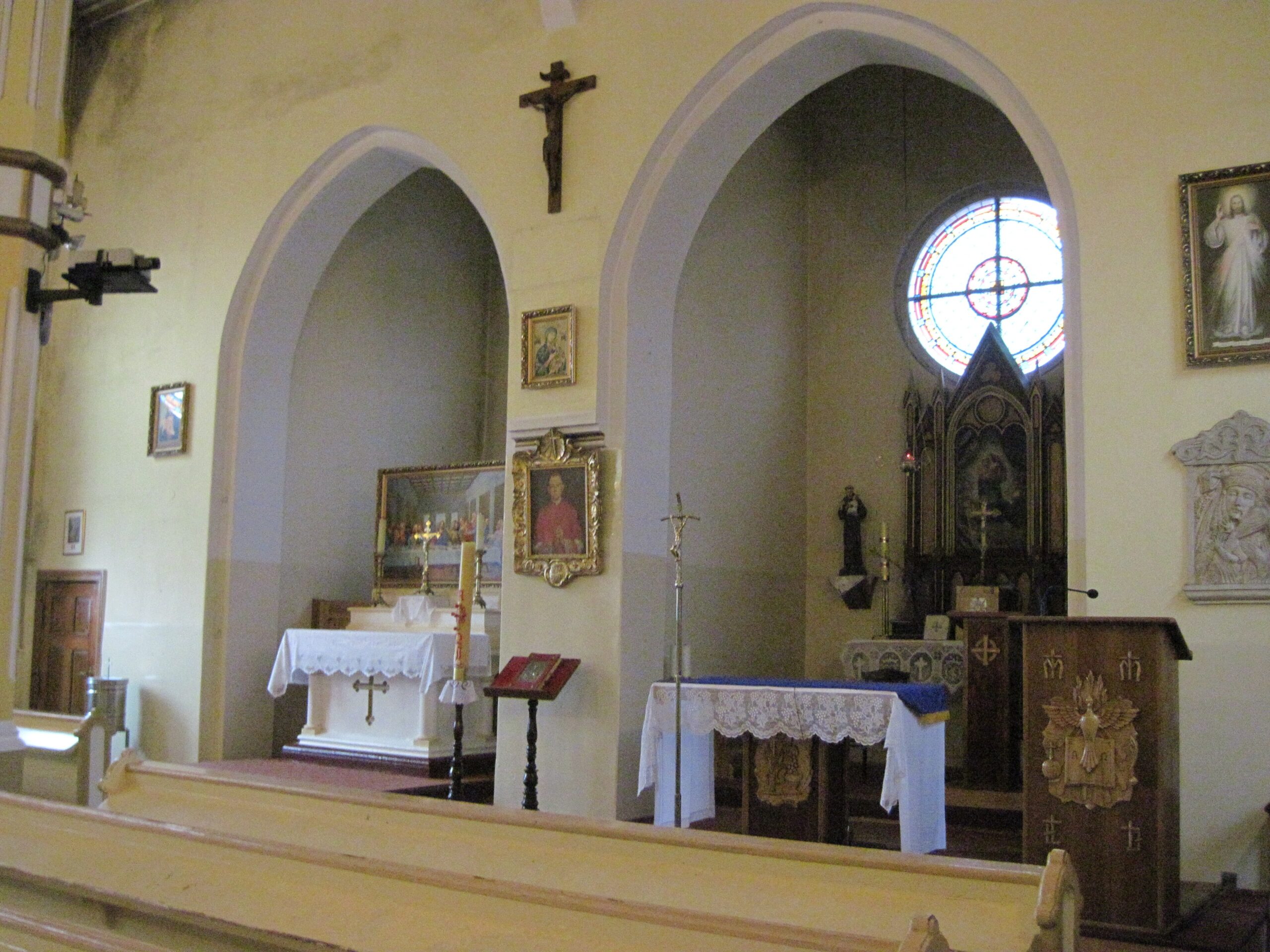
A Gothic Revival chapel built for a psychiatric hospital, now shared by Catholic and Evangelical congregations in Poland’s ecclesiastical heartland.
At a glance
Constructed in the final years of the 19th century, this modest Gothic Revival church emerged from practical necessity. It was originally designed as a chapel for the Dziekanka Psychiatric Hospital, serving the spiritual needs of patients and staff. Today it functions as a dual-use sacred space—a rare arrangement in which Catholic and Evangelical parishes share the same building.
History
Bruno, likely the German architect Bruno Schulz, designed the church between 1894 and 1895. Its construction coincided with a period of institutional expansion across Central Europe, when new hospitals and asylums required chapels for their populations. The building has served multiple communities over its existence and entered a period of closure beginning 7 February 2012.
What you see
The structure adheres to Gothic Revival principles, a style that dominated ecclesiastical architecture in 19th-century Europe. A distinctive feature is its two chancels, an unusual arrangement that accommodates simultaneous use by both Catholic and Evangelical congregations. This practical design reflects the building’s dual religious function.
Cultural significance
The church represents an important moment in modern ecclesiastical design—when hospitals became large-scale institutions requiring dedicated spiritual infrastructure. Its shared-use arrangement demonstrates interfaith cooperation and adaptation in a historical context where such arrangements were uncommon.
Key facts
- Location: Gniezno, Poland
- Coordinates: 52.5336, 17.5756
- Built: 1894–1895
- Architect: Bruno (attributed)
- Original purpose: Dziekanka Psychiatric Hospital chapel
- Dual-use: Catholic and Evangelical parishes
Practical information & getting there
The church has been temporarily closed since February 2012. Before planning a visit, confirm current access status with local authorities in Gniezno or the parish office.
Sources & resources
Find it on the map
See this place and what’s around it →📷 Become a Cultural Heritage Online photographer
Share your photos of places: they stay published under your name as the author. The more they're seen, the more you get noticed — and soon a contest will reward the most appreciated photos.
Log in or sign up free to add a photoIs this page about you?
This page is read by travellers and heritage enthusiasts who find it on Google. Tell us how you are connected to this place and we will take it from there.