
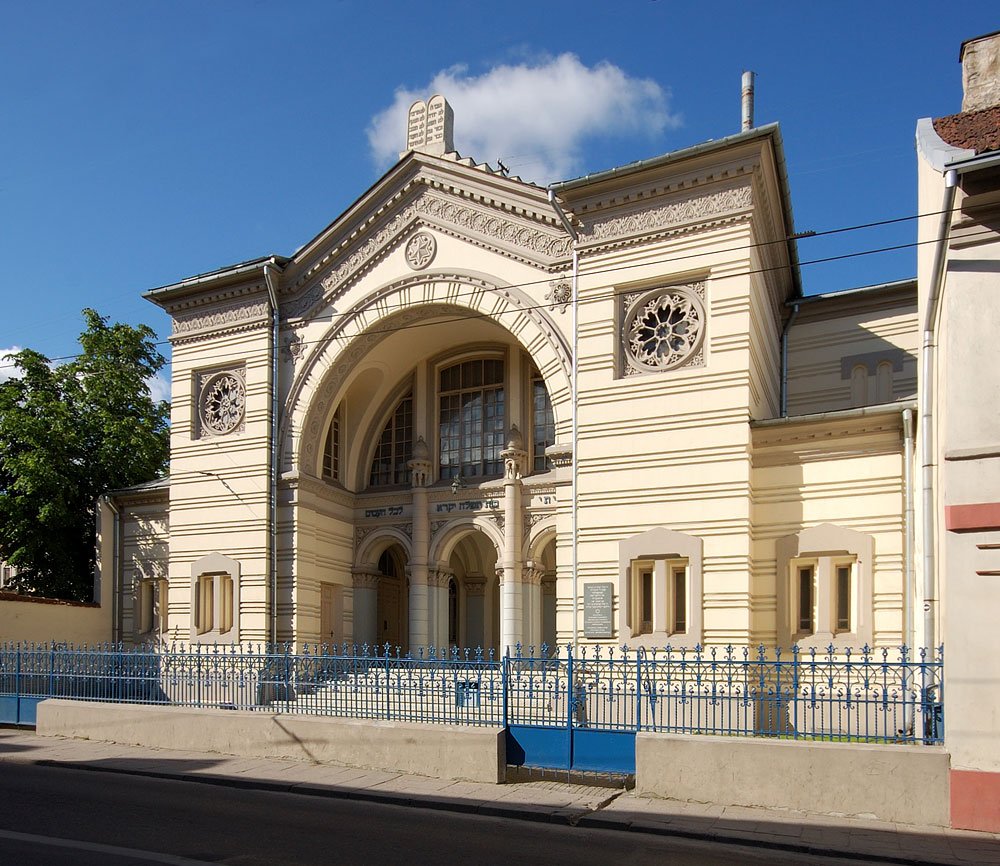
An ornate house of worship blending Romanesque and Moorish Revival architecture, and the sole surviving active synagogue in Vilnius after the destruction of the city’s other Jewish houses of prayer.
At a glance
The Choral Synagogue stands at 39 Pylimo Street in Vilnius’s Old Town as a testament to the city’s Jewish heritage. Completed in 1903, it serves an Orthodox Jewish congregation and remains the only functioning synagogue in the city—a distinction born of tragic necessity rather than design.
History
The synagogue was built to the designs of Daniel Rosenhaus and Aleksejus Polozovas during a period of vibrant Jewish cultural life in Vilnius. The building’s completion in 1903 marked a flourishing of institutional Jewish architecture in the city.
During World War II, when Nazi Germany occupied Lithuania, the city’s other synagogues were destroyed or desecrated. Soviet authorities compounded this devastation after the war. The Choral Synagogue endured, becoming irreplaceable.
What you see
The building presents an eclectic synthesis of Romanesque Revival and Moorish Revival styles, a decorative approach that reflected late 19th-century architectural tastes. Its ornamentation and formal presence distinguish it from earlier synagogue designs in the region.
Cultural significance
The Choral Synagogue embodies the resilience of Vilnius’s Jewish community and the fragility of cultural heritage in wartime. Its survival—unique among the city’s synagogues—makes it a living memorial to a community devastated by genocide and Soviet suppression.
Key facts
- Country: Lithuania
- City: Vilnius
- Completed: 1903
- Designed by: Daniel Rosenhaus and Aleksejus Polozovas
- Architectural styles: Romanesque Revival and Moorish Revival
- Address: 39 Pylimo Street, Old Town
- Coordinates: 54.676°N, 25.281°E
- Current use: Active Orthodox Jewish congregation
Practical information & getting there
The synagogue is located in Vilnius’s Old Town district. As an active place of worship, visiting hours and access may be restricted; contact ahead to confirm. The site serves as both a functional religious center and a historical landmark of profound significance to understanding Vilnius’s multicultural past.
Sources & resources
Find it on the map
See this place and what’s around it →📷 Become a Cultural Heritage Online photographer
Share your photos of places: they stay published under your name as the author. The more they're seen, the more you get noticed — and soon a contest will reward the most appreciated photos.
Log in or sign up free to add a photoIs this page about you?
This page is read by travellers and heritage enthusiasts who find it on Google. Tell us how you are connected to this place and we will take it from there.