
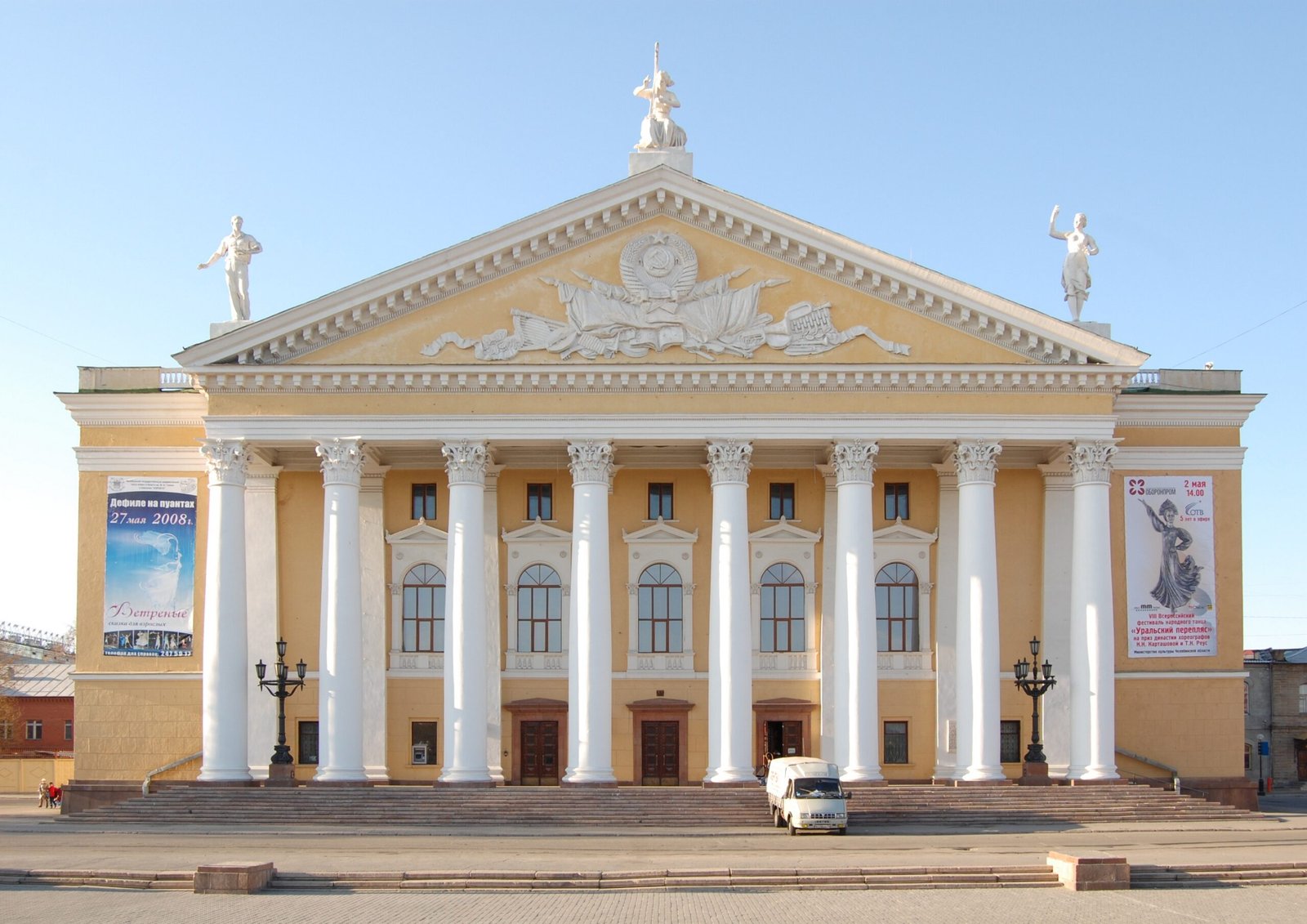
On a central square of Chelyabinsk stands a theatre two decades in the making, its opening delayed by war and its stage now named for Mikhail Glinka.
At a glance
This is the largest theatre in the Chelyabinsk Region, with an auditorium seating 894. Designed by architect N. Kurennoy, it was built between 1936 and 1955. It occupies ground once held by the Nativity Cathedral, demolished in 1932.
History
Construction stretched across nearly twenty years, spanning some of the harshest decades of Soviet history. Planners had set November 7, 1941, as the opening date, timed to a revolutionary anniversary. The Great Patriotic War intervened. Materials, labor and attention turned elsewhere, and the building sat unfinished for years. It finally opened on September 29, 1956, with a performance of Alexander Borodin’s “Prince Igor”. The choice was fitting for a house dedicated to opera and ballet. The theatre replaced a much older sacred structure: the Nativity Cathedral had stood on the site from 1748 until its demolition in 1932, a change that marks the broader transformation of Russian civic space under Soviet rule.
What you see
The theatre sits prominently on one of Chelyabinsk’s main squares. Its scale reflects its status as the region’s principal stage for opera and ballet. Inside, the hall accommodates nearly nine hundred spectators, a size that speaks to ambitions of civic grandeur common to Soviet-era theatre buildings. The article does not detail interior finishes or facade ornament, so visitors should look to the building’s presence and setting rather than a documented decorative program.
Cultural significance
Since 1956 the theatre has anchored musical life in the Chelyabinsk Region. It carries the name of composer Mikhail Glinka, tying the house to the foundations of Russian national opera. A line of principal conductors has shaped its repertoire over decades, from Isidor Zak in the theatre’s earliest years through to Evgeny Volynsky, who has led since 2013. That continuity of artistic leadership across more than half a century underscores the theatre’s ongoing role as a regional cultural institution. Its heritage-listed status affirms its recognized architectural and historical value within Russia.
Key facts
- Location: Chelyabinsk, Russia
- Architect: N. Kurennoy
- Built: 1936–1955; opened September 29, 1956
- Seating capacity: 894
- Named after: Mikhail Glinka
- Site history: former Nativity Cathedral (1748–1932)
- Status: heritage-listed; largest theatre in the Chelyabinsk Region
Practical information & getting there
The theatre stands on a main square in central Chelyabinsk, making it straightforward to find on foot from the city center. Check the official website before visiting, since performance schedules and ticketing details vary by season. As with most working theatres, plan around specific show times rather than casual daytime visits.
Sources & resources
Find it on the map
See this place and what’s around it →📷 Become a Cultural Heritage Online photographer
Share your photos of places: they stay published under your name as the author. The more they're seen, the more you get noticed — and soon a contest will reward the most appreciated photos.
Log in or sign up free to add a photoIs this page about you?
This page is read by travellers and heritage enthusiasts who find it on Google. Tell us how you are connected to this place and we will take it from there.