
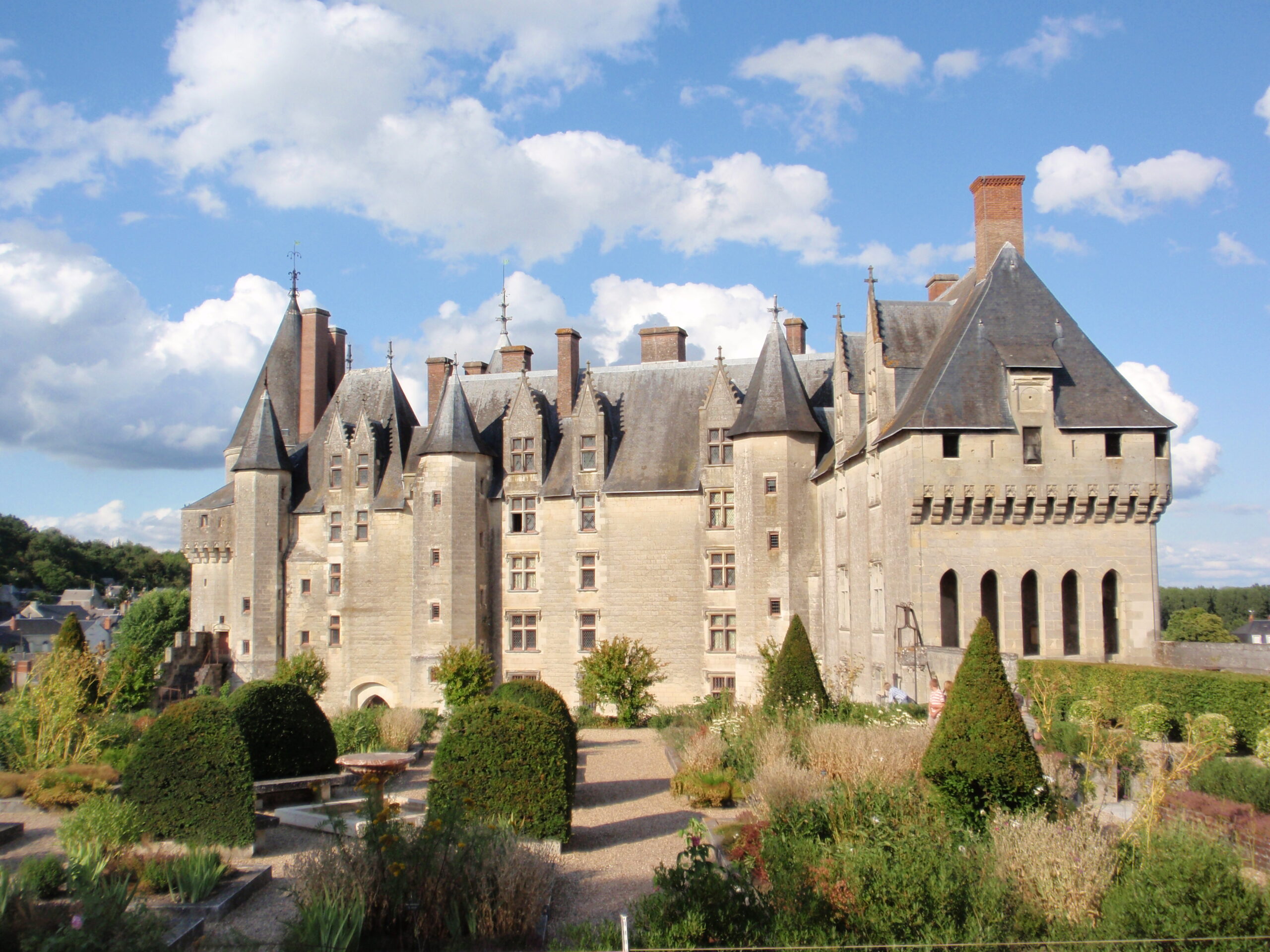
A masterpiece of late medieval architecture, this 15th-century castle showcases Flamboyant Gothic design and extraordinary decorative chimneypieces, rebuilt by King Louis XI on foundations laid nearly 500 years earlier.
At a glance
Château de Langeais rises from a promontory above the Roumer River valley at the Loire’s threshold. Its formidable stone walls and intricate Gothic ornamentation reflect both military strength and courtly refinement. The castle remains a defining example of how medieval fortifications evolved into palatial residences.
History
Fulk Nerra, Count of Anjou, founded the castle in 992, establishing a strategic stronghold in the volatile frontier between Anjou and Blois. The keep—one of the earliest datable stone examples of its kind—survives from after Odo I of Blois’s unsuccessful assault. Between 994 and 996, the castle endured two more sieges without falling.
Control shifted repeatedly during the Angevin-Blois conflict until Fulk recaptured it in 1038. Centuries later, the castle fell into ruin during the Hundred Years’ War. King Louis XI (r. 1461–1483) then undertook a comprehensive reconstruction, transforming the medieval fortress into a refined noble residence. Late 19th-century restoration work preserved these achievements. The Institut de France has owned and maintained the property since then.
What you see
The castle displays hallmark Flamboyant Gothic elements characteristic of 15th-century French architecture. Visitors encounter monumental chimneypieces of exceptional decoration—the castle is especially renowned for these ornamental features. The surviving 10th-century keep stands as tangible evidence of early medieval military engineering, contrasting strikingly with the more ornate later structures.
Cultural significance
Château de Langeais represents a pivotal moment in European architectural history: the transition from fortress to palace. Its reconstruction under Louis XI exemplifies Renaissance ambitions while retaining feudal heritage. The castle remains one of France’s finest surviving examples of late medieval design, illustrating how power, wealth, and aesthetic refinement intersected in the closing decades of the Middle Ages.
Key facts
- Founded 992 by Fulk Nerra, Count of Anjou
- Reconstructed 1461–1483 by King Louis XI
- Location: Langeais, Indre-et-Loire, France
- Coordinates: 47.3248°N, 0.4061°E
- Status: Monument historique; owned by Institut de France; open to the public
Practical information & getting there
The castle is situated in the Loire Valley, accessible from the town of Langeais. It is open to visitors and managed by the Institut de France under French Ministry of Culture protection. For current hours, admission fees, and guided tour availability, consult the official website or contact the castle directly.
Sources & resources
Find it on the map
See this place and what’s around it →📷 Become a Cultural Heritage Online photographer
Share your photos of places: they stay published under your name as the author. The more they're seen, the more you get noticed — and soon a contest will reward the most appreciated photos.
Log in or sign up free to add a photoIs this page about you?
This page is read by travellers and heritage enthusiasts who find it on Google. Tell us how you are connected to this place and we will take it from there.