
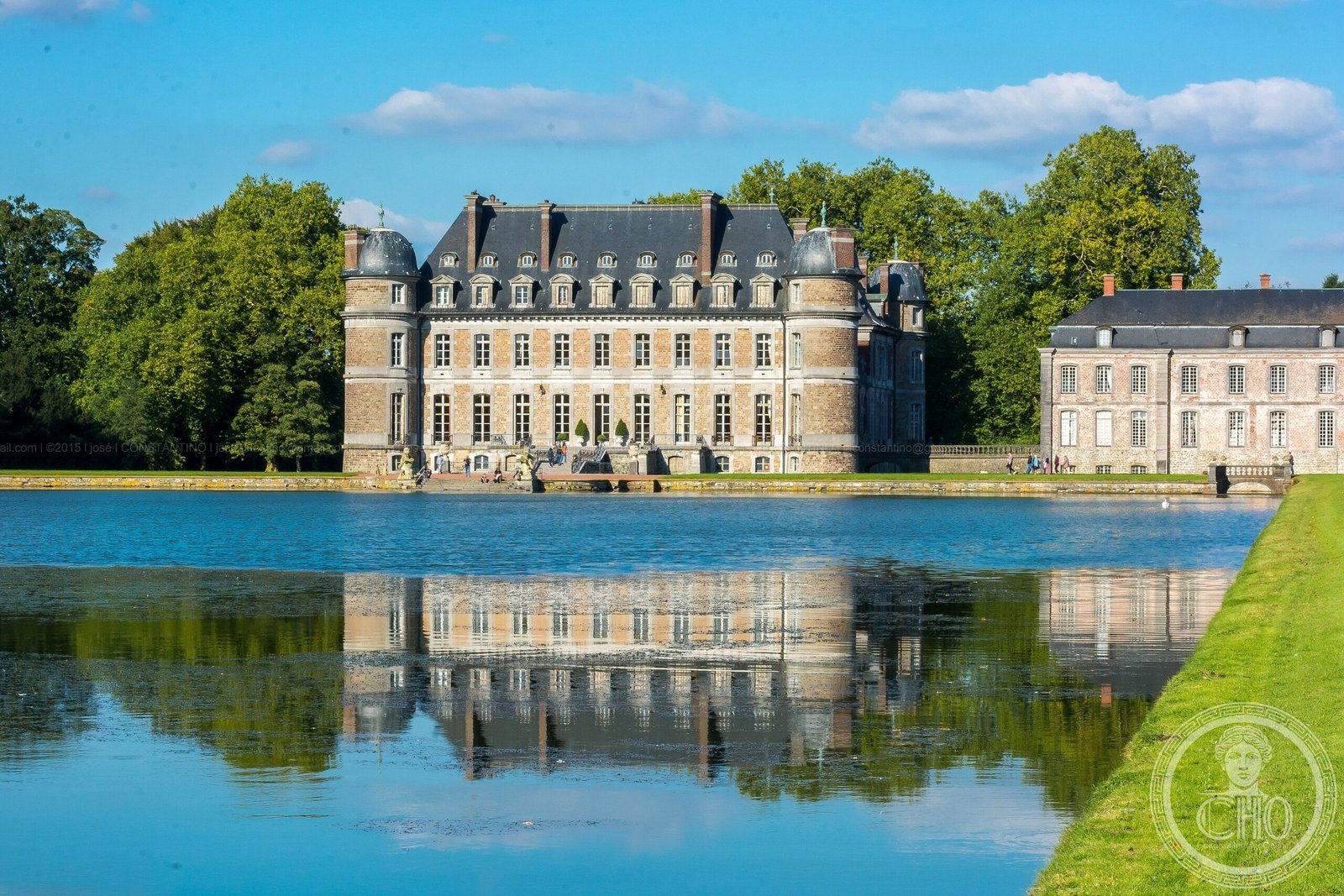
A princely residence set within one of Belgium’s finest Baroque gardens, the Château de Belœil remains the seat of the House of Ligne and opens its doors seasonally to visitors.
At a glance
The Château de Belœil stands in the Hainaut province of Wallonia as the principal residence of the princes of Ligne. Its Baroque garden, laid out in 1664, forms an integral part of the estate’s identity. The château and grounds welcome visitors during spring and summer months.
History
The château evolved as the family seat of the House of Ligne, one of the Low Countries’ most prominent noble dynasties. The estate’s Baroque garden was designed in 1664, establishing the aesthetic framework that endures today. The property’s significance spans centuries of Belgian aristocratic life.
What you see
Visitors encounter a château anchored within a Baroque garden of formal design. The garden’s 1664 layout reflects classical principles of symmetry and geometric arrangement typical of 17th-century Continental taste. The château itself serves as the visual and functional center of this planned landscape.
Cultural significance
As a working residence of the princes of Ligne, the château represents continuity of aristocratic patronage and heritage stewardship in modern Belgium. The Baroque garden itself is a valuable document of 17th-century design philosophy. The estate has attracted cultural attention: it was a filming location for the 2017 film The Royal Exchange.
Key facts
- Location: Belœil, Hainaut, Wallonia, Belgium
- Coordinates: 50.551°N, 3.73°E
- Garden designed: 1664
- Current status: Private residence; open to public spring and summer
Practical information & getting there
The château is located in the municipality of Belœil in Hainaut province. Visitor access is seasonal: the château and gardens are open during spring and summer months. You should verify current opening hours and any admission requirements before planning your visit. The estate’s formal gardens reward leisurely exploration of their Baroque design.
Sources & resources
Find it on the map
See this place and what’s around it →📷 Become a Cultural Heritage Online photographer
Share your photos of places: they stay published under your name as the author. The more they're seen, the more you get noticed — and soon a contest will reward the most appreciated photos.
Log in or sign up free to add a photoIs this page about you?
This page is read by travellers and heritage enthusiasts who find it on Google. Tell us how you are connected to this place and we will take it from there.