
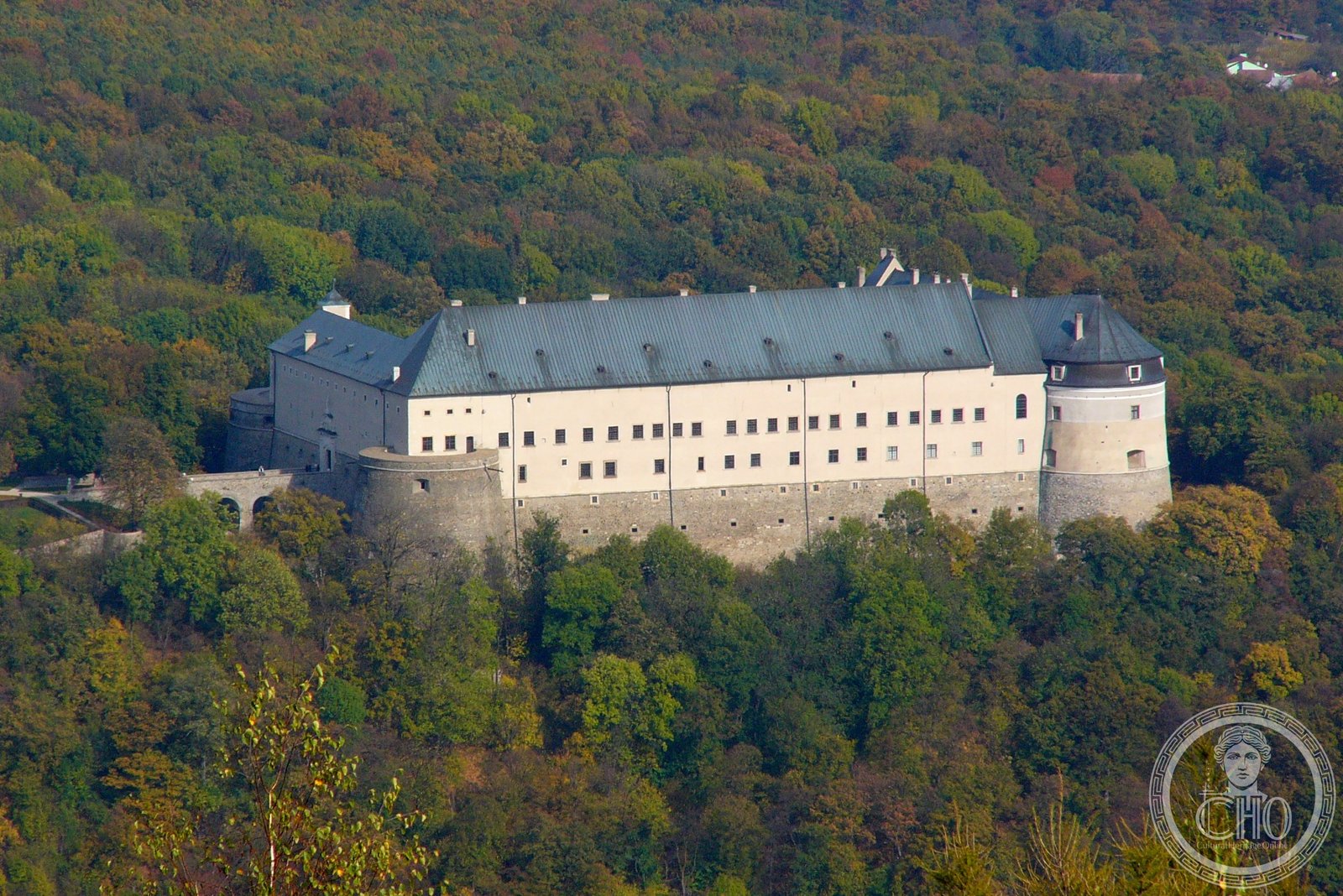
A 13th-century fortress perched in Slovakia’s Little Carpathians, Červený Kameň Castle commands the landscape near Częstá with stone walls that have endured seven centuries of regional upheaval.
At a glance
This medieval stronghold rises from the Little Carpathian range in southwestern Slovakia. Known by multiple names across languages—Rotenstein in German, Vöröskő vára in Hungarian—the castle reflects the region’s complex cultural history. Its position near Częstá made it strategically significant throughout Central European history.
History
Founded in the 13th century, Červený Kameň Castle emerged during the medieval period when fortified positions controlled trade routes and territorial boundaries across the Little Carpathians. The castle’s linguistic heritage—carrying German, Hungarian, and Slovak names—documents centuries of rule under different powers. Its earlier name, Rotenstein, derives from the German tradition of identifying fortresses by their geographical features.
What you see
The castle displays characteristics typical of medieval Central European military architecture. Stone construction dominates its visible remains, adapted to the mountainous terrain of the Little Carpathians. The fortress’s layout reflects both defensive requirements and the topography of its dramatic setting.
Cultural significance
Červený Kameň represents an important node in Slovakia’s medieval defensive network. As a symbol of the region’s multilingual past, it embodies the cultural layers—Slovak, Hungarian, and German—that shaped southwestern Slovakia. The castle stands as testimony to centuries of Central European history written into stone.
Key facts
- Location: Near Częstá, southwestern Slovakia
- Coordinates: 48.39°N, 17.34°E
- Founded: 13th century
- Alternative names: Rotenstein (German), Vöröskő vára (Hungarian)
Practical information & getting there
Červený Kameň Castle is situated in the Little Carpathians near Częstá in Slovakia’s southwestern region. Visitors should consult local tourism resources for current access conditions, visiting hours, and guided tour availability. The castle’s mountain location offers vistas across the Carpathian foothills.
Sources & resources
Find it on the map
See this place and what’s around it →📷 Become a Cultural Heritage Online photographer
Share your photos of places: they stay published under your name as the author. The more they're seen, the more you get noticed — and soon a contest will reward the most appreciated photos.
Log in or sign up free to add a photoIs this page about you?
This page is read by travellers and heritage enthusiasts who find it on Google. Tell us how you are connected to this place and we will take it from there.